Sketching Miles Davis in New Colors
Night 2 of SFJAZZ’s Miles Davis centennial series shifted from argument to atmosphere as Gil Goldstein, Keyon Harrold, and Lenny White revisited the Davis-Gil Evans songbook with orchestral color, a sense of history, and a chamber-like scale.
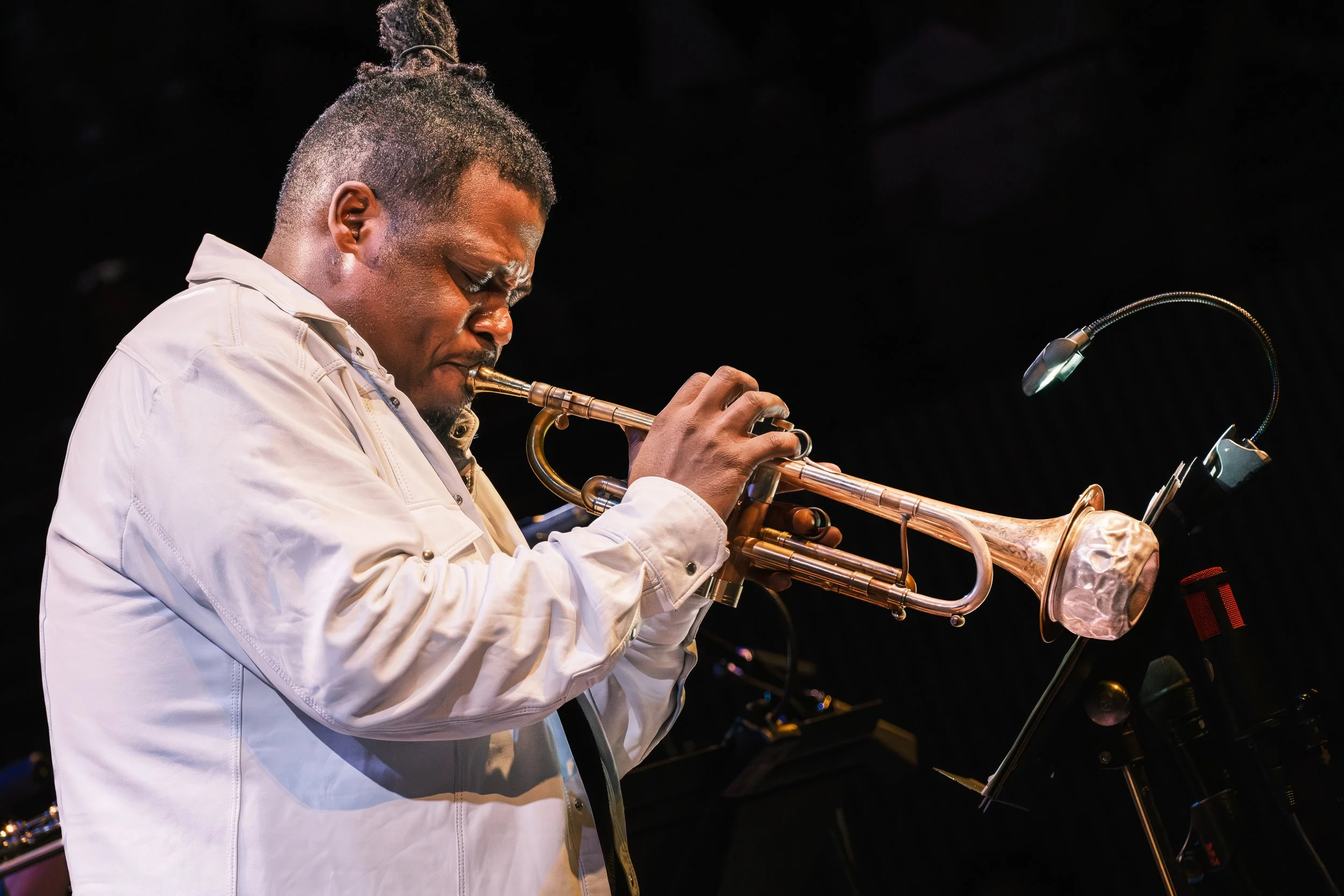
Keyon Harrold. Photo: Steve Roby
On Night 2 of SFJAZZ’s Miles Davis centennial celebration, “Sketches of Miles” transformed Miner Auditorium into a chamber of memory, color, and orchestral grandeur. The nearly two-hour program, arranged by five-time Grammy winner Gil Goldstein, celebrated Davis’s collaborations with Gil Evans and drew from repertoire spanning 1957 to 1963. Trumpeter Keyon Harrold and former Miles Davis drummer Lenny White led a tight ensemble through music that bore the weight of history while maintaining its dramatic openness.
Much of the evening’s success depended on Goldstein, whose richly detailed arrangements immersed the audience in the atmosphere of Miles and Evans at their most captivating. Here, improvisation merged with orchestral design, classical shading, and a wide range of instrumental colors. The result had depth, shape, and emotional impact, with Davis’s trumpet and flugelhorn legacy lingering over the performance as both sound and emotion.
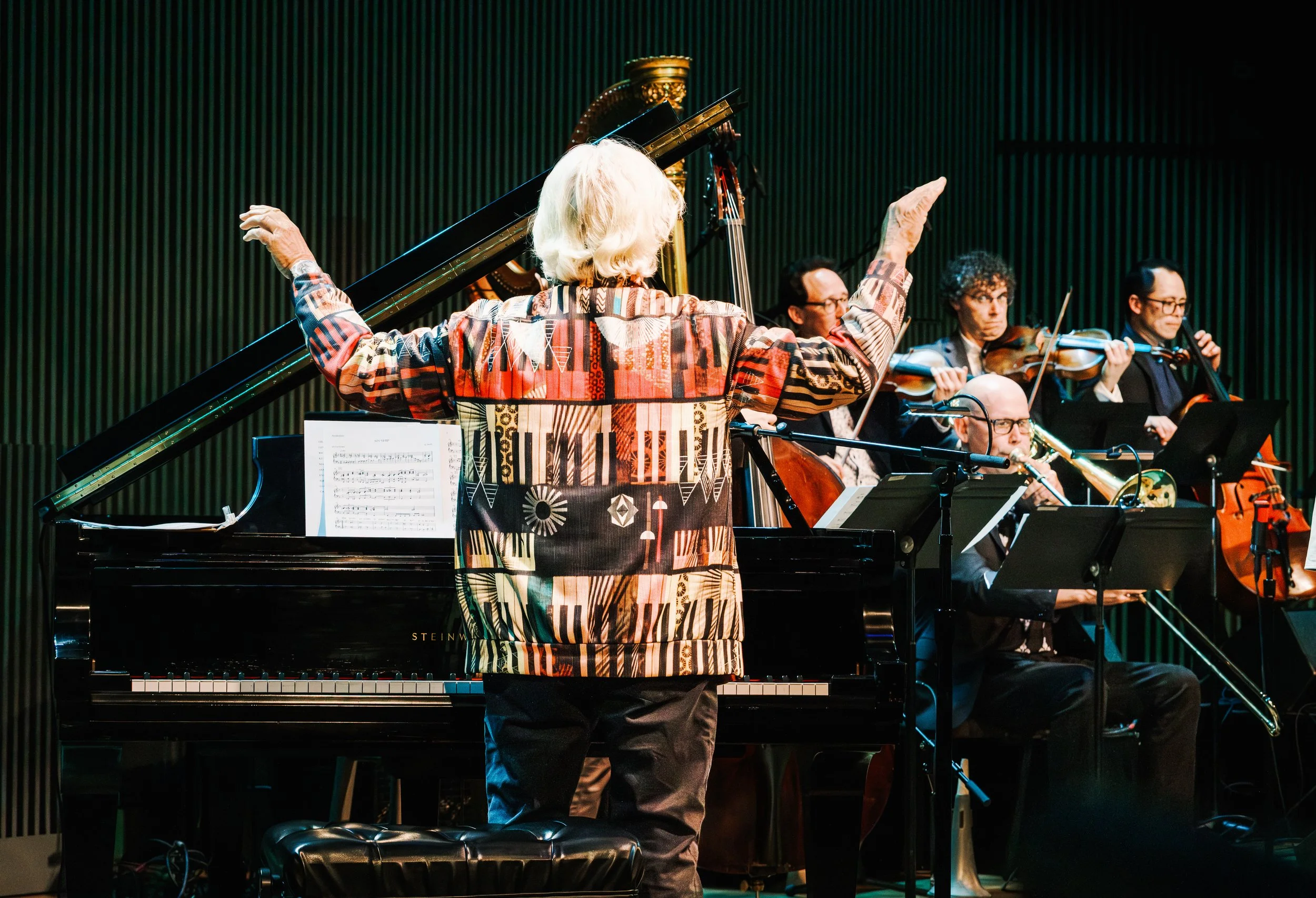
Gil Goldstein. Photo: Steve Roby
Goldstein’s stage remarks added emotion and authority to the concert. Talking about Gil Evans and the music he created with Miles Davis, he reflected on a relationship that influenced his own artistic journey. Goldstein worked closely with Evans from 1984 to 1988, performed in the Gil Evans Orchestra, learned Evans’s arranging style firsthand, and later helped reconstruct many of the classic scores that defined this chapter of Davis’s career. He told the audience that this was only the second time he had presented the Evans-Davis project live, the first being at the 1991 Montreux Jazz Festival with Quincy Jones.
From the beginning, Goldstein presented the evening as an opportunity for close listening to Evans’s writing. “This is a very exciting project because it truly focuses on Gil’s writing, which you can, I think, hear more clearly than even the large ensembles,” he said before starting with “Moon Dreams.”
That idea persisted throughout the night. By reducing the scale without diminishing the music, Goldstein revealed the structure within these scores. The voicings moved and breathed. The strings from the Bay Area’s Magik*Magik Orchestra added lift. The harp and flute brought a tactile softness to the edges. White provided pulse and shape, while Harrold took on the challenge of inhabiting music so closely associated with Miles without turning it into an imitation.

Magik*Magik Orchestra’s string section. Photo: Steve Roby
Harrold’s presence was effective because he understood that this repertoire relies as much on placement and tone as on virtuosity. He played within the arrangements and through them, providing the music with a steady center. For listeners seated stage right, the visual elements enhanced the experience. A large projection based on the Sketches of Spain cover cast Miles’s silhouette high above the band, angled in such a way that it seemed to look down toward Harrold throughout much of the set. The effect bordered on theatrical, but it fit the evening’s mood. This was music shaped by memory and shadow as much as by direct expression.
Goldstein also kept the concert human. He wore a colorful jacket covered in piano keys and often stood up from the bench to conduct the strings or cue White on drums. His introductions balanced scholarship, affection, and occasional humor. Before the Quiet Nights medley, he explained how he had excerpted “Song No. 1” and transitioned into the record’s Brazilian material. Before “Concierto de Aranjuez (Adagio),” he called Sketches of Spain “the big one” and shared an emotional memory of Evans saying he had not changed Joaquín Rodrigo’s piece very much because he wanted to stay true to the composer.
One of the night’s lighter moments happened when Goldstein introduced the ensemble and accidentally skipped over Harrold, only to have a woman in the front row call out, “Hey, what about the trumpet player?” Goldstein laughed, corrected himself, and Harrold responded with a smile and a raised horn. The exchange broke the formal spell for a moment, making the room feel more communal.
The concert’s highlights were the selections from Porgy and Bess. Goldstein told the audience that a phone call with White convinced him that “Summertime” alone was not enough from an album he called a masterpiece, so he paired it with “I Loves You, Porgy.” The choice worked perfectly. These two performances received some of the loudest cheers of the night and showed how well the band could embody lyricism without losing momentum.
Goldstein also expanded the scope of the tribute. “I Will Wait for You,” more closely associated with Michel Legrand and Astrud Gilberto than with a Miles Davis album, became part of the set within the broader Gil Evans universe. Later, “Time of the Barracudas/Variation” introduced a more fragmented, searching element, linking the evening to the less-explored, unfinished corners of the Evans-Davis scene.
The closing “Solea” completed the program’s emotional journey. As the final major statement of Sketches of Spain, it brought together the concert’s themes of longing, grandeur, and formal control into a powerful conclusion. When the piece finished, the audience rose for a standing ovation. One concertgoer, overheard on the way out, said the music had transported him back to that era.
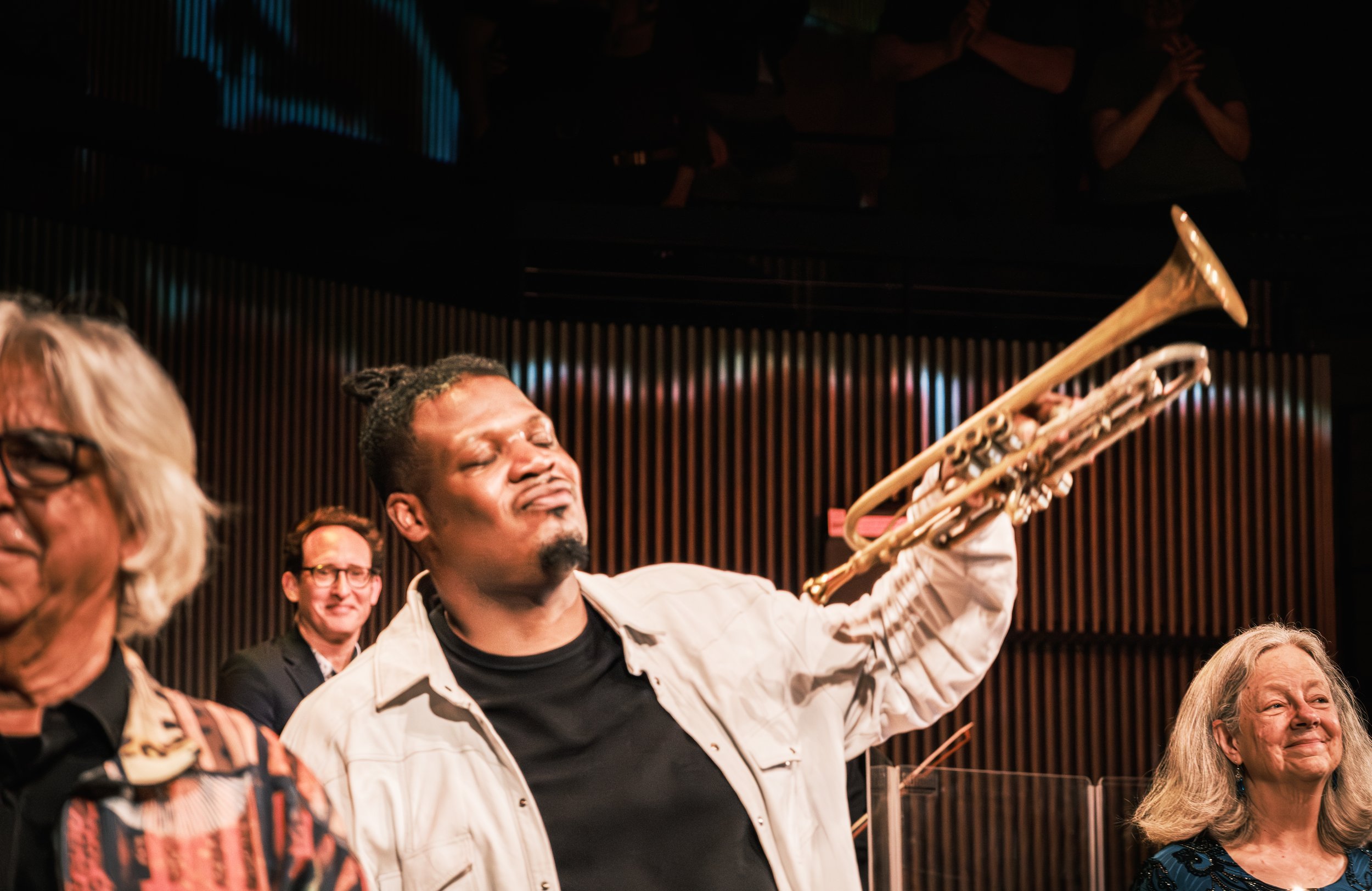
The ensemble take their final bows before leaving the stage. Photo: Steve Roby
That response captured the night, though “transport” told only part of the story. Goldstein’s ensemble did more than recreate atmosphere; it demonstrated how this music still works: through color, balance, pacing, and the tension between intimacy and scale. If Night 1 of the series explored Miles as a cultural provocateur, Night 2 revealed him as a colorist and collaborator, building a machine fueled by arrangement, texture, and air.
Program Notes
The Orchestral Jazz Of Miles Davis & Gil Evans
Event: Sketches Of Miles Davis
Date: Friday, March 20, 2026
Showtime: 7:30 p.m.
Venue: Miner Auditorium, SFJAZZ Center
Personnel
Gil Goldstein: piano
Carol Robbins: harp
Ricardo Rodriguez: bass
James Dubberly: bass trombone
Mary Fettig: flute
Lucas Chen: cello
Jory Fankuchen: viola
Evan Price: violin
Lenny White: drums
Keyon Harrold: trumpet
Setlist: “Moon Dreams” (Birth of the Cool), “My Ship” (Miles Ahead), “Miles Ahead” (Miles Ahead), Corcovado Medley: “Song No. 1/Corcovado/Aos Pés da Cruz” (Quiet Nights), “Concierto de Aranjuez (Adagio) (Sketches of Spain), “Wait Till You See Her” (Quiet Nights), “I Loves You, Porgy” (Porgy and Bess), “Summertime” (Porgy and Bess), “I Will Wait for You” (not from a Miles Davis album; a Michel Legrand/Gil Evans-associated selection), “Time Of The Barracudas/Variation,” (Time of the Barracudas), “Solea” (Sketches of Spain)
Photos: ©2026 Steve Roby