SFJAZZ Recharged Miles’s Acoustic Years
During two Saturday performances at Miner Auditorium, Eddie Henderson, Javon Jackson, Donald Harrison, Patrice Rushen, Buster Williams, and Lenny White approached Kind of Blue as a living language, infusing Night 3 of SFJAZZ’s Miles Davis centennial celebration with profound historical depth and a clear sense of musical exploration.
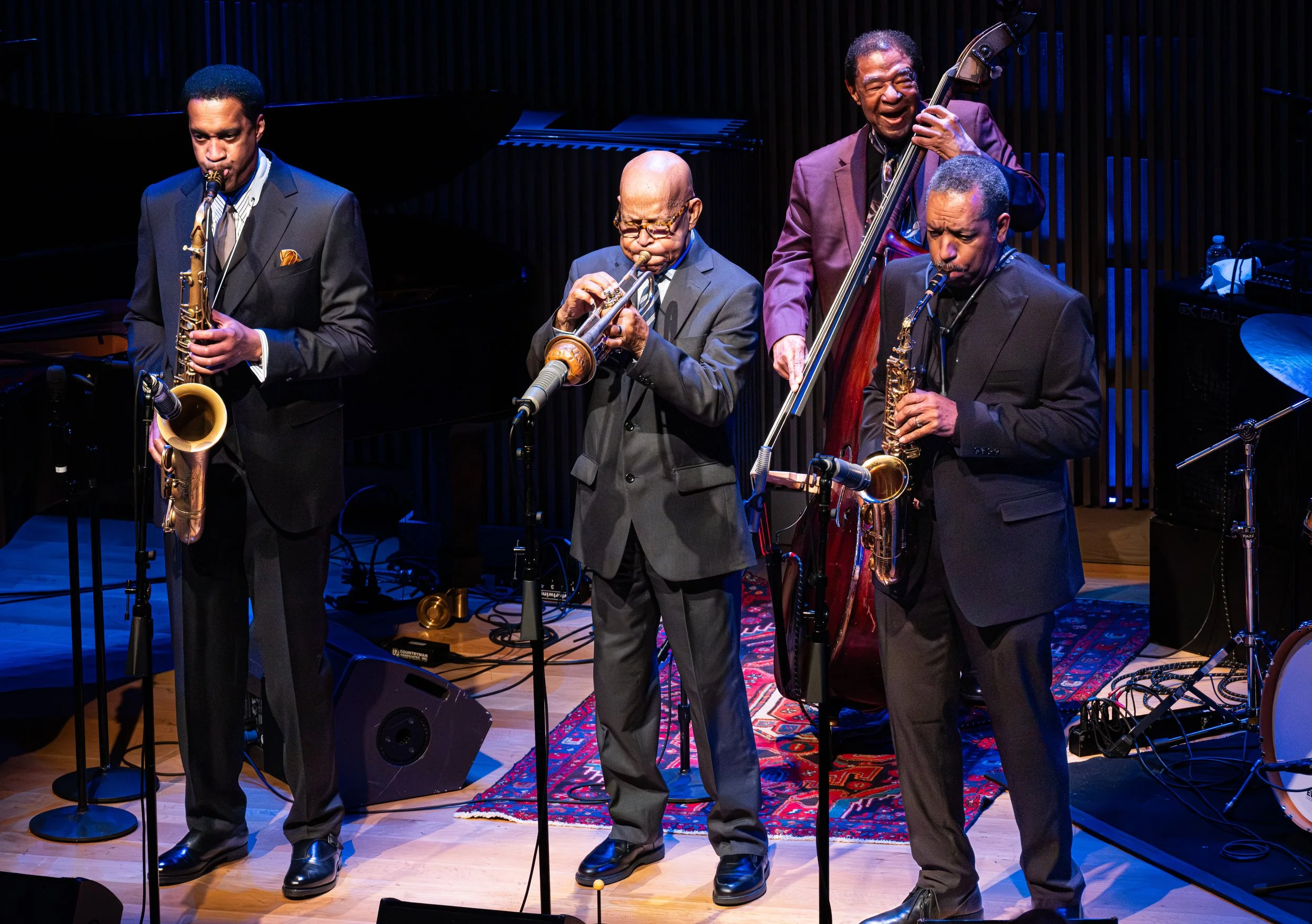
L-R: Javon Jackson, Eddie Henderson, Charles "Buster" Williams, and Donald Harrison.
Night 3 of SFJAZZ’s Miles Davis centennial celebration turned to Kind of Blue. Following Thursday’s discussion of Doo-Bop and Friday’s orchestral return to the Miles Davis–Gil Evans songbook, Saturday’s “The Acoustic Years” brought the series back to the small-group language that helped reshape modern jazz. The evening centered on Miles’s 1959 masterpiece, a recording that still stands as one of his defining achievements for the way it transforms ensemble chemistry into atmosphere.
For both the 4 p.m. matinee and the 7 p.m. evening show, SFJAZZ assembled a sextet with the stature and experience to perform that material with genuine authority: Eddie Henderson on trumpet, Javon Jackson on tenor saxophone, Donald Harrison on alto saxophone, Patrice Rushen on piano, Buster Williams on bass, and Lenny White on drums. The lineup looked impressive on paper. Onstage, it became something more captivating. These musicians approached Miles’s repertoire as an open system, one that still required choices about sound, pacing, pressure, and space.
Henderson at the Center
Eddie Henderson gave the evening its emotional anchor. During the later show, he told the audience that Miles Davis had stayed at his parents’ house when Henderson was 17, while Miles was in San Francisco playing the Black Hawk with John Coltrane, Cannonball Adderley, Philly Joe Jones, Paul Chambers, and Wynton Kelly. Henderson described the experience as one that left “an indelible impression upon my brain and musical being,” then added, with perfect economy, “Here I am in the hot seat today.”

Eddie Henderson (evening show). Photo: Steve Roby
That phrase framed the night beautifully. Henderson bore the weight of proximity. As a teenager, he had known Miles and experienced that band firsthand. He had also lived long enough to realize that the goal was never imitation. In a recent interview, he recalled one of Miles’s key lessons: stop trying to play the trumpet and focus on playing music. Henderson said the instrument was merely a tool through which a deeper expression passes. That idea helped explain why his presence was so meaningful here. He did not stand in front of the band as a copy of Miles. He stood there as a musician who had internalized Miles’s demands and made something personal from them.
Jackson and Harrison significantly expanded the frontline. Jackson delivered a warm, patient tenor tone with body, while Harrison pushed the music more aggressively, especially as tempos increased. The contrast worked well for the material. Kind of Blue has become so familiar that its shape can seem fixed before the first note is played. Saturday’s band reintroduced the music by restoring individual voices to the ensemble.
Rushen Changed the Temperature
The strongest audience response of the afternoon and evening came for Patrice Rushen, whose playing seemed to boost the band’s energy. The loudest cheers often followed her solos, and the excitement was visible onstage. The horn players appeared to feel the impact of her performance in real time.
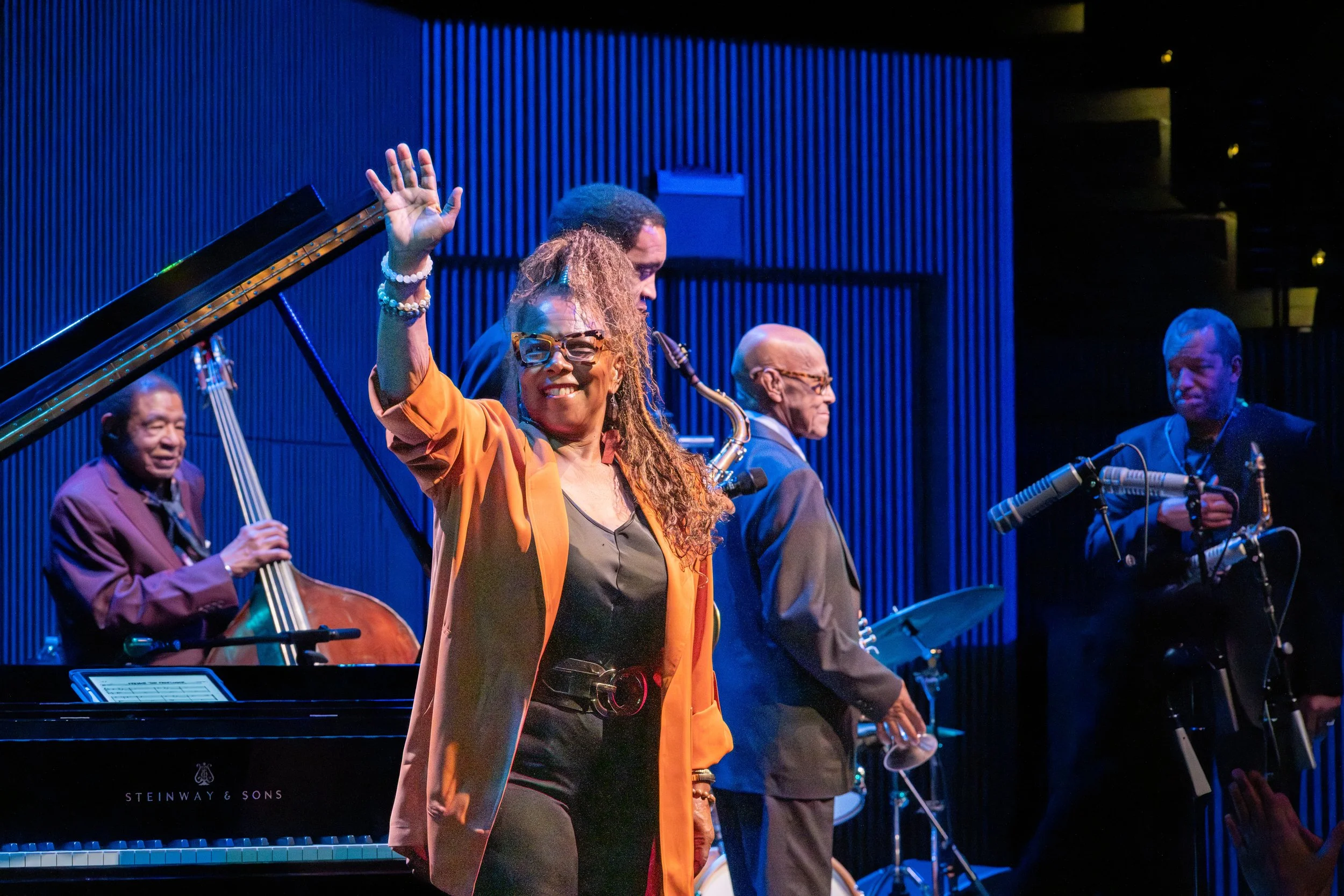
Patrice Rushen (evening show). Photo: Steve Roby
Rushen’s role in this setting carried an unusual weight. Bill Evans remains central to the aura of Kind of Blue, yet this was never a museum exercise in piano style. Rushen played with clarity, nerve, and a sense of forward momentum that kept the performances from becoming reverent. She gave the music a modern tensile strength. In “All Blues,” where the group increased the tempo from a familiar studio feel, her work at the keyboard helped propel the band into a livelier current. Harrison followed with a striking solo that leaned into the tune’s internal heat.
The room itself reinforced that mood. Miner Auditorium was bathed in dim orange and purple lighting, with warm spotlights highlighting soloists. Above the stage was the familiar Kind of Blue cover image, lit so it seemed to float over the ensemble as a permanent visual witness. The visual design never overshadowed the performance, but it enhanced the sense that this music belonged to a shared public memory while still unfolding in the moment.
Miles as Method
The matinee kept talk to a minimum beyond the initial band introduction. The evening show included spoken remarks from Rushen, White, and Henderson, which clarified the concert’s significance. Rushen reminded the crowd that the band was only touching a small part of Miles’s legacy. White, with easy humor, mentioned that he didn’t know many people turning 100 this year other than Miles, John Coltrane, and his own parents, then guided the audience into “Flamenco Sketches” as a journey.

Jackson, Henderson, and Harrison (evening show). Photo: Steve Roby
White’s presence carried its own authority. In a conversation before the concert, he spoke about Miles as a bandleader who made musicians think differently. One of Miles’s strangest directions, he recalled, was an image rather than a musical instruction: “Think of this as a big pot of stew, and I want you to be salt.” White understood the lesson later. Miles wanted artists who could interpret metaphors, trust their instincts, and shape the whole from within the music. That sensibility remained audible on Saturday. White’s drumming kept the pulse open, and his touch was uncluttered. He understood that Miles’s acoustic music drew much of its force from restraint, silence, and the space surrounding a phrase.
That quality permeated the entire band. Williams provided stability and form from the bass. The horns integrated seamlessly into the arrangements without turning them into routine repertoire. Rushen made the harmony breathe. The music maintained its composure while leaving room for tension and discovery.
By the end of the night, “The Acoustic Years” had become the centerpiece of the SFJAZZ series. Thursday focused on Miles’s final step toward hip-hop. Friday delved into his orchestral creativity. Saturday revisited the fundamentals behind much of his music and explained why it still mattered. This was Miles the engine in acoustic form: pressure transformed into elegance, space became meaning, tradition was reshaped into risk.
Program Notes
Event: Miles Davis: The Acoustic Years
Date: Saturday, March 21, 2026
Showtime: 4:00 and 7:00 p.m.
Venue: Miner Auditorium, SFJAZZ Center
Personnel
Lenny White: drums
Eddie Henderson: trumpet
Javon Jackson: tenor saxophone
“Big Chief” Donald Harrison: alto saxophone
Charles "Buster" Williams: bass
Patrice Rushen: piano
Setlist: “So What,” “Flamenco Sketches,” “All Blues,” “Blue in Green,” “Freddie Freeloader”
Encore: Afternoon show: “Pfrancing” (from the 1961 album Someday My Prince Will Come), Evening show: “On Dolphin Green Street”
Listen to our interviews with Javon Jackson, Eddie Henderson, and Lennny White here.