Immanuel Wilkins’ World Premiere of “Recitations” at SFJAZZ
Opening his SFJAZZ residency with a commissioned work for expanded ensemble, Immanuel Wilkins transformed Miner Auditorium into a shared space where Brontë Velez’s spoken text, Amina Claudine Myers’s organ, and a patient, searching band called for a deeper level of attention from the audience.
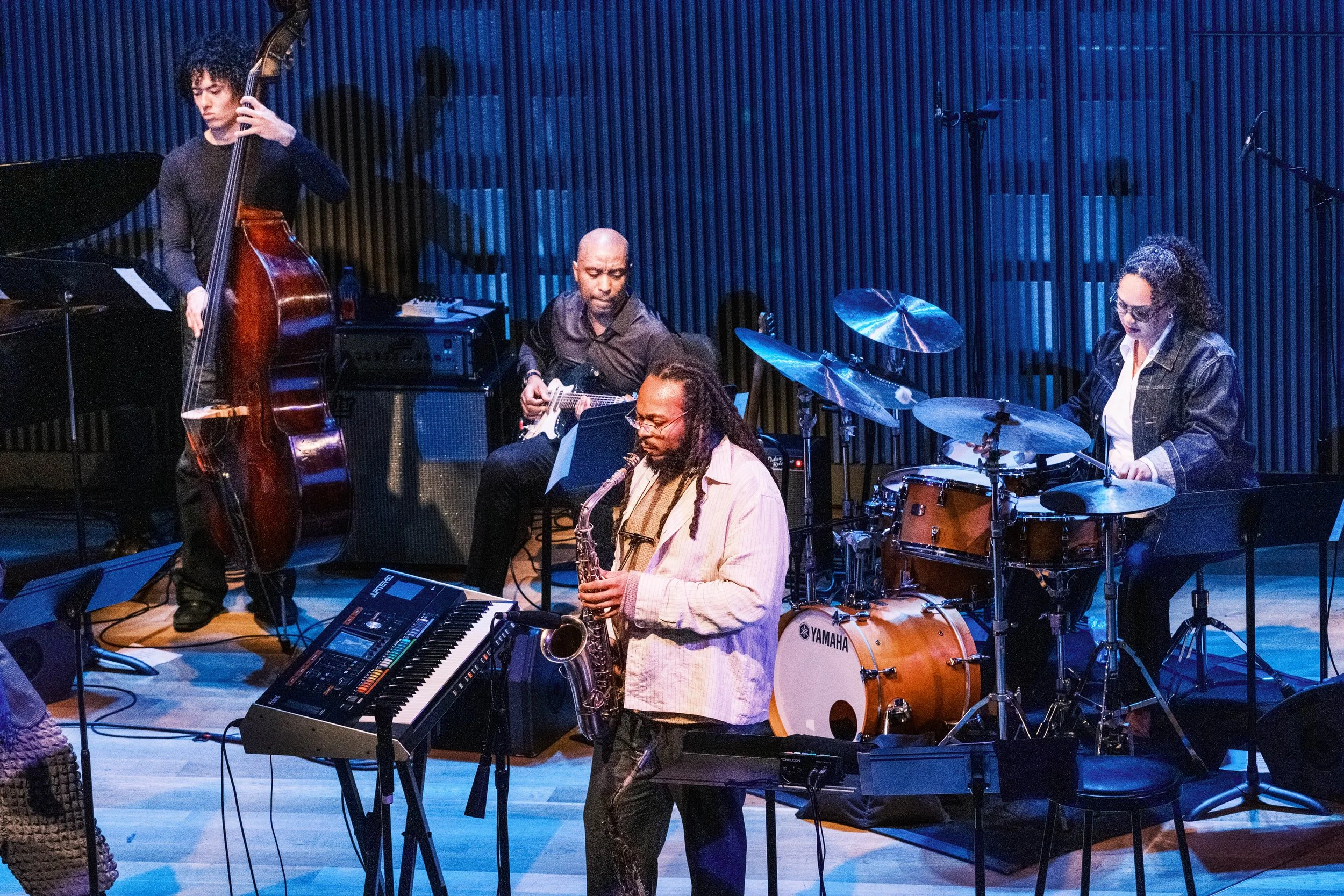
Immanuel Wilkins kicked off his SFJAZZ residency on Thursday night with a commission that transformed the room before the music even started. For the world premiere of “Recitations” in Miner Auditorium, concertgoers received a 21-page document at the entrance and were encouraged to read along with Brontë Velez’s spoken text. The setup followed directly from Wilkins’s comments at the Listening Party the night before. He mentioned he was “generally anti-audience participation,” tired of simple reactions mistaken for engagement, and spoke instead about aiming for “a performance — a gathering — where the audience is experiencing the exact same thing that the musicians are.” “Recitations” put that idea to a serious test.
The printed document clarified that the work would span a broad range of topics: prayer, ICE detention, surveillance, Palestine return, Nat Turner’s visions, George Jackson’s funeral, Black Lives Matter and nihilism, gentrification, common land, faith under pressure, rhythm, humming, sanctuary, and refuge. In performance, these subjects emerged through Velez’s steady, clear reading and music that emphasized atmosphere, pulse, and buildup rather than traditional solo display. The result felt more like a civic meditation than a typical premiere.
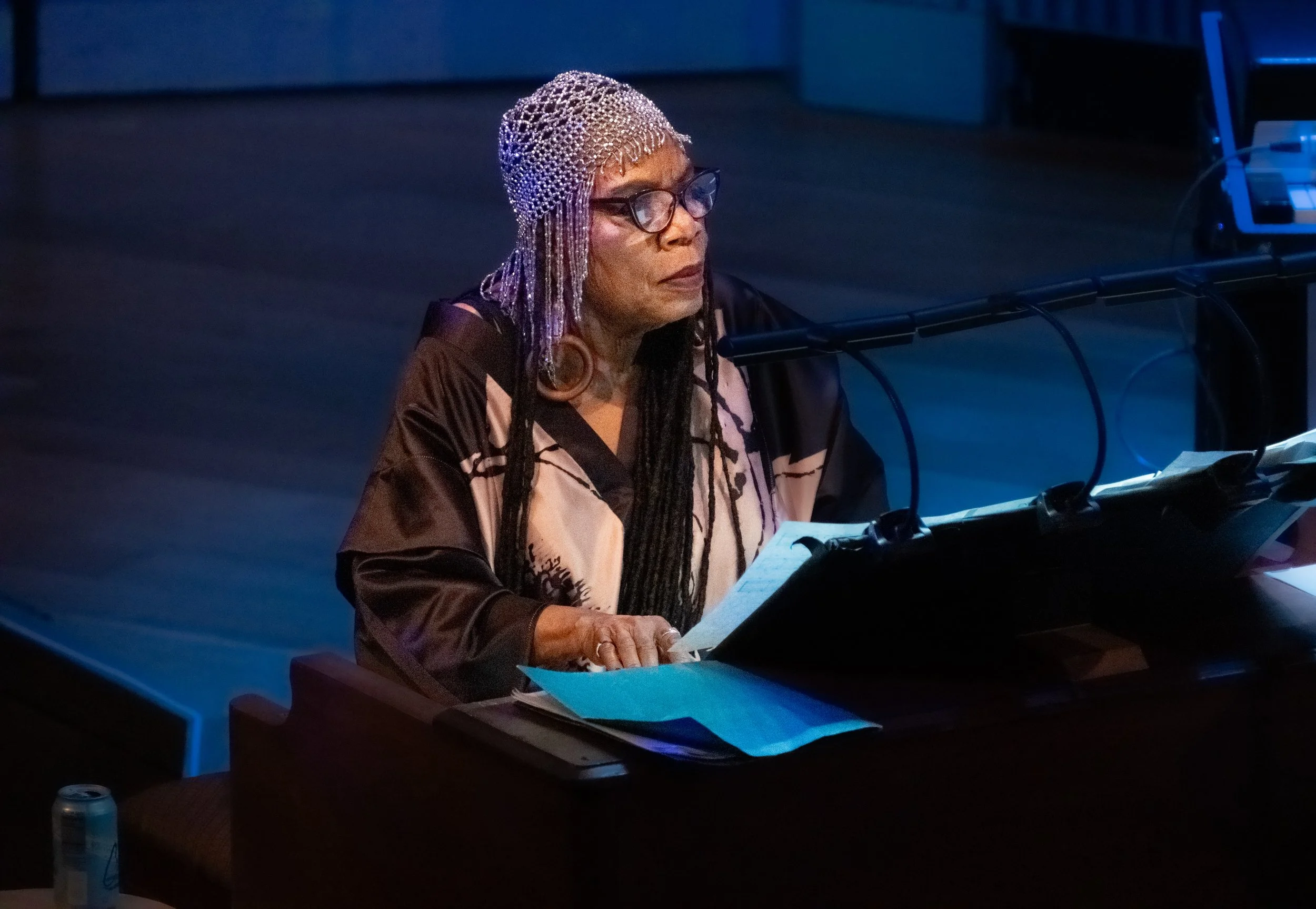
Amina Claudine Myers. Photo: Steve Roby
SFJAZZ board member Lewis Byrd opened the evening by placing the commission within the organization’s longstanding commitment to new work, and the performance responded to that theme with ambition. Amina Claudine Myers started alone on the Hammond B-3, creating a deep, resonant sound that filled Miner with a sense of importance and warmth. Her opening set the spiritual tone for the night even before the full ensemble gathered: Wilkins on saxophones and synth, Micah Thomas on piano, Ryoma Takenaga on bass, Savannah Harris on drums, Marvin Sewell on guitar, Holland Andrews on clarinet and voice effects, and Velez at the center of the spoken text.
Velez’s presence shaped the evening. She read in a steady, measured tone, with little inflection, and that restraint allowed the language to gather strength on its own. The pamphlet opened with the phrase “attention [as] the substance of prayer,” a line that set the evening’s tone with unusual precision. Prayer here meant focus, discipline, and ethical regard. From there, the text expanded into carceral facts and historical witness, then into declarations with prophetic power: “God and revolution are one and the same.” Velez delivered those turns without dramatizing them. Her composure let the words do their work.
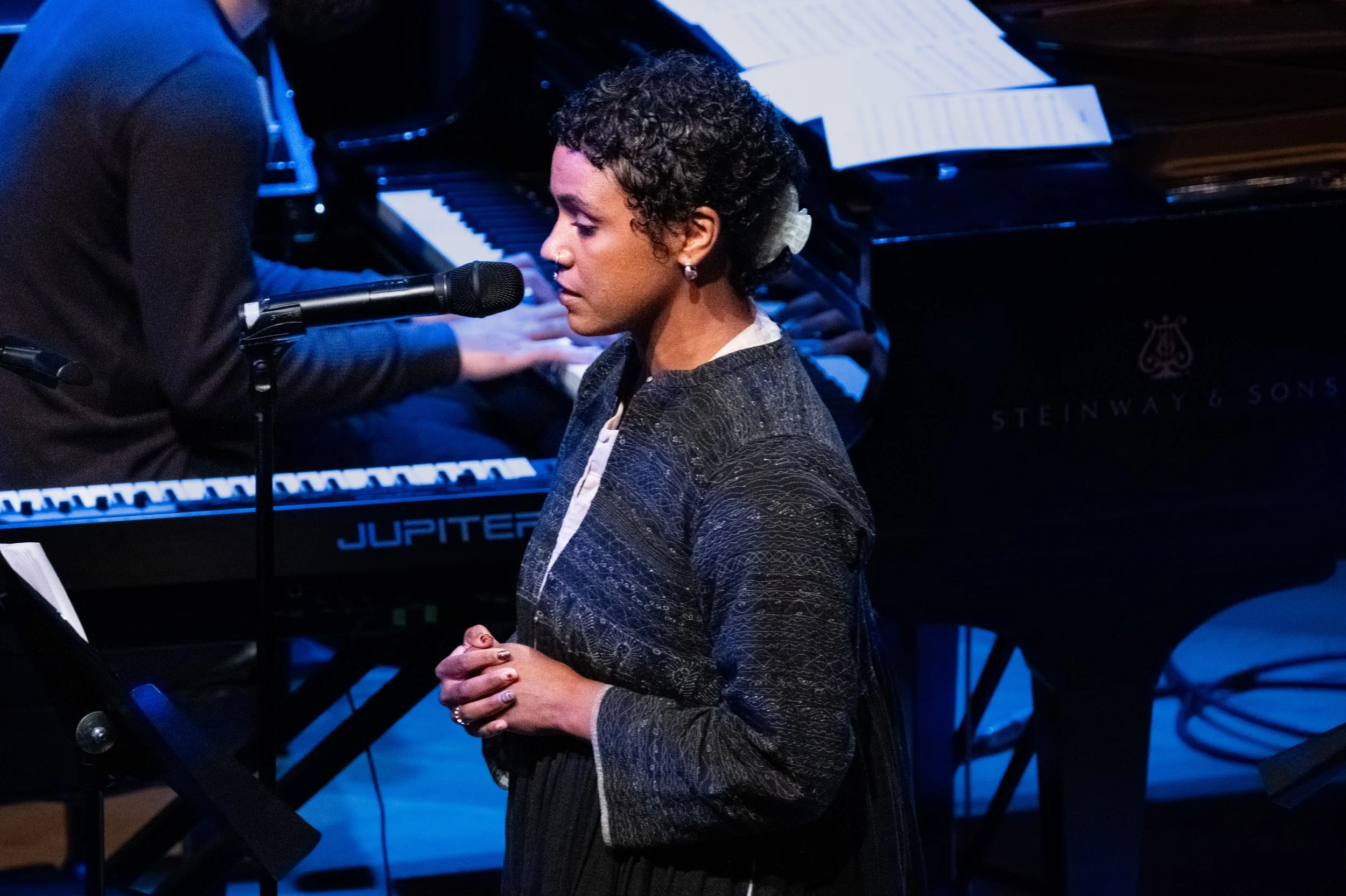
Brontë Velez. Photo: Steve Roby
The most powerful part of the spoken piece, and, in fact, the entire performance, focused on home. “I need to speak about living room,” Velez read, repeatedly returning to the idea of a space where Black women can thrive without fear, where Black families can gather, “without grief, without wailing aloud.” In those passages, the performance shifted from broad history to domestic needs, and the focus became clearer. Gentrification, loss of living space, and the removal of everyday refuge: these themes provided the project's deepest emotional thread. The auditorium briefly transformed into the kind of room the text longed for.
That aspiration became more vivid because the music supported the words with patience rather than competition. Wilkins spent much of the performance shaping texture instead of claiming the foreground. On tenor and soprano saxophones, and sometimes on synth, he acted like an architect of pressure and release, entering to color the air, withdrawing, then re-entering with a phrase that raised the ensemble’s emotional temperature. Thomas responded with chords that glowed rather than announced themselves. His voicings often expanded the harmonic space around Velez’s reading, making the spoken text feel suspended inside a larger resonance.
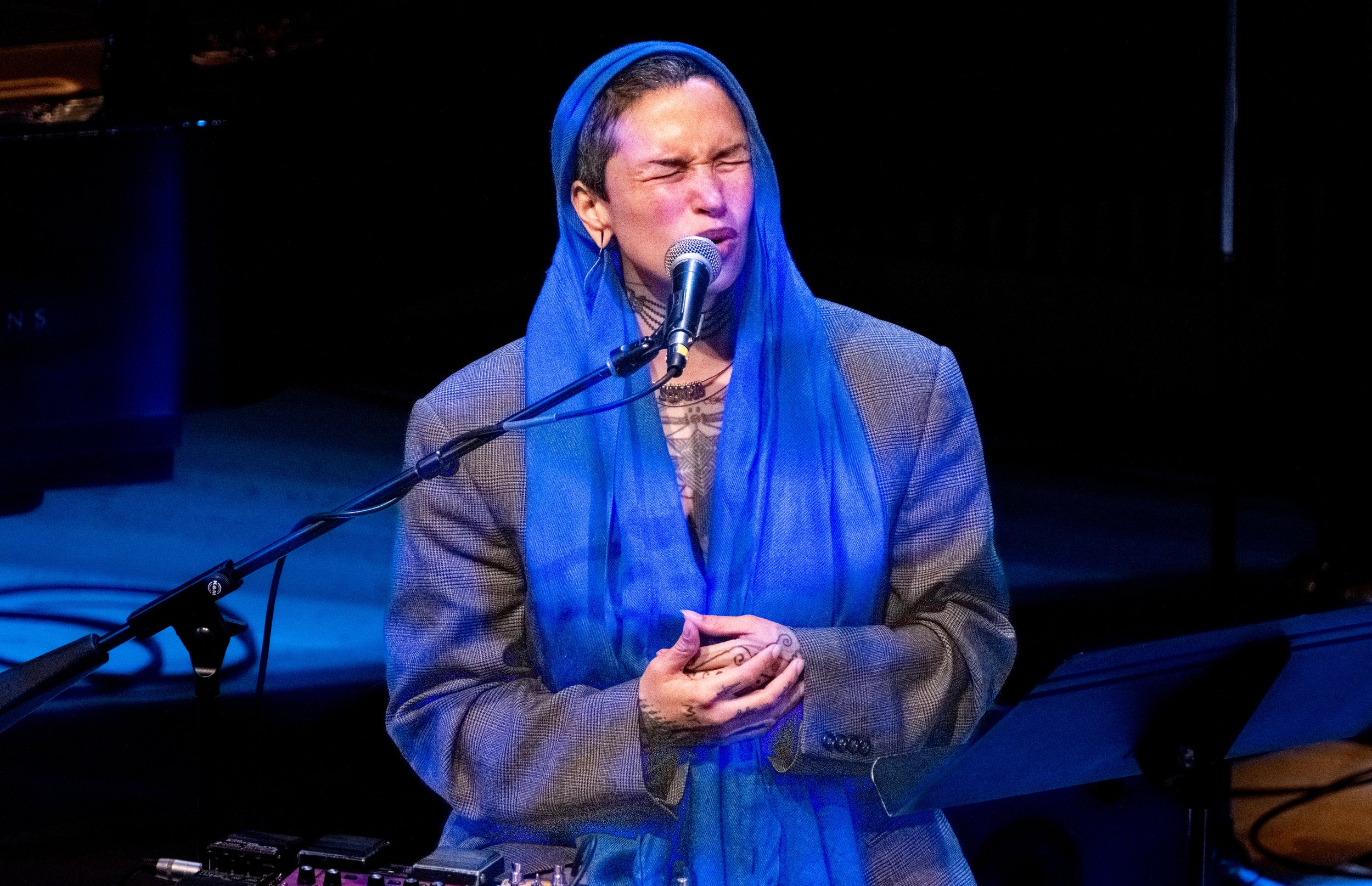
Holland Andrews. Photo: Steve Roby
Myers remained a commanding presence long after the start. Her organ provided the piece with a subtle undercurrent of ceremony, sometimes reminiscent of church music, other times earthier and more blues-influenced. Sewell’s guitar added wiry, curling lines that weaved through the ensemble like subtle commentary, then sharpened into pointed interjections. Andrews contributed some of the evening’s most unsettling colors, especially when the clarinet and her processed voice entered the texture, giving the piece a raw, unstable edge. Harris and Takenaga faced the challenging task of maintaining momentum without letting the work fall into a fixed groove. Harris used cymbal shimmer, tom resonance, and well-placed accents to keep the music alive; Takenaga’s bass anchored the ensemble while maintaining its openness.
The architecture of “Recitations” drew partly on chant and repetition, and that influence was most evident in the middle sections, where phrases seemed to circle and deepen rather than progress in a linear manner. The text transitioned into al masha, the idea of communal land held in shared use, and explored the difference between bargaining faith and enduring faith—the distinction the pamphlet described as “if” faith versus “though” faith. In those moments, the ensemble’s patience paid off. The music allowed the language to settle. Repetition became a way to focus.
A simple visual element could have further enhanced the spoken-word sections. The pamphlet presented the full argument, and attentive readers could follow its progression, but a sequence of section titles or brief thematic cues might have clarified the progression from prayer to revolt, from the living room to the land, from faith to refuge. Such a guide could have deepened the audience’s understanding while maintaining the work’s contemplative pace. The commission already called for active reading and listening. A visual framework would have strengthened the connection between page and stage.
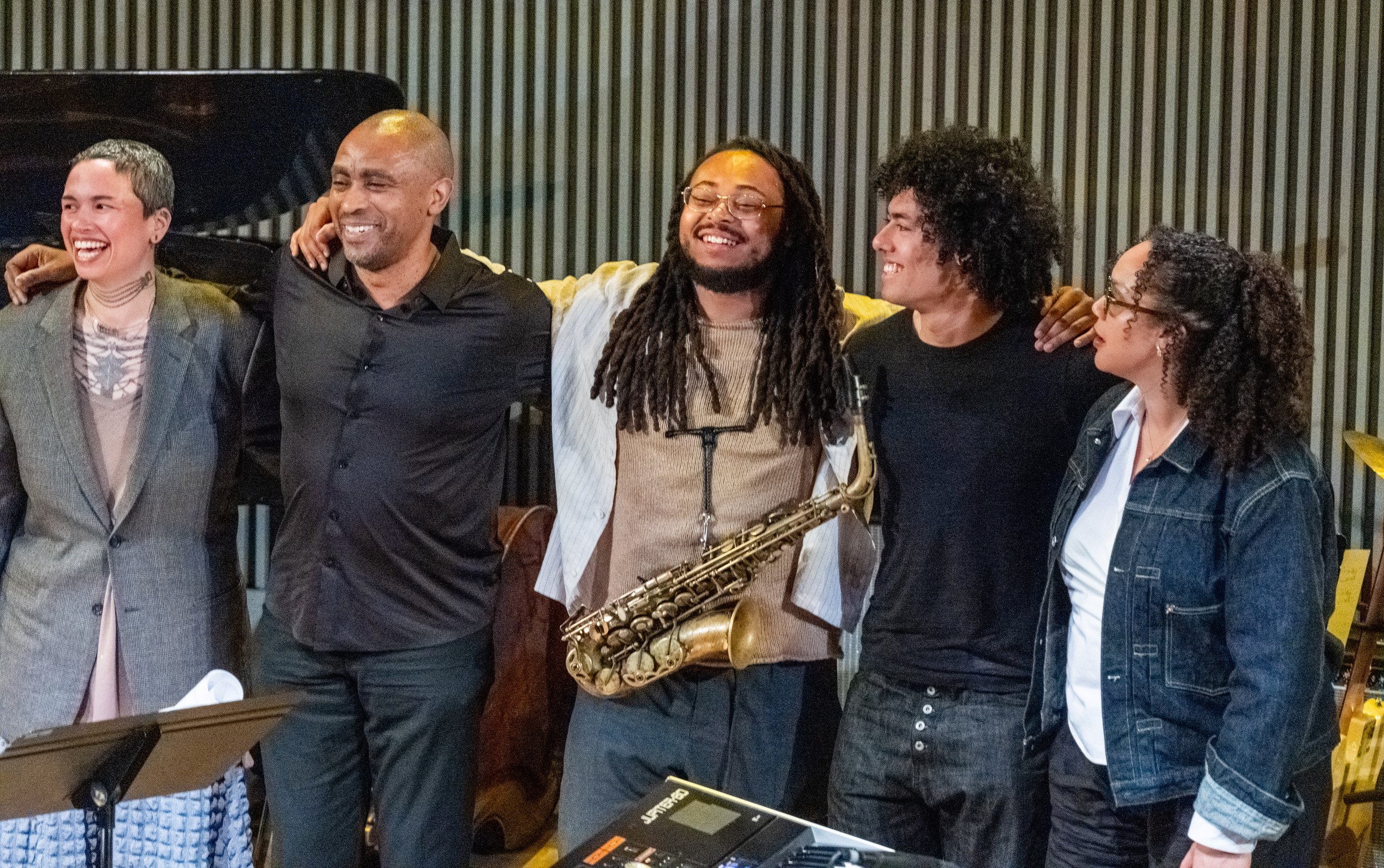
Holland Andrews, Marvin Sewell, Immanuel Wilkins, Ryoma Takenaga, and Savannah Harris. Photo: Steve Roby
Late in the performance, Wilkins gradually brought the piece into a more familiar concert dynamic, drawing on music from his albums Omega, The 7th Hand, and Blues Blood. That shift provided a welcome boost in energy. After so much focus on recitation, the emergence of a clearer instrumental storyline felt well-earned. “Solar” wrapped up the evening with a brighter, more recognizable momentum, and Sewell delivered a solo touched by Wes Montgomery’s lyric clarity, warm in tone and elegantly shaped. The release mattered because the performance had spent so much time asking for focus. By the end, the intensity of that focus could finally relax.
“Recitations” carried real weight as an opening-night statement. Wilkins used the SFJAZZ commission to create a piece about public attention, historical memory, spiritual seriousness, and the fragile need for shared refuge. He treated Miner Auditorium as a civic space, a reading room, a listening room. The performance demanded a lot from its audience and rewarded that effort with a meaningful focus. At its best, it made prayer feel like concentration, language feel like a score, and ensemble sound feel like a way of holding difficult truths in the air long enough for a room to meet them together.
Program Notes
Event: Immanuel Wilkins: Recitations
Date: Thursday, March 26, 2026
Showtime: 7:30 P.M.
Venue: Miner Auditorium, SFJAZZ Center
PERSONNEL
Immanuel Wilkins: saxophones, synth
Micah Thomas: piano, keyboards
Ryoma Takenaga: bass
Savannah Harris: drums
Special Guests
Amina Claudine Myers: vocals, organ
Marvin Sewell: guitar
Holland Andrews: voice/clarinet
Brontë Velez: voice
Setlist: "Enough For All Of Us," (The 7th Hand); "North Side," (Omega); "The Whole World," (Blues Blood); "Hiding Place," (The 7th Hand); "Almighty God," (Blues Blood); "Solar" (Omega)