José James: Exit The Dragon
At Miner Auditorium, José James wrapped up his 1978: Revenge of the Dragon tour with a performance that blended soul, fusion, disco, hip-hop, and jazz, turning Friday night into a lively, flirtatious, high-energy celebration.
Before José James sang a note at SFJAZZ last Friday, he screened a short film.
The 17-minute Revenge of the Dragon, a self-produced companion piece to his 13th studio album, played before the house lights fully dimmed. Styled after Shaw Brothers kung-fu cinema, the film featured swish pans, dubbed dialogue, and deliberate rough edges. The audience laughed at the right moments, but the mood shifted when James later explained what the project now meant to him. The 2025 fires in Altadena, California, destroyed his home and the hard drives containing the work related to the album. Screening it at Miner Auditorium carried a sense of loss. “It’s just kind of a bittersweet moment,” he said from the stage. “SFJAZZ was dope enough to let me do it.”
That emotional context gave the concert a sharper edge. 1978: Revenge of the Dragon already draws on memory, fantasy, and the pop-cultural debris of the late 1970s. On Friday, James brought that material into Miner Auditorium with style, humor, and a band that knew how to keep the room lively.
A Friday-night room
José James. Photo: Steve Roby
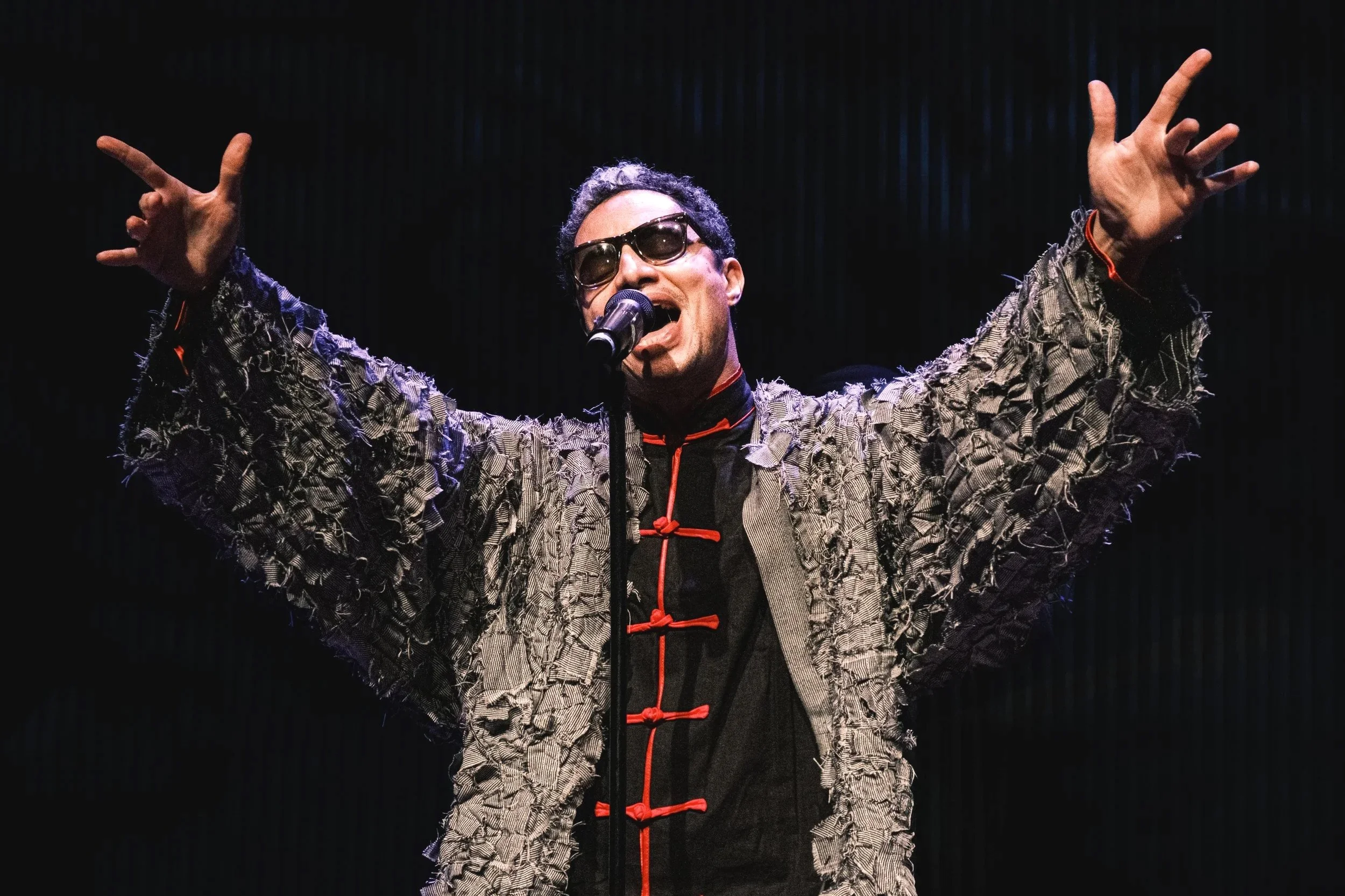
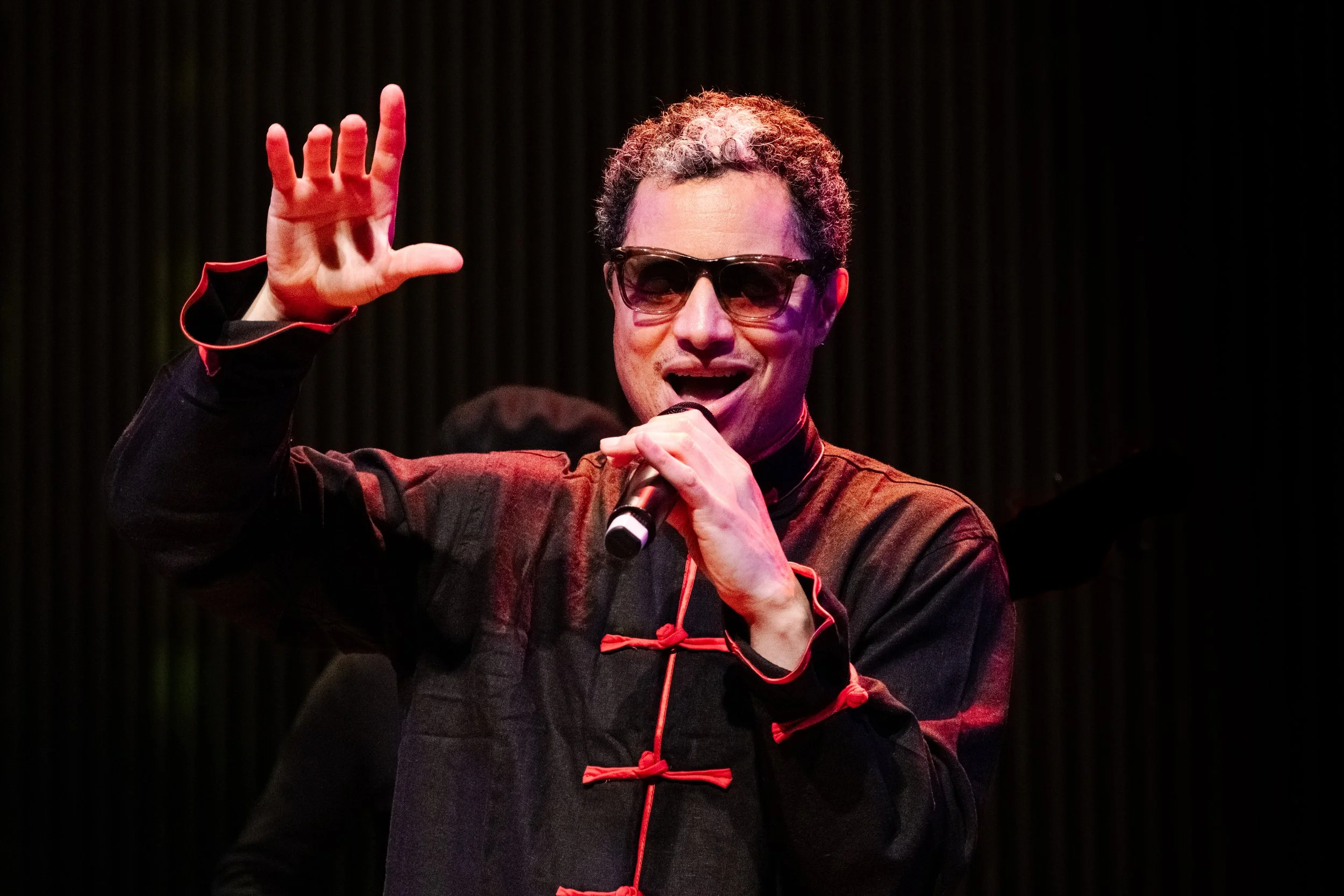
Dressed in a black kung-fu-style outfit with red piping, James opened with “Tokyo Daydream” and quickly set the tone for the night. This was not an evening focused on distance or reserve. The crowd skewed young and arrived ready to respond in real time. Women at the front of the stage shouted at James and his bandmates with the confidence of people who had come for a lively Friday night, not a polite seated recital. One well-dressed lady called out, “Can I give you my phone number?” The room laughed and cheered.
James has long held a unique position in contemporary jazz: a singer with a deep understanding of the tradition who also comprehends hip-hop, soul, and pop from the inside. His set showcased that breadth. The material moved effortlessly across genre boundaries, but James never treated it as a conceptual exercise. He approached the music as a social sound, crafted for bodies as much as for ears.
He also knew how to incorporate his references. Musical snippets of Freddie Hubbard’s “Red Clay” and Coltrane’s A Love Supreme passed through the set like signals to attentive listeners. The younger crowd around them responded just as strongly when Michael Jackson’s “Rock With You” made his entrance. That contrast fit the show perfectly. James has spent years creating music that trusts listeners to understand multiple histories at once.
The band gave the music its bite

Jharis Yokley. Photo: Steve Roby
A major part of the concert’s success came from the quartet supporting him: BIGYUKI on piano and keyboards, Brandon Rose on bass, and Jharis Yokley on drums. James spoke from the stage about his “1978” projects as a way of channeling the music and attitude of his birth year, from fusion and disco to reggae, early hip-hop, and electronic music. The band gave those references physical shape.
James’s take on Herbie Hancock’s “I Thought It Was You” marked one of the strongest moments of the main set. The song kept the sweetness and keyboard-focused vibe of the original, but James and the quartet pushed it into a more intense, louder space. Rose drove the groove with a thick, effects-heavy bass sound that nodded to Larry Graham. Yokley kept breaking up the time with a clap stack cymbal setup that let him snap at the beat without losing it. BIGYUKI, as he did all night, played with a mix of speed and harmonic creativity that made people pull out their phones and start recording.
He was a visual and musical force all evening. His solos could become explosive without sounding ornamental, and he seemed to push the group toward a more volatile kind of cohesion. James, for his part, never had to force his charisma. He understood when to croon, when to let the rhythm section carry the momentum, and when to step back and let the band generate its own heat.
Guests changed the shape of the set
Talia Billig and José James. Photo: Steve Roby
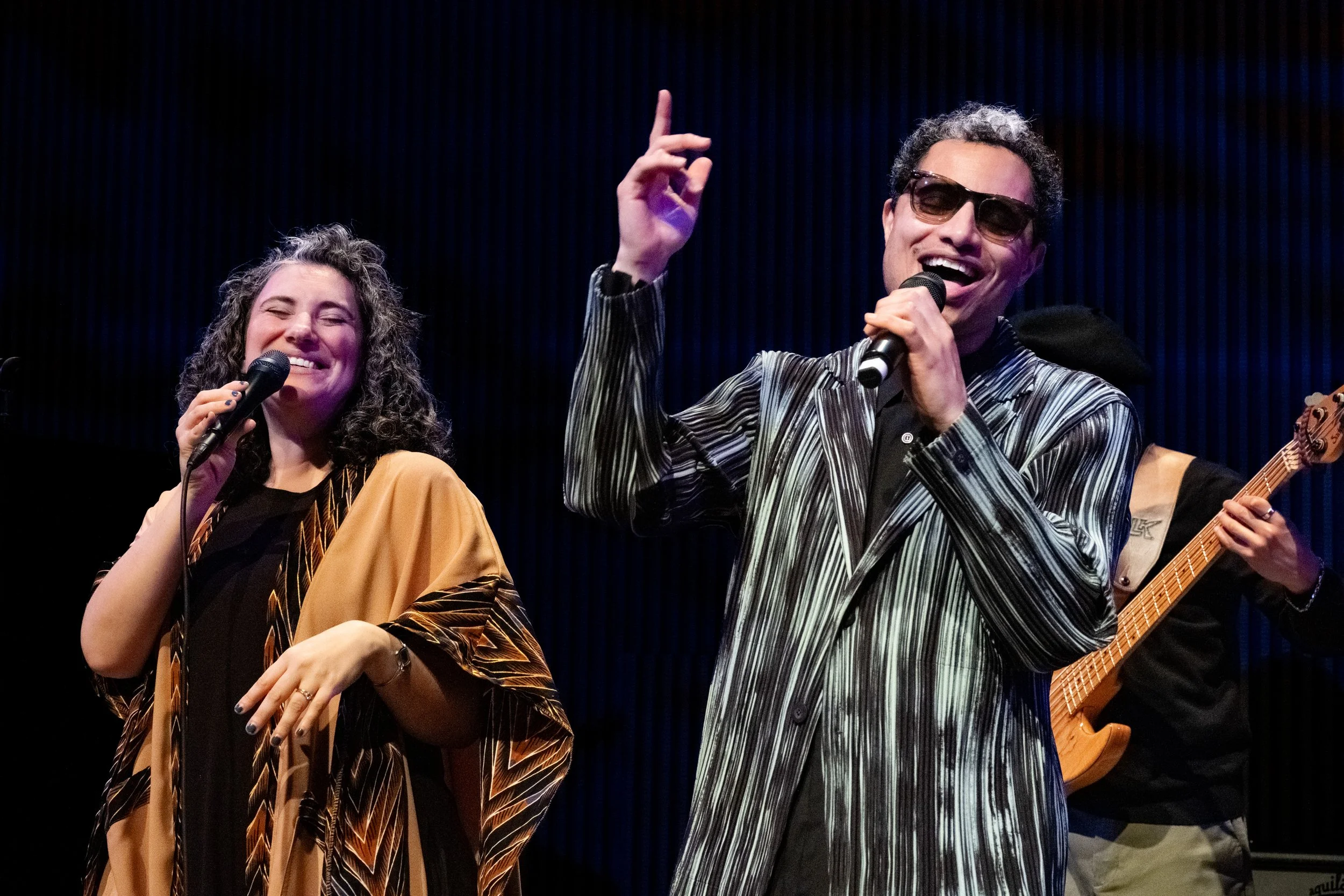
Midway through the show, James introduced Talia Billig for a duet segment that softened the atmosphere without reducing the energy. They sang the Bee Gees’ “Love You Inside and Out” and James’s “Come to My Door,” the latter from his Blue Note debut. Billig, a Grammy-nominated singer, songwriter, and producer, is also James’s wife and creative partner. Together, they co-founded Rainbow Blonde Records. Their stage chemistry was evident, and the shift in texture gave the set a welcome new dynamic.
The concert reached a second peak when alto saxophonist Ebban Dorsey joined the band for “Trouble.” Dorsey, still early in her career but already well known for her work with the Herbie Hancock Institute’s National Peer-to-Peer Quintet and Carnegie Hall’s NYO Jazz, brought a sense of urgency to the stage. Her extended solo overwhelmed the audience. At one point, a woman near the front dropped to her knees, bowed toward the stage, and shouted “WHAT?!” in amazement. It was the kind of raw crowd response that can seem exaggerated but was entirely genuine to the night.
Dorsey’s presence also emphasized the concert’s jazz focus. James’s set relied heavily on groove music and crossover tunes, but improvisation remained key to its structure. Dorsey made that clear.
A strong finish
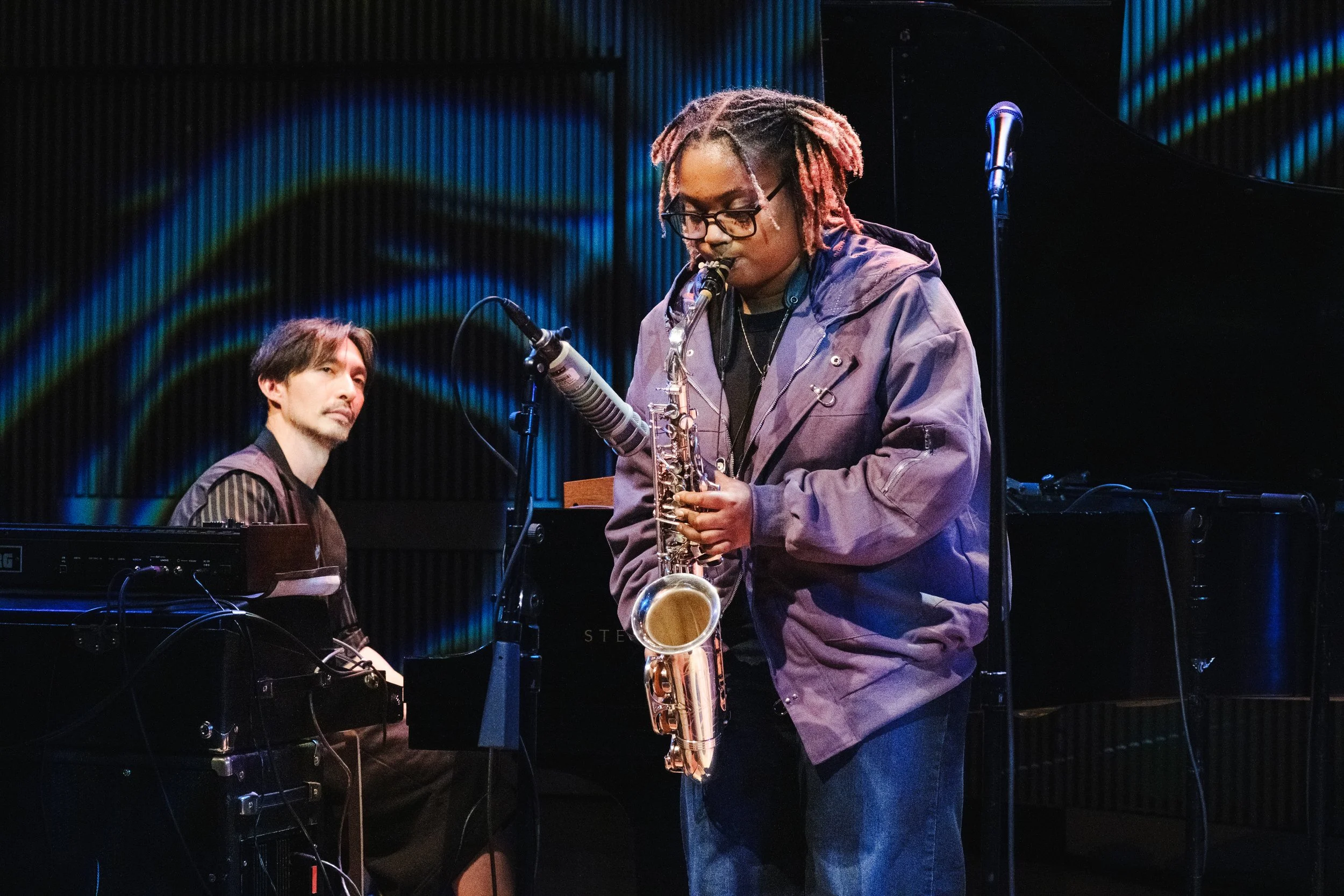
BIGYUKI and Ebban Dorsey. Photo: Steve Roby
For the closing number of the main set, James extended “Park Bench People” into a ten-minute freestyle that incorporated Freddie Hubbard’s “Red Clay” and hinted at Gil Scott-Heron’s “The Bottle.” Dorsey’s solo briefly drifted toward A Love Supreme before returning to the tune’s main thread. The performance brought together much of the evening’s language: jazz memory, groove pressure, vocal personality, and a willingness to let the material go beyond its studio frame.
The audience demanded more and received it. James and the quartet came back quickly for an encore of Bill Withers’s “Lovely Day,” a choice that left the crowd feeling warm and satisfied.
After the show, fans queued in the lobby for limited-edition vinyl and movie posters. That scene made perfect sense. James had given them more than just a concert; he transformed Miner Auditorium into a space of imagination, seduction, and musical artistry, all driven by personal loss and public performance. The film at the beginning of the evening looked back at what had been broken and nearly erased. The concert responded with something more lasting: presence, creativity, and a space ready to embrace it.
Program Notes
Event: 1978: Revenge Of The Dragon
Artist: José James Quartet
Date: Friday, March 27, 2026
Showtime: 7:30 p.m.
Venue: Miner Auditorium, SFJAZZ Center
Personnel
José James: vocals, guitar
Talia Billig: guest vocals
Ebban Dorsey: alto saxophone
BIGYUKI: piano, keyboard
Brandon Rose: bass
Jharis Yokley: drums
Setlist: “Tokyo Daydream,” Rock With You,” “They Sleep, We Grind (For Badu),” “I Thought It Was You,” “Love You Inside And Out,” “Trouble,” Medley: “Park Bench People/The Bottle/Red Clay/A Love Supreme”
Encore: “Lovely Day”