Arturo Sandoval at SFJAZZ: Bebop Lessons, Cuban Fire, and the Joy of Staying Alive
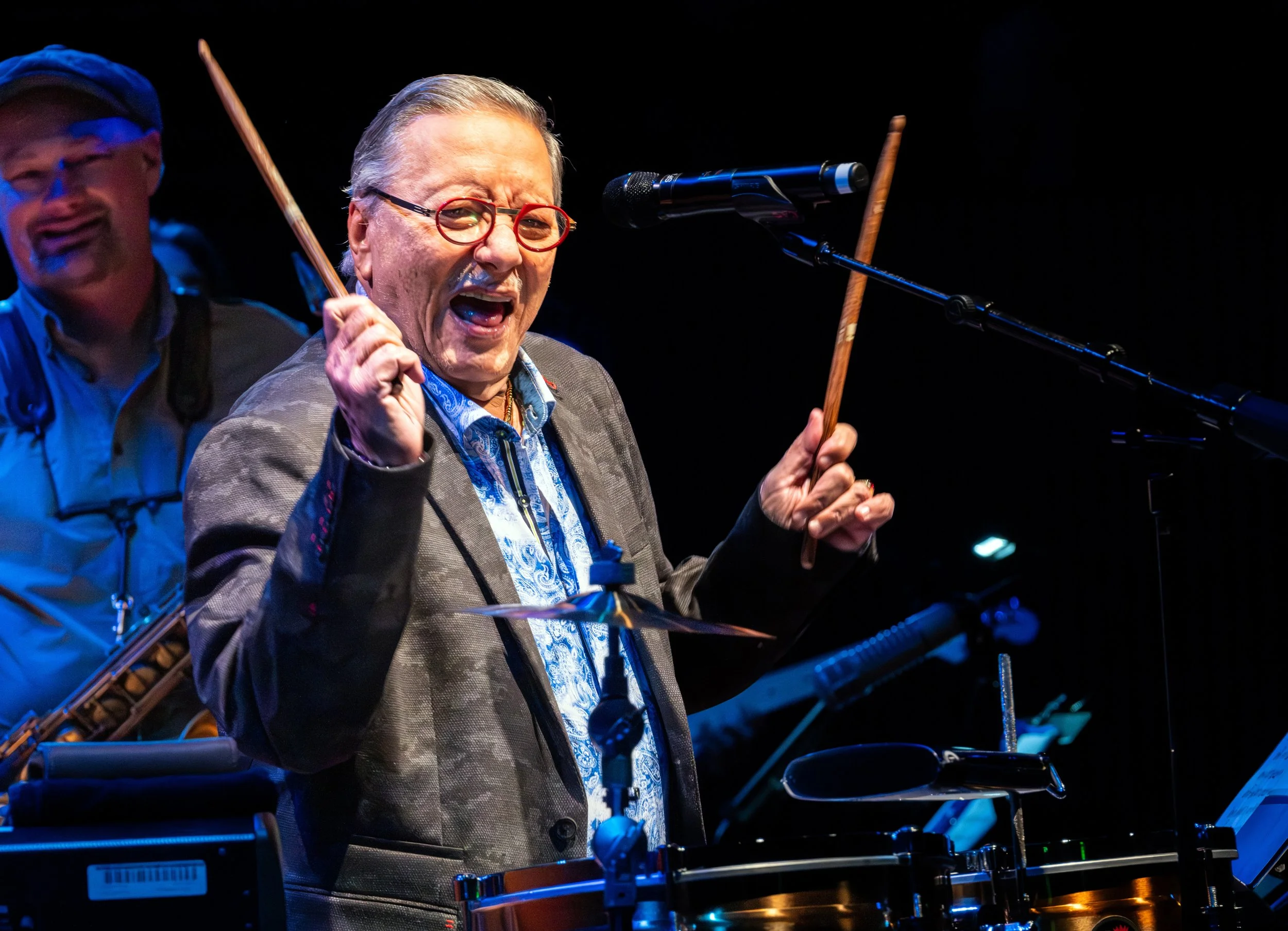
At 76, Arturo Sandoval still walks onstage with the authority of someone who knows exactly what he offers—and how to deliver it. Thursday night at SFJAZZ’s Miner Auditorium, his Swinging Holiday program unfolded as something more enduring than a festive detour. It was a living survey of bebop lineage, Afro-Cuban rhythms, and the hard-earned wisdom of a musician who has outlasted eras without dulling his edge.
Sandoval opened with an instrumental featuring eight members of his nonet, and the band immediately established the evening’s twin pillars: rhythmic propulsion and flexibility. The horns snapped into tight unison, then broke into swinging phrases, while the rhythm section—congas and drums locked but buoyant—kept the groove supple enough to accommodate sudden turns. The sound was unmistakably Sandoval’s: bebop phrasing riding a Cuban current.
Moments after the opener, a voice from the audience cut through the applause—“I love your shoes!” Sandoval looked down at his black sequined shoes and laughed, launching into an extended, self-effacing riff on his late-life obsession with sneakers. What began as a throwaway joke deepened unexpectedly. He spoke of growing up in Cuba with a single pair of shoes, patched with cardboard, and of how turning 70 seemed to flip a switch. “Now it’s like a virus,” he said. “My wife tells me, ‘Man, please—no more tennis shoes!’” The crowd roared, but beneath the humor lay a familiar Sandoval theme: scarcity transformed into abundance, survival into joy.
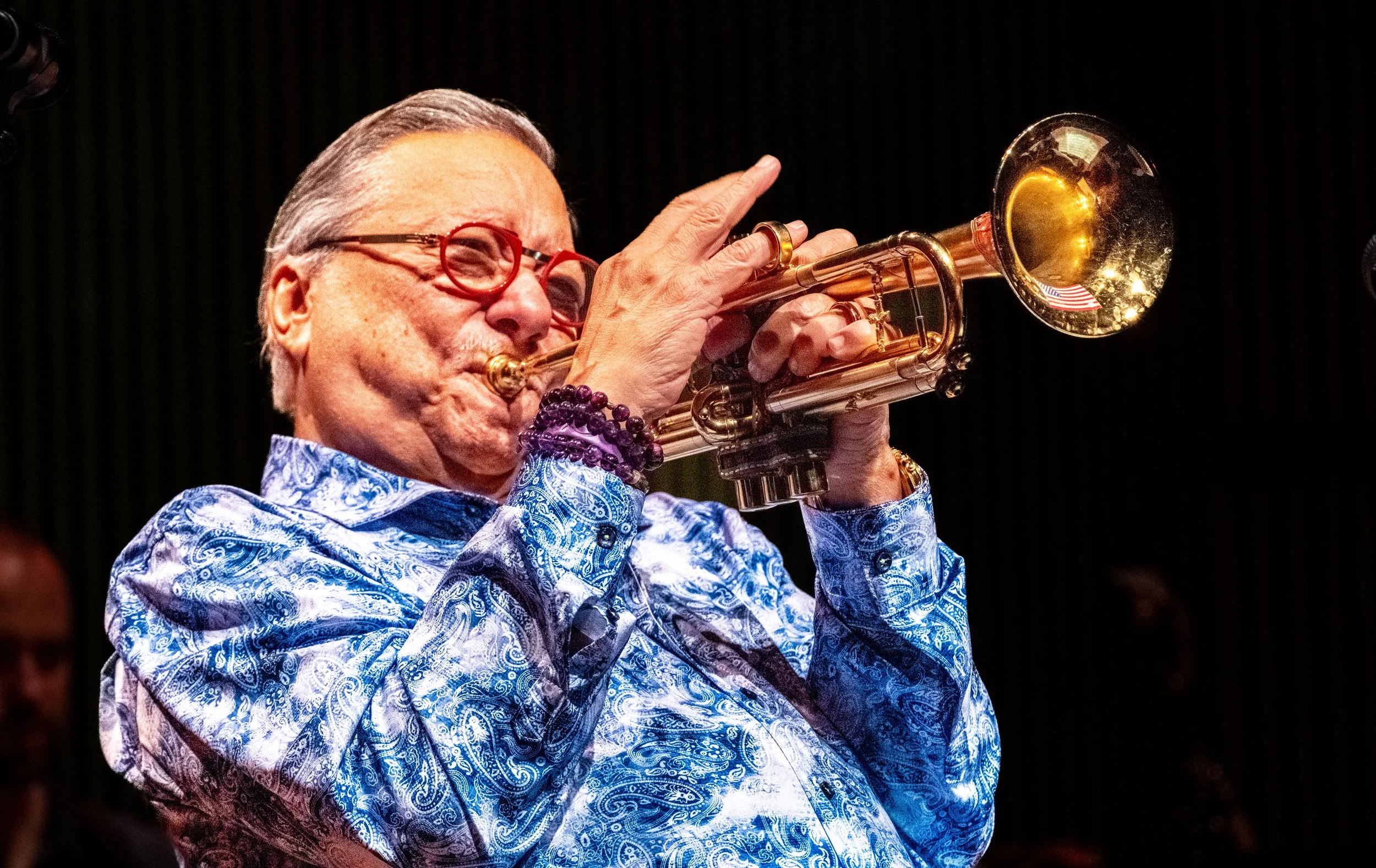
Arturo Sandoval. Photo Steve Roby
That blend of warmth and authority defined the night. Sandoval moved restlessly among his tools—two trumpets (one red), piano, KORG synthesizer, and timbales—never treating multi-instrumentalism as a novelty. Each switch shifted the band’s center of gravity. At the piano, he leaned into harmonic color and momentum; on timbales, he pushed the groove forward with sharp accents; on trumpet, he reminded everyone why Dizzy Gillespie had taken such interest in him decades earlier.
Those high notes—the dizzying, clarion peaks—remain intact. Sandoval still hits them cleanly and confidently, often with a grin. Yet the most compelling sections of the set emphasized how and why rather than sheer display. Midway through the evening, Sandoval paused to discuss bebop. He recounted how a journalist once asked Dizzy Gillespie, Charlie Parker, and Clark Terry what this new music was called. Dizzy’s flippant answer—“bebop”—stuck, and a movement was named.
From there, Sandoval launched into what he called “Scat Vocal,” an extended, freewheeling vocal improvisation that blurred language into rhythm and gesture. At times, the sounds felt like a blend of Lord Buckley’s surreal monologues and Professor Irwin Corey’s comic lectures, with bass and drums responding as if to a horn solo. The audience clapped along as the melody emerged, fractured, and reassembled.
Sandoval seized the moment to underscore Clark Terry’s famous dictum—“imitate, emulate, create”—breaking it down with the clarity of a master teacher. Jazz, he reminded the crowd, begins with admiration, moves through risk, and ends—if you’re lucky—in originality. The band illustrated the point in real time, quoting bebop figures and twisting them into fresh shapes.
New music also found its way into the set. Sandoval introduced Sangú, an album slated for release in 2026 and produced by his son and daughter-in-law. The backstory drew laughs—“I’ve been feeding you for 50 years,” he joked when they first suggested producing him—but the results sounded anything but obligatory. The material suggested a musician still curious about how his voice fits into new frames and still open to being pushed.
The emotional center of the night arrived quietly. Sandoval spoke of the constant stream of bad news and imagined launching his own station, the “Good News Channel.” Then he asked the sound technician to EQ his microphone “like Nat King Cole,” grabbed a wireless mic, and walked into the audience. Introducing Charlie Chaplin’s 1936 melody “Smile,” he quoted Chaplin’s line: “A day without smiling is a lost day.” Sandoval sang as he moved through the crowd, his voice warm and unforced. The hall softened.
The final stretch returned the room to motion. Introducing a piece based on timba, Sandoval explained the rhythm in plain terms. “Go left, right, left, right,” he instructed. “Shake your booty a little bit.” The Miner Auditorium complied. Timba’s layered, driving groove—born in 1990s Cuba and fueled by Afro-Cuban tradition, funk, and jazz—lifted people from their seats and turned the hall into a dance floor.
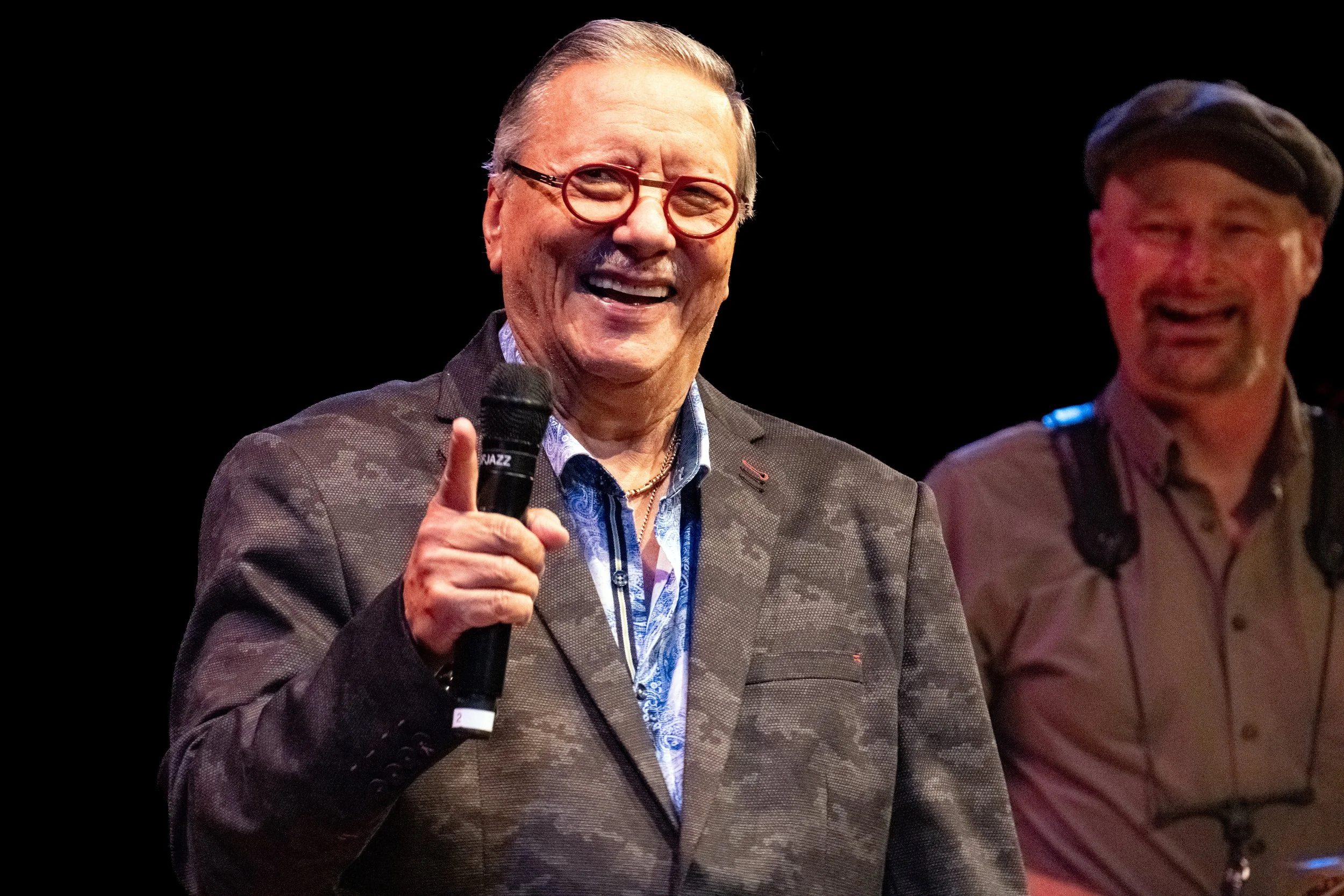
Talk of retirement surfaced only briefly. “It’s not in my hands,” Sandoval said. “It’s in God’s hands.” He followed that line by raising his trumpet and soaring into the upper register again, drawing cheers that felt earned rather than nostalgic.
For longtime jazz listeners, the night offered lineage, pedagogy, and virtuosity. For casual fans, it provided humor, warmth, and irresistible rhythm. Sandoval understands that accessibility and depth are partners. His Swinging Holiday concert proved that celebration can carry history, that laughter can coexist with rigor, and that joy, when shared so fully, becomes enduring.
At 76, Arturo Sandoval remains a teacher, a provocateur, and a bandleader who knows how to make a room feel alive. He can lecture, testify, and lead a dance floor—sometimes all in one tune.
Program Notes
Event: Arturo Sandoval’s Swinging Holiday
Date: Thursday, December 18, 2025
Showtime: 7:30 p.m.
Location: San Francisco, California
Venue: Miner Auditorium
Personnel: Arturo Sandoval (trumpet, vocals, piano, timbales, synth), William Brahm (guitar), Lisandro Pidre (piano/keyboards), Max Gerl (bass), Daniel Feldman (drums), Samuel Torres (percussion), Michael Tucker (tenor sax), Larry Bustamante (baritone sax), Keith Fiala (trumpet).
Setlist: "Caprichosos De La Habana," “Scat,” “The Christmas Song (Chestnuts Roasting on an Open Fire),” “Have Yourself a Merry Little Christmas,” “ Smile,” “O Holy Night/March of the Tin Soldiers,” “Timba De La Buena”
Read our 2014 review of Arturo Sandoval at Yoshi’s in Oakland.