

Branford Marsalis Quartet: Craft, Groove, and Controlled Intensity
The Branford Marsalis Quartet returned to SFJAZZ and set the room on fire with their first notes. In a sold-out Miner Auditorium, the music favored chamber-level precision, dynamic nuance, and seasoned control. Lines were shaped as complete statements, with the focus on ensemble balance and detail.

The Cookers Carry Hard-Bop Forward At Miner Auditorium
Some bands chase heat; The Cookers shape it—transforming velocity into design and treating their repertoire as a living lab for risk. On this night at Miner Auditorium, the seven-piece didn’t rely on memory. They played in the present tense, with charts that encourage lift, turn, and smooth landings, the way only a seasoned band with deep trust can deliver. The premise was simple and powerful: craft a set that breathes, then push until the edges feel new again.

Christian McBride & Brad Mehldau: The Sound of Shared Memory
Listening became the real instrument onstage, a single invisible string stretched between Christian McBride and Brad Mehldau and humming all night. At the Presidio Theatre, they approached repertoire as conversation and memory as form, leafing through familiar tunes like a well-loved book, reading passages aloud, underlining new meanings, and showing how a lifetime of music speaks through them.

Becca Stevens: Stories That Carry the Journey
What happens when a songwriter transforms an intimate space into a map and invites us to follow her route? That was the guiding question of Becca Stevens’ early set at the Joe Henderson Lab, where voice and guitar became coordinates, and each song represented a mile of lived experience. The premise was straightforward: Maple to Paper, her 2024 voice-and-guitar cycle, performed without a safety net. What made the night engaging was how precision and honesty went hand in hand—open tunings that revealed unexpected colors, lyrics that conveyed grief and determination equally, and stage talk that clarified her process without smoothing out emotion.

Funk as a Commons: Dumpstaphunk’s Collective Groove
What if the beat were a social contract? That question lingered over a sold-out Saturday at Miner Auditorium, where Dumpstaphunk approached funk not as escapism but as a shared practice—an agreement to move, listen, and shape tension and release as a community. This thesis emerged in the music, in the crowd, and in the way bandleader Ivan Neville framed the evening: a collective body choosing the groove.

Two Chairs, One Language: The Loving Art of Tuck & Patti
…Throughout the evening, the main theme was resilience that avoids spectacle. We learned—briefly and without melodrama—why Patti moved slowly: a concussion from a fall in Milan, lingering vertigo, and a cold. Then came the moment that always seems to happen at a Tuck & Patti show: the confession turns into craft. The story leads to a song as she weaves a witty, bluesy aside about ditching the high heels and holding onto faith. The crowd recognized the magic that has defined this partnership since the late ’70s: personal details turned into shared emotion.

Kurt Elling & Christian Sands: A Creative Force, In Concert and In Conversation
A spare duo becomes an engine—voice and piano reworking Monk, Ellington, theater, and rock into a present-tense argument for hope, empathy, and the living tradition of jazz.

Work, Glitter, Voltage: Idris Ackamoor & The Pyramids Seize Miner Auditorium
The room hinted at it before the first note: Miner’s seats pulled back for a dance floor, a crowd already swaying, costumes and masks and a rubber chicken on a security guard like a dare—move or be moved. Women claimed the open space and owned it; men leaned on the rail and observed. Pre-Halloween was billed as “Night of the Exotictress,” but it was really a work shift—sweat, glitter, muscle, repetition, release.
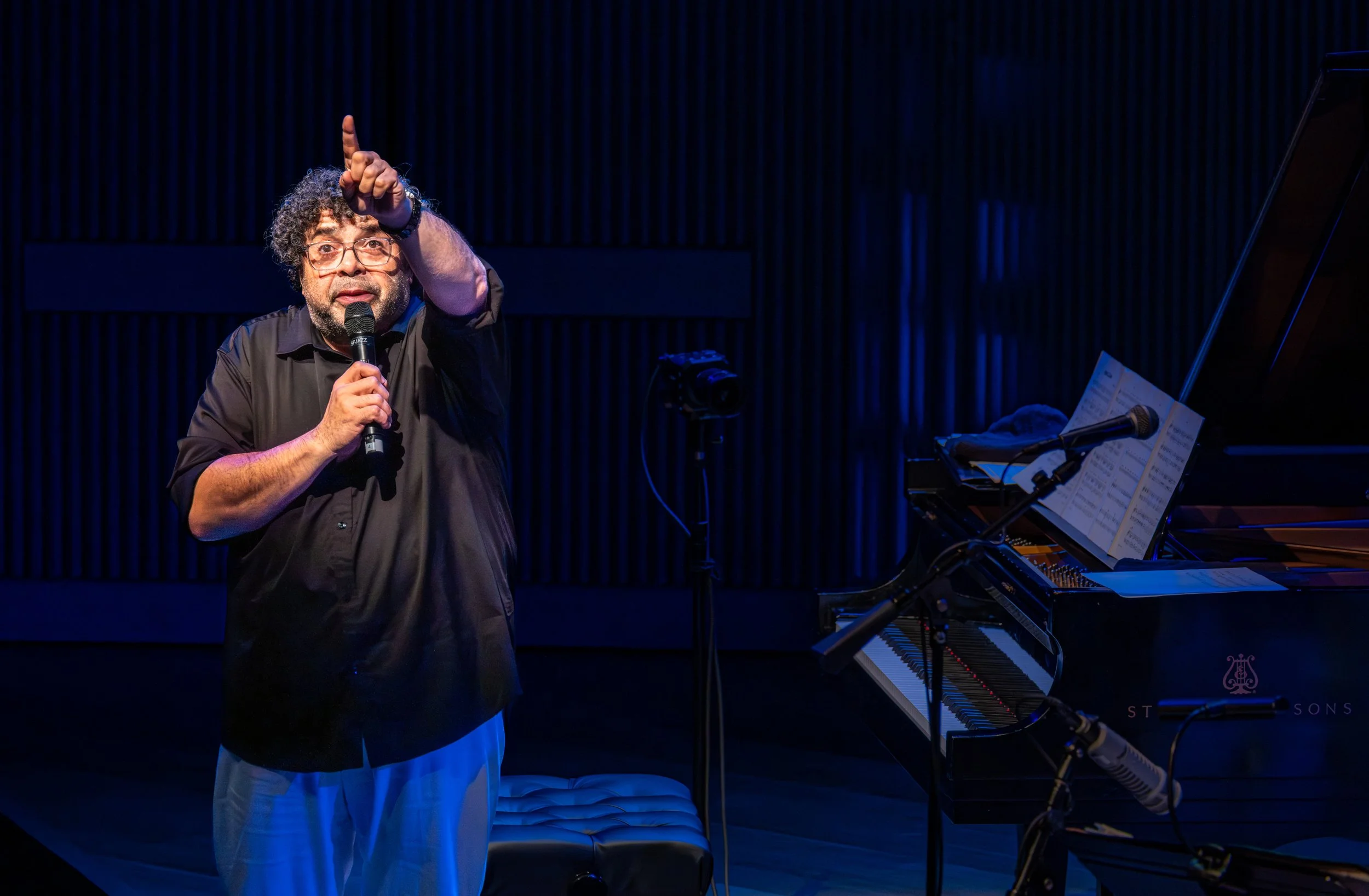
O’Farrill’s Afro Latin Jazz Ensemble in Full Conversation at SFJAZZ
At SFJAZZ’s Miner Auditorium, the pianist-bandleader fused Cuban memory, Afro-Peruvian pulse, and border-born fandango into music that championed community as rhythm—and rhythm as community.


Chopin in Havana, Mozart in New Orleans: Paquito D’Rivera’s Living Canon at Miner Auditorium
On Friday night at SFJAZZ’s Miner Auditorium, Paquito D’Rivera walked out smiling, a clarinet at his side and seven decades of stage experience in his pocket. The Cuban-born NEA Jazz Master has long argued that the corridor between the conservatory and the clave is not a border but a passage of constant traffic. With his long-running quintet—Alex Brown (piano), Oscar Stagnaro (six-string electric bass), Mark Walker (drums), and Diego Urcola (flugelhorn and trumpet)—he made that point seem inevitable, even obvious, for a packed house in San Francisco.
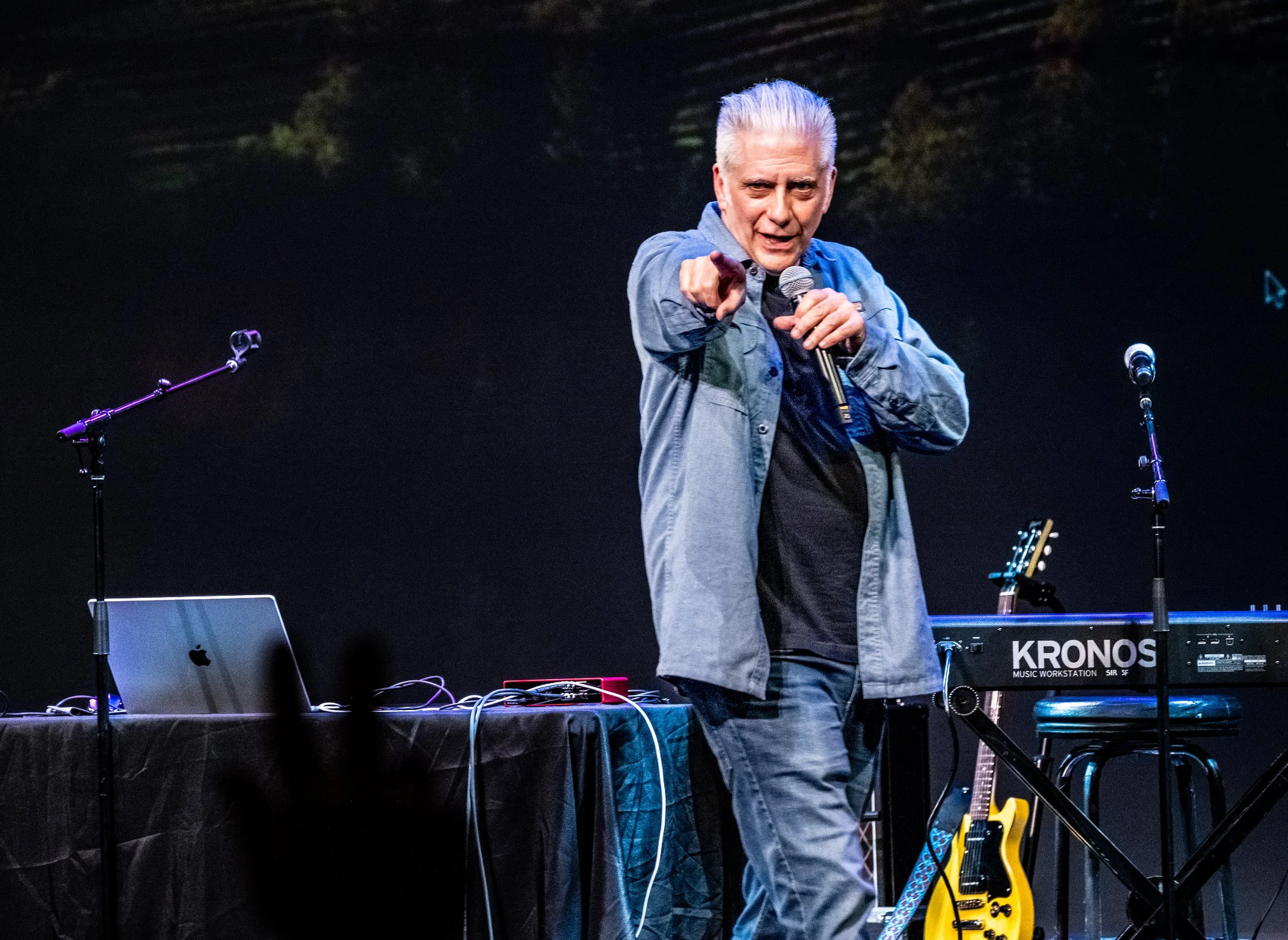
From Views to Value: Rick Beato Turns Music Knowledge into a Business
YouTube sensation Rick Beato’s Bay Area debut played less like a lecture and more like a working demo of the creator economy: storytelling, live analysis, and community Q&A packaged as a premium product. He demonstrated how clear teaching, a steady cadence, and audience trust can transform massive online attention into a sustainable, human-scale business.
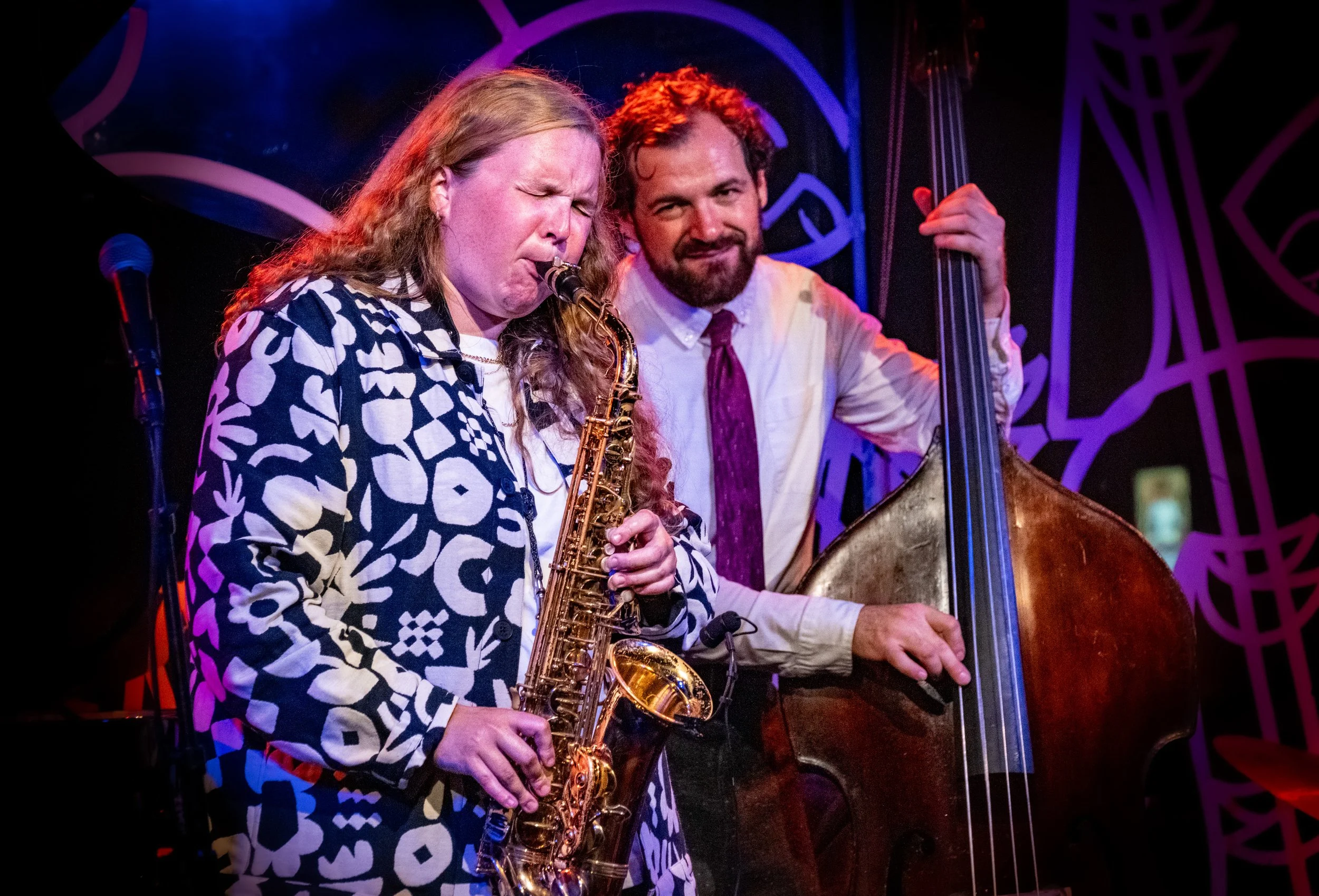
Sarah Hanahan Brings the Heat to SFJAZZ
Sold-out first set at the Joe Henderson Lab—Sarah Hanahan’s SFJAZZ debut. Outside, faces pressed close to the glass, the Lab alive with that tight-room voltage you can taste. She walks out in a black-and-white patterned jacket, grinning like someone who came to work and loves the work. Alto at the ready. Quartet locked in: Kyle Poole on drums, Matt Dwonszyk on bass, Miles Lennox on piano. The applause feels like permission—go, do it, take it further.
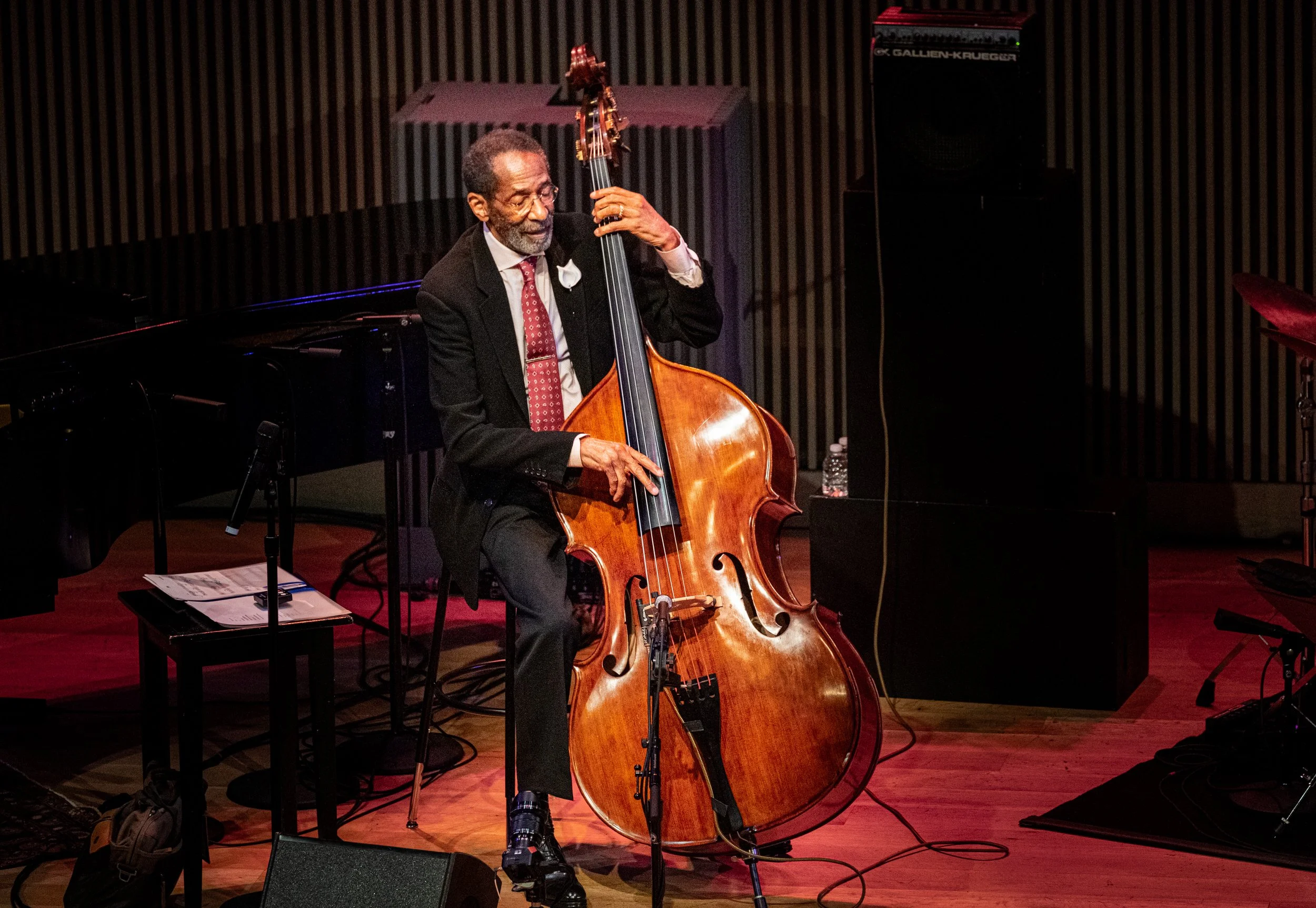
Ron Carter’s Quiet Authority: Foursight Finds Soul in “Strange Times” at SFJAZZ
The Foursight Quartet—Renee Rosnes on piano, Jimmy Greene on tenor saxophone, and Payton Crossley on drums—was making a rare appearance in San Francisco at Miner Auditorium. Carter, now 88, carries a résumé that runs from Miles Davis’ second great quintet to more than 2,300 recording credits and a Guinness World Records citation as the most-recorded jazz bassist. But the point of the night wasn’t numbers; it was how he uses that history to shape a room’s expectations and turn four musicians into one mind.

Cindy Blackman Santana Band Lights Up Miner Auditorium
Cindy Blackman Santana does not treat the drum kit as furniture. She treats it as a vow. The second of two sold-out nights at Miner Auditorium began with a brief welcome—“‘Blue Whale,’” she said, and nothing more—and then four musicians oriented themselves toward the center, eyes on the drummer, as if to say the pulse will be our guide and the guide had a name. In an era when stage patter often substitutes for purpose, Blackman Santana let intent speak in rhythm.
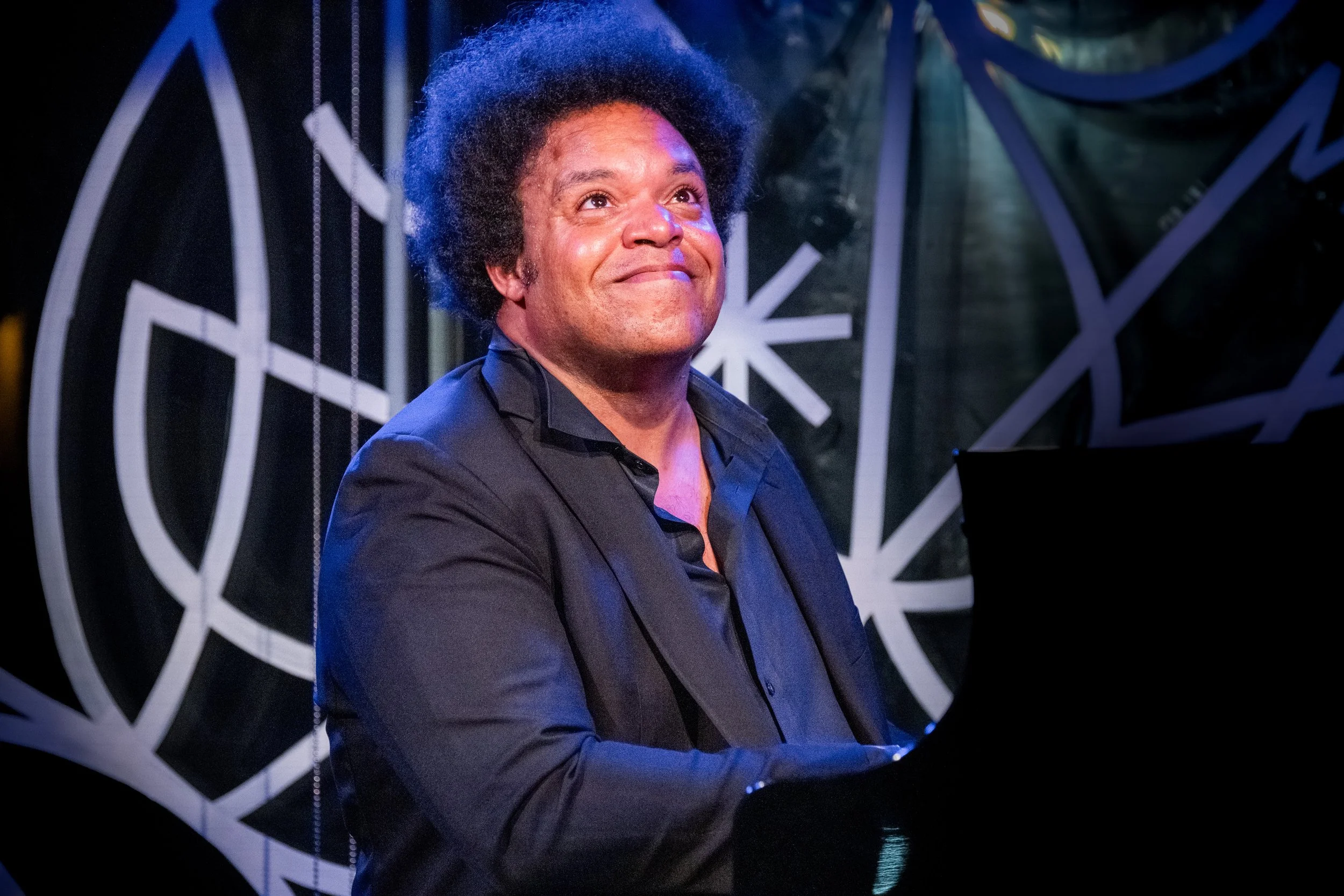
Through the Wormhole: ELEW Gives Sting New Gravity
The evening clicked into focus the instant ELEW raised his hands above the keyboard and did nothing. Not a feint; a recalibration. The room quieted to his breathing, and when the first left‑hand pattern of “Message in a Bottle” finally arrived, it sounded more like scaffolding than melody—a bass figure laid down as a flexible floor, rubberized and springy, for the right hand to test in careful steps. He teased cross‑rhythms until the groove wobbled like a pier hit by crosscurrents, then snapped it back into alignment so cleanly that the correction read as part of the design. Showmanship rode on the surface—the grin, the head toss—but underneath was a drafter’s precision: trills used like scratches, pedaled resonance as a cross‑fade. He wasn’t mimicking the record; he was reverse‑engineering it into a machine for tension and release.
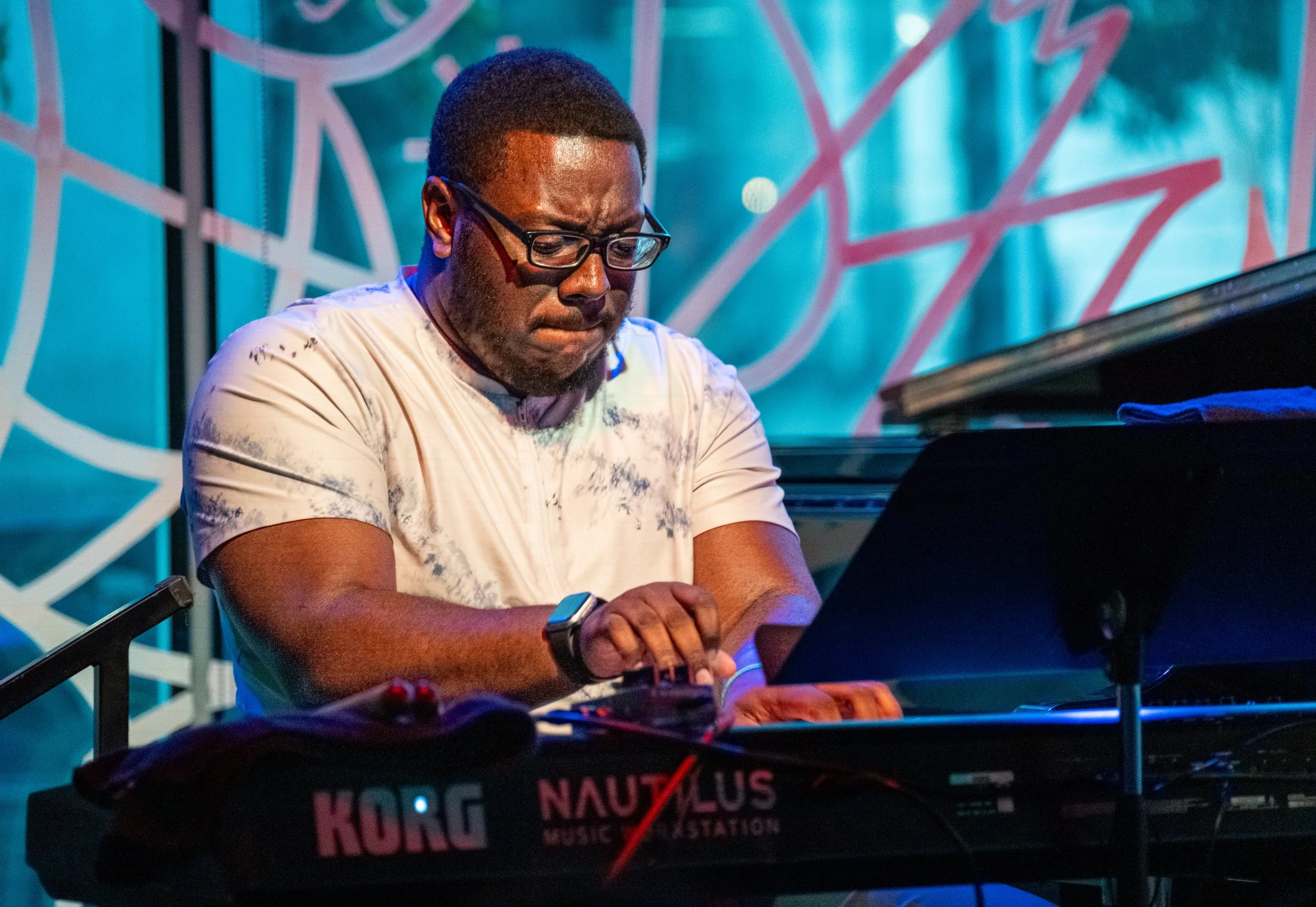
LABRATS Rewire Mwandishi at the Joe Henderson Lab
This show hit like a voltage spike to the sternum—disciplined chaos, loud purpose, no hedging.
The room was already on edge before a note. Three fans who’d driven down from Sacramento staked the front row and swore they’d “never seen anything like the drummer.” A DJ in the lobby leaned into lo-fi jazz as ticket holders lined up; late rush-hour traffic crawled outside; passersby pressed their faces against the windows. Inside, teenagers claimed the second and third rows. One hundred seats. Sold out. Air held tight, ready to snap.
The Hotplate banner matters here. A monthly home-field challenge: Bay Area players take a classic and turn up the heat, risking failure. Tonight’s canvas—Mwandishi.
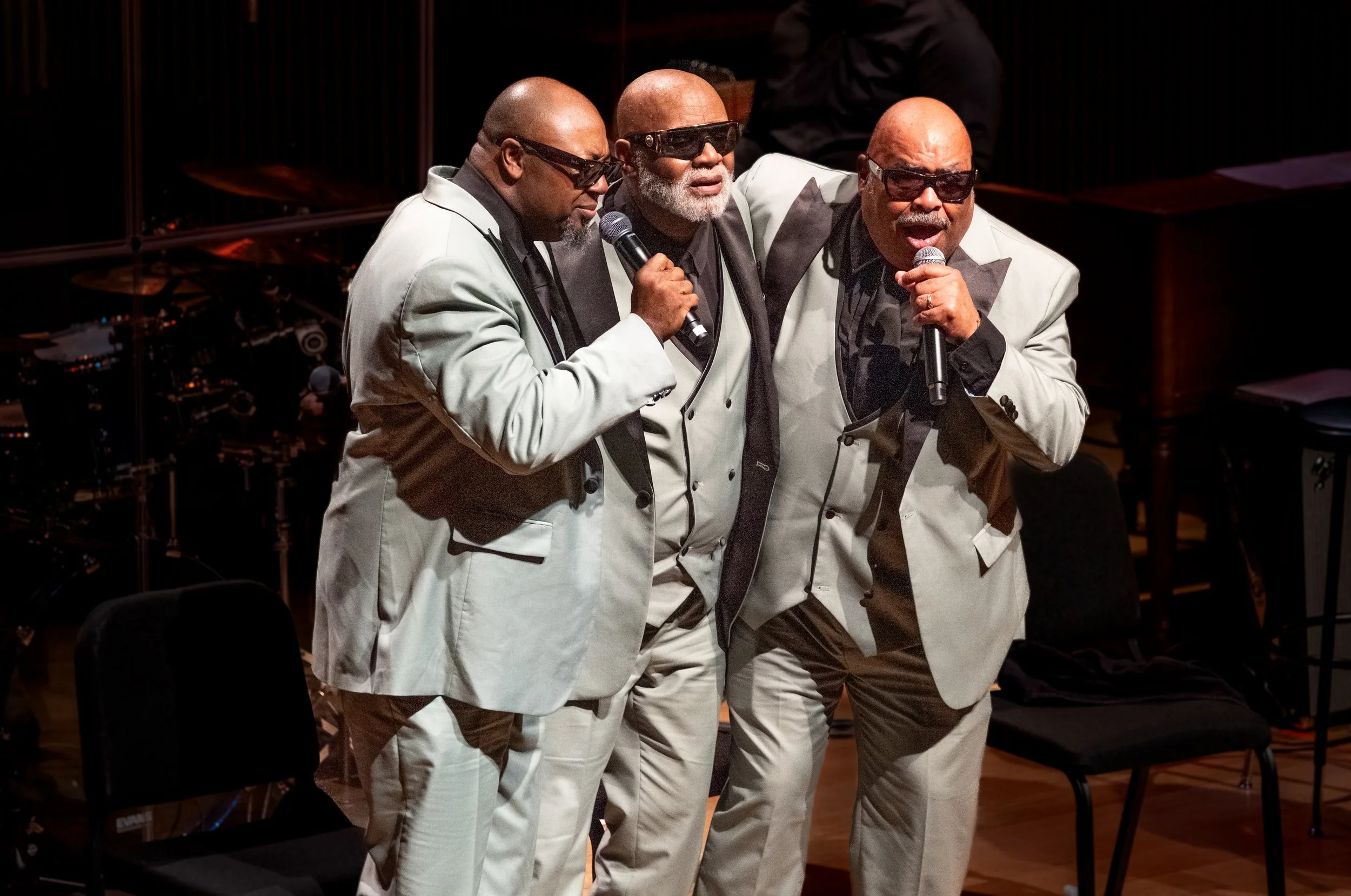
Cory Henry & the Blind Boys Testify at SFJAZZ
It was the kind of Sunday afternoon that settles on a room like a benediction. Folks looked as if they’d come straight from church—pressed jackets, careful shoes, a woman down front wearing a black sweater stitched with the word “FAITH,” the letters bright with rhinestones that caught every glint of stage light. The musicians would add the rest.

Between Hush and Heat: Stella Heath Honors Holiday
The Joe Henderson Lab was full, the kind of sold-out where strangers sit shoulder to shoulder and the air sharpens with anticipation. It carried a small-room charge—as if we’d all agreed to listen harder. An hour is not a long time, yet this set unfolded like a compact short story: precise scenes, careful silences, a closing image that refuses to leave. Stella Heath entered in period dress, with white gardenias in her hair, an emblem and a promise, and her sextet matched the era with crisp, 1930s– 40s attire. The message was not costume drama. It was witness. Heath’s Billie Holiday Project aims to tell the truth about the songs and about the life that shaped them—history delivered without fuss, and music that lets the history speak back.
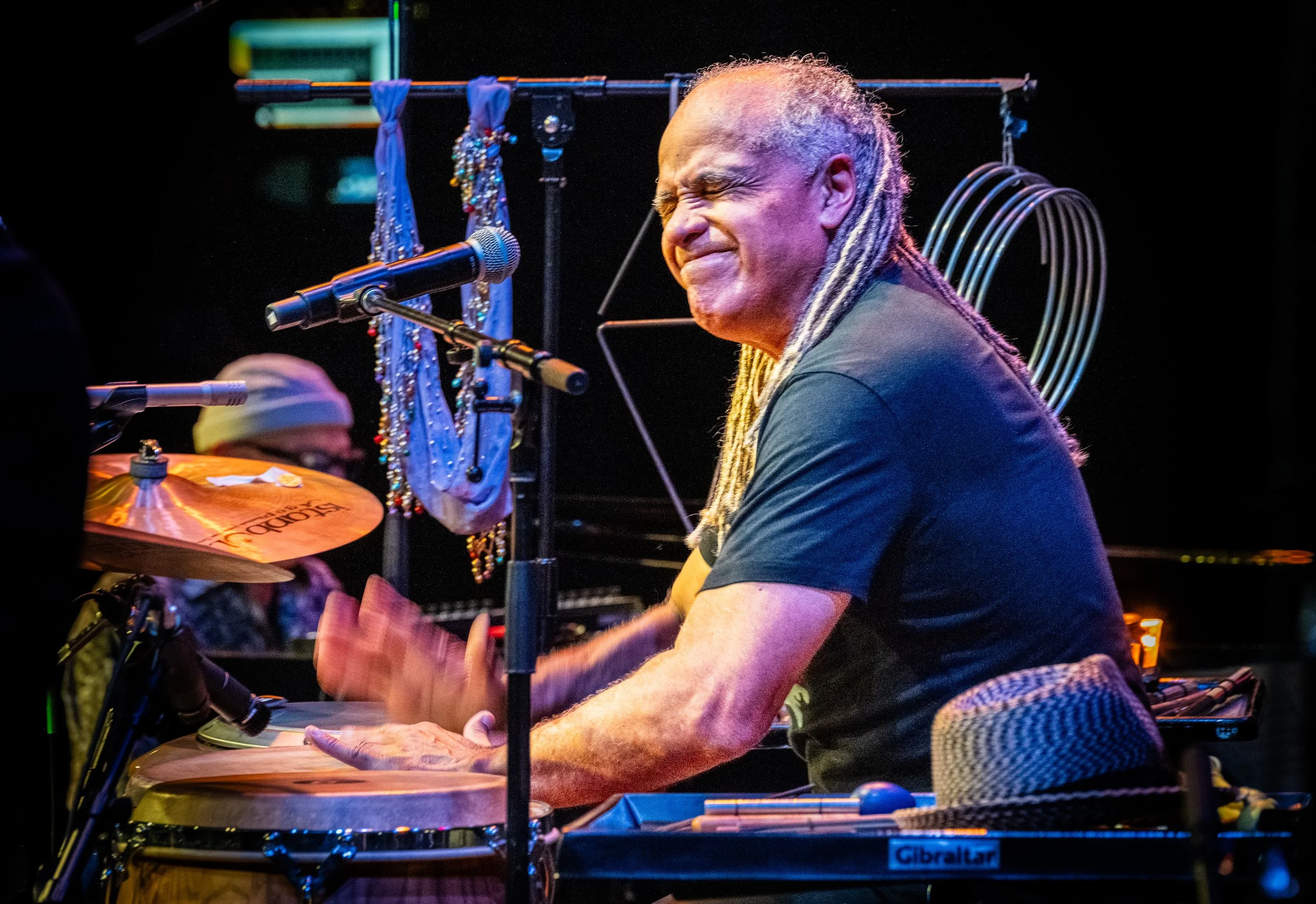
Groove, Pivot, Repeat — Mino Cinélu’s Four for Miles
The room begins with absence—no band, no chatter—just a white gauze curtain hanging like a flag with no country. A looped rhythm creeps in from the edges, dry and sandy, like shoes on stone. Then the words land—Miles Davis on change, on refusing the safe—projected large enough to read and short enough to sting. “If anybody wants to keep creating, they have to be about change.”