Emmet Cohen Keeps Miles and Coltrane Moving
Sold-out SFJAZZ performance frames Miles and Coltrane as living forces rather than fixed legacies
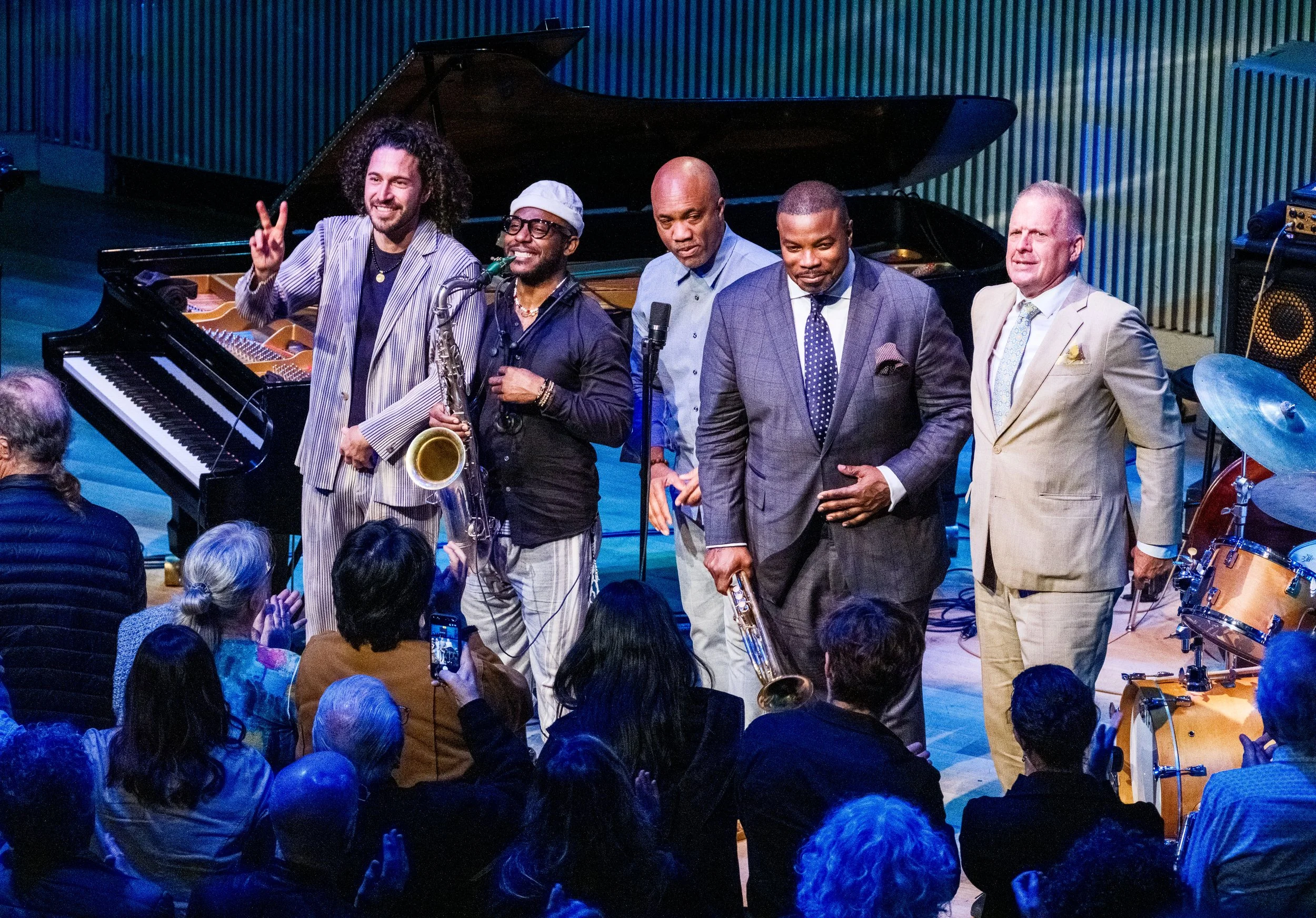
Photo: Steve Roby
April 9, 2026 • Miner Auditorium, SFJAZZ Center • Emmet Cohen (piano), Jeremy Pelt (trumpet), Tivon Pennicott (saxophone), Reuben Rogers (bass), Joe Farnsworth (drums, vocals)
Jazz pianist and bandleader Emmet Cohen approached the centennial of Miles Davis and John Coltrane with a clear premise: the music remains in motion. At a sold-out Miner Auditorium last Thursday, his Miles & Coltrane at 100 program unfolded as a working model of how that motion continues to generate new ideas in real time.
Cohen began with the trio, easing into “Surrey with the Fringe on Top” at a measured tempo before letting the rhythm build. Joe Farnsworth’s cymbal touch tightened the groove, Reuben Rogers settled into a walking line with a blues undertone, and Cohen gradually accelerated the pulse into a clipped, galloping swing. The transition felt deliberate, a study in pacing that established the night’s underlying logic.
When Cohen addressed the audience, he framed the project in clear terms: “Tonight and all year we’re celebrating the centennials of Miles Davis and John Coltrane… and part of celebrating their legacies is definitely honoring our own artistry.” That idea—tribute as continuation rather than replication—guided what followed.
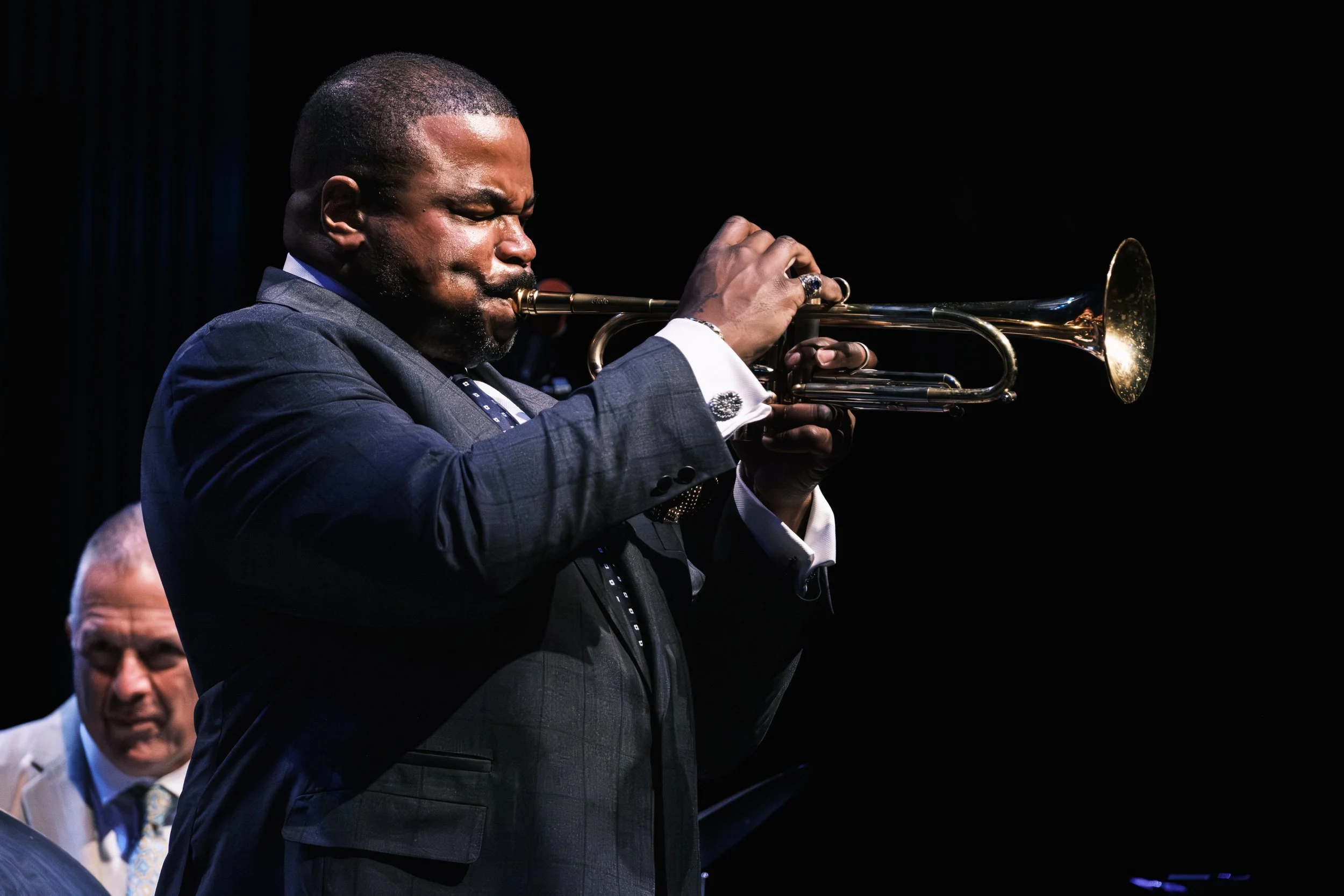
Jeremy Pelt. Photo: Steve Roby
With trumpeter Jeremy Pelt and tenor saxophonist Tivon Pennicott joining the stage, the music pivoted toward velocity and attack. “Two Bass Hit” became the first ignition point. The band treated the tune’s bebop framework as an active system rather than a fixed script. Pennicott’s lines arrived in tight, concentrated bursts, while Pelt countered with broader, declarative phrasing. Cohen’s comping moved restlessly between them, inserting rhythmic figures that kept the exchanges taut. Farnsworth expanded the energy further, building his solo with both propulsion and physical presence.
Cohen underscored the approach from the bench: the piece was “kind of as played by John Coltrane and Miles Davis, but updated the way we like to interpret it.” The emphasis fell on reinterpretation as a present-tense act.
The set then shifted to a darker register with “Amandla,” drawn from Davis’s late-period repertoire. Cohen introduced it with a note of context: “It’s the first time I think it’s been played in an acoustic environment.” That change in instrumentation reframed the piece. Pelt’s muted trumpet set a shadowed, almost cinematic tone, while the tenor and piano unfolded the harmony with restraint. The performance resisted an overt climax, sustaining a low, steady intensity that held the room in suspension.
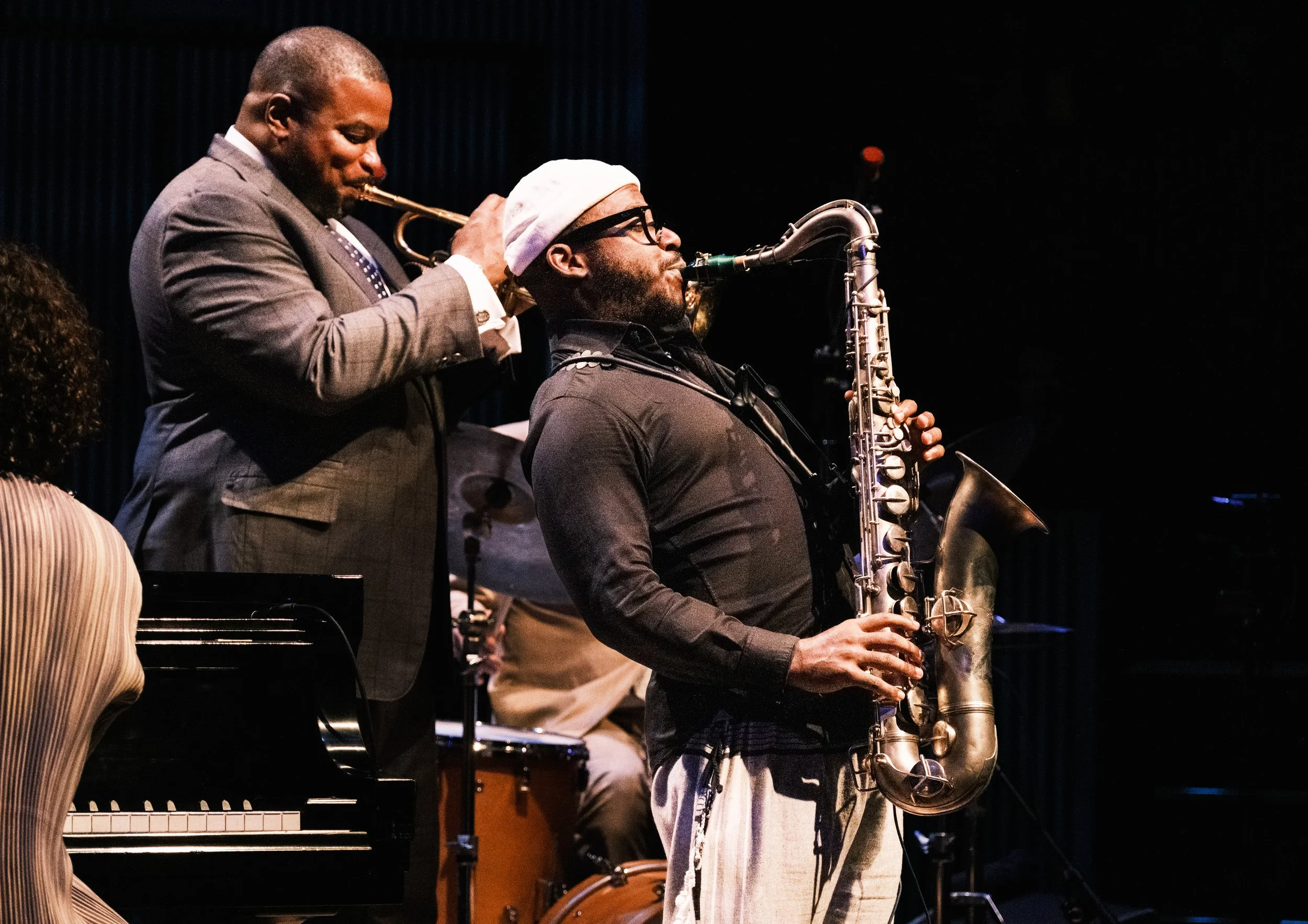
Tivon Pennicott. Photo: Steve Roby
From there, the band moved into a ballad medley of “When I Fall in Love” and “They Say It’s Wonderful,” where the focus narrowed to tone and breath. Pennicott emphasized line over display, shaping phrases that let silence serve as structure. Cohen connected the moment to his broader thinking about the project: “No matter how far Miles and Trane soared… there was always that strain of originality that was founded in what came before.” The statement clarified the musical choice. The ballads returned the music to first principles—melody, sound, and the architecture beneath them.
Cohen maintained a clear command of pacing throughout. Dressed in a gray-striped suit with black-and-white wingtips, he marked time physically, his heels audible even from the upper levels of Miner. The gesture reinforced the sense that tempo and feel were being actively shaped, not merely followed.
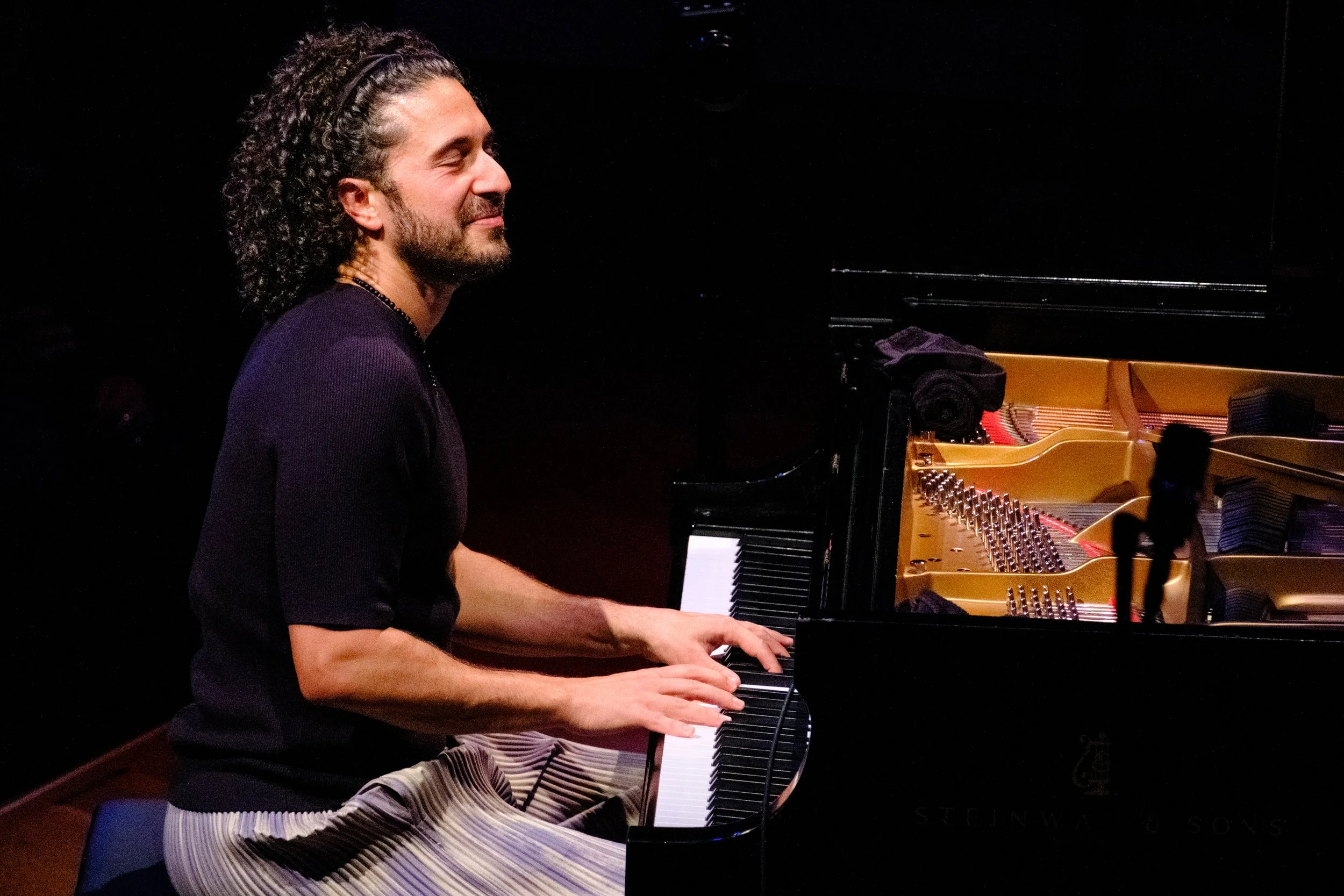
Emmet Cohen. Photo Steve Roby
The emotional center of the evening came during the encore. Before continuing, Cohen paused to acknowledge Gail Sinquenfeld, a figure associated with his Live from Emmet’s Place community. “She would have been sitting right there,” he said as a photograph was placed on an empty chair. The audience responded with sustained applause, and the room’s focus shifted from lineage to community, from history to lived connection.
What followed extended that sense of connection. Cohen reintroduced each musician with a mix of biography and personal detail, sketching the ensemble as a working organism. Farnsworth emerged as both historian and forward-moving force, Rogers as a grounding presence defined by generosity, Pennicott as a carrier of joy within the music, and Pelt as a disciplined architect of sound and documentation. The introductions deepened the context without interrupting the flow.
The closing suite, drawn from Cohen’s forthcoming album Universal Truth, brought the performance to its most expansive point. Structured in three movements—“Eternal Glimpse,” “Compassion,” and “Universal Truth”—the piece functioned as a synthesis of the evening’s ideas. Farnsworth’s drumming pressed against the ensemble at key moments, creating friction that the group absorbed and redirected. During one extended passage, he rose from the kit, striking the bass drum and hi-hat stand before leading the band into a chant invoking both Davis and Coltrane.
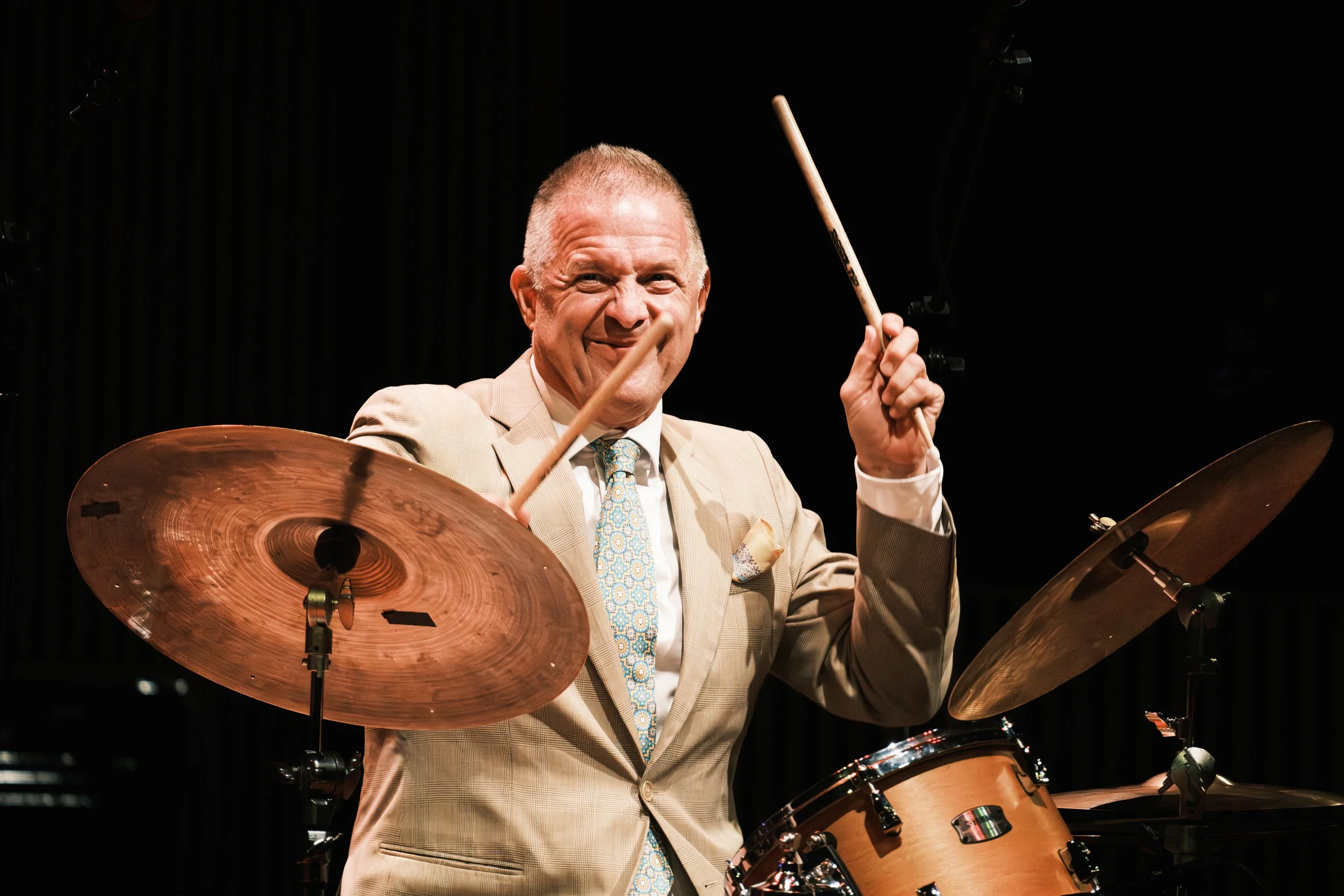
Joe Farnsworth. Photo: Steve Roby
The sequence clarified Cohen’s intent. This was not repertory in the conventional sense. The music engaged directly with underlying principles—restlessness, risk, and a continual search for new forms. The centennial framing provided context, but the performance itself remained firmly in the present tense.
By the final resolution, the audience’s response extended beyond the hall, with listeners gathering in the lobby to continue the exchange with Cohen and the band. The momentum carried outward, suggesting that the project’s real subject was not commemoration but transmission—music moving forward through those willing to keep it in motion.
From the archives: Emmet Cohen Trio at Gates Concert Hall
Joe Farnsworth 2024 interview