The Architect of Swinging Joy: Benny Green’s Living History at Miner Auditorium
Green's solo recital was a deep engagement with the foundation of the jazz continuum, operating as a 'Curator-Virtuoso' in the heart of Hayes Valley.
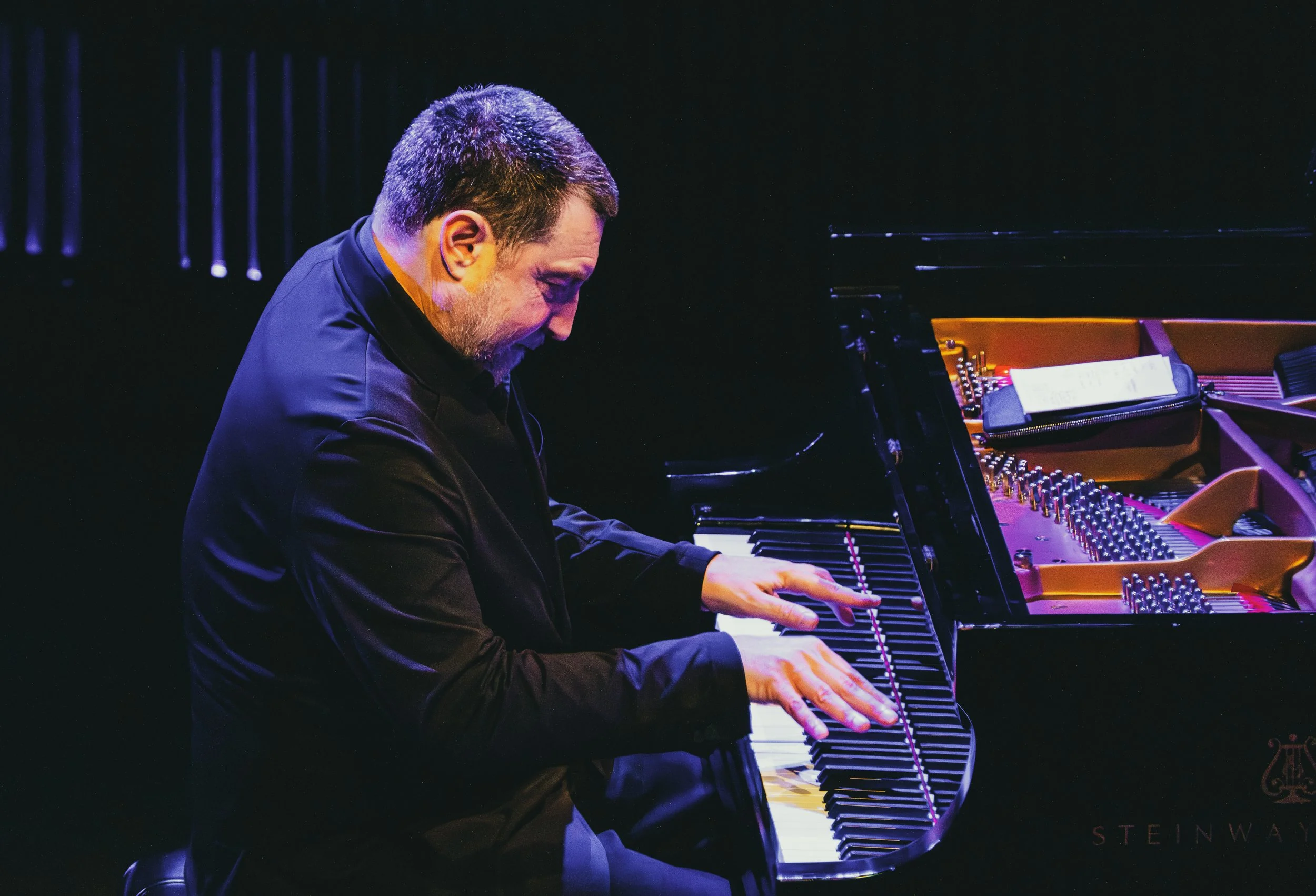
The weekend programming at the SFJAZZ Center often presents a deliberate dialectic, placing the genre’s vanguard in conversation with its bedrock. While the previous evening’s "UpSwing" double bill, featuring vibraphonist Sasha Berliner and vocalist Michael Mayo, highlighted the genre’s futuristic, genre-blurring edge, the Sunday, December 28, appearance of pianist Benny Green offered a profound counterweight. Green’s solo recital was a deep engagement with the foundation of the jazz continuum. In the steep, intimate amphitheater of the Robert N. Miner Auditorium, Green operated as a "Curator-Virtuoso," an artist whose primary creative engine is the celebration and reimagining of the harmonic languages handed down by the mid-century titans.
The stage presentation reinforced this focus on the music itself. A tight circle of purple, orange, and yellow light surrounded the nine-foot Steinway, leaving the rest of the hall in shadow and evoking the atmosphere of a small, focused jazz club. In this pristine acoustic environment, where every nuance is audible, Green’s performance emerged as a pedagogical and emotional exhibition, synthesizing the distinct dialects of his mentors—Art Blakey, Ray Brown, Betty Carter, and Oscar Peterson—into a singular, exuberant voice.
Green’s lineage, particularly the rhythmic imperative of Art Blakey and the "bass-melody axis" of Ray Brown, was immediately evident in the set’s kinetic energy. On "Pittsburgh Brethren," an original composition dedicated to his mentors from that city, the pianist’s left hand took on the role of a surrogate double bass. He used a stride technique that formed a linear walking line, driving the time with a ferocity that made a rhythm section superfluous. The physicality of his playing underscored this rhythmic commitment; during blues-drenched numbers, his right foot slid out to tap the beat with his heel, while audible grunts and groans accompanied the most intense phrases, recalling Mose Allison's vocalizations.
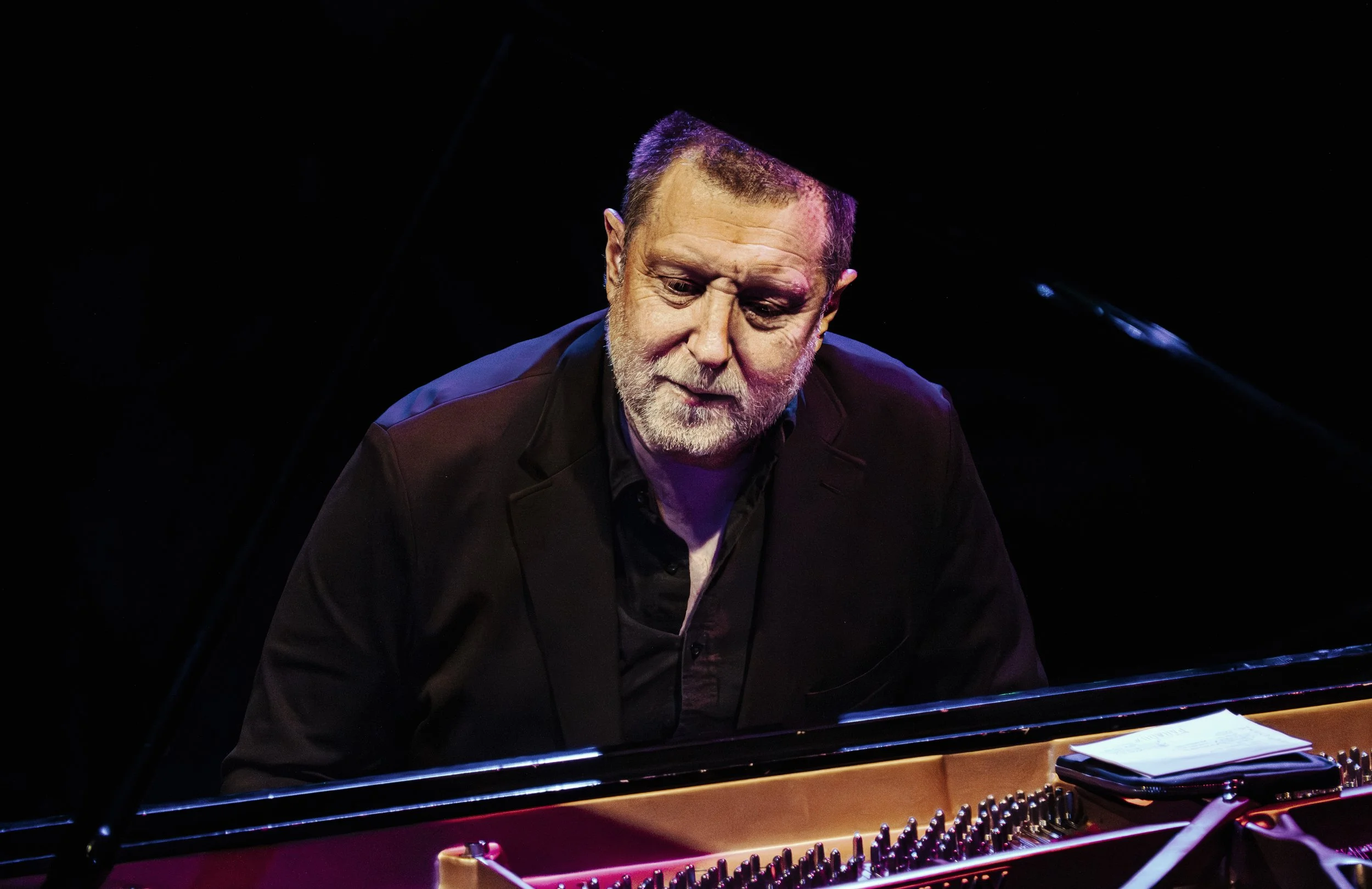
Benny Green. Photo: Steve Roby
The concert functioned as a live memoir, using spoken word to transform the auditorium into an intimate living room. Green introduced "Cedar Wood,” a song that revisited his discovery of pianist Cedar Walton through a radio clip on Alameda’s KJAZZ in the 1970s, a story that contextualizes the music within his autobiography. Musically, the piece channeled Walton’s structural clarity and sturdy rhythmic bounce. By sharing these anecdotes, Green acted as a griot, summoning the spirits of his predecessors into the room.
The influence of Oscar Peterson, who selected Green as the first recipient of the Glenn Gould International Protégé Prize, was evident in his virtuosic handling of the instrument. On Fats Waller’s "Two Sleepy People," Green used single-line octaves in both hands, a hallmark of Peterson’s orchestral approach. This technique expanded the sonic spectrum, allowing the piano to mimic the density of a full ensemble. Later, Green paid direct homage to his mentor with "The Fallen Warrior," a Peterson composition from the Africa Suite dedicated to Nelson Mandela. Green’s interpretation captured the melody’s solemnity and strength, treating the piano with a symphonic weight that honored Peterson’s legacy.
By contrast, Green demonstrated the harmonic discipline and use of space he absorbed during his tenure with Betty Carter. Introducing "Quiet Girl," an original ballad, he shared a humorous story from a previous live recording in which an enthusiastic audience member nearly derailed the track’s intimacy. In the respectful silence of the Miner Auditorium, however, the piece flourished. Green employed back-phrasing, playing slightly behind the beat to let chords ring into silence. This plush velvet touch highlighted his ability to manipulate the instrument’s timbre to sing like a vocalist, a skill essential to the romanticism of Tadd Dameron’s "If You Could See Me Now.”
The set list also explored the happy groove associated with the hard bop tradition, a style Green unapologetically champions. "New York Attitude," a Kenny Barron composition based on the changes of Wayne Shorter’s "Black Nile," showcased Green’s command of the burner tempo. Green approached the piece with a joyous kinetic energy, executing rapid-fire unison lines that captured NYC’s frenetic pace. He contextualized this tempo choice with a lesson from saxophonist Bobby Watson, explaining that playing fast often sets up the emotional resonance of a subsequent ballad.
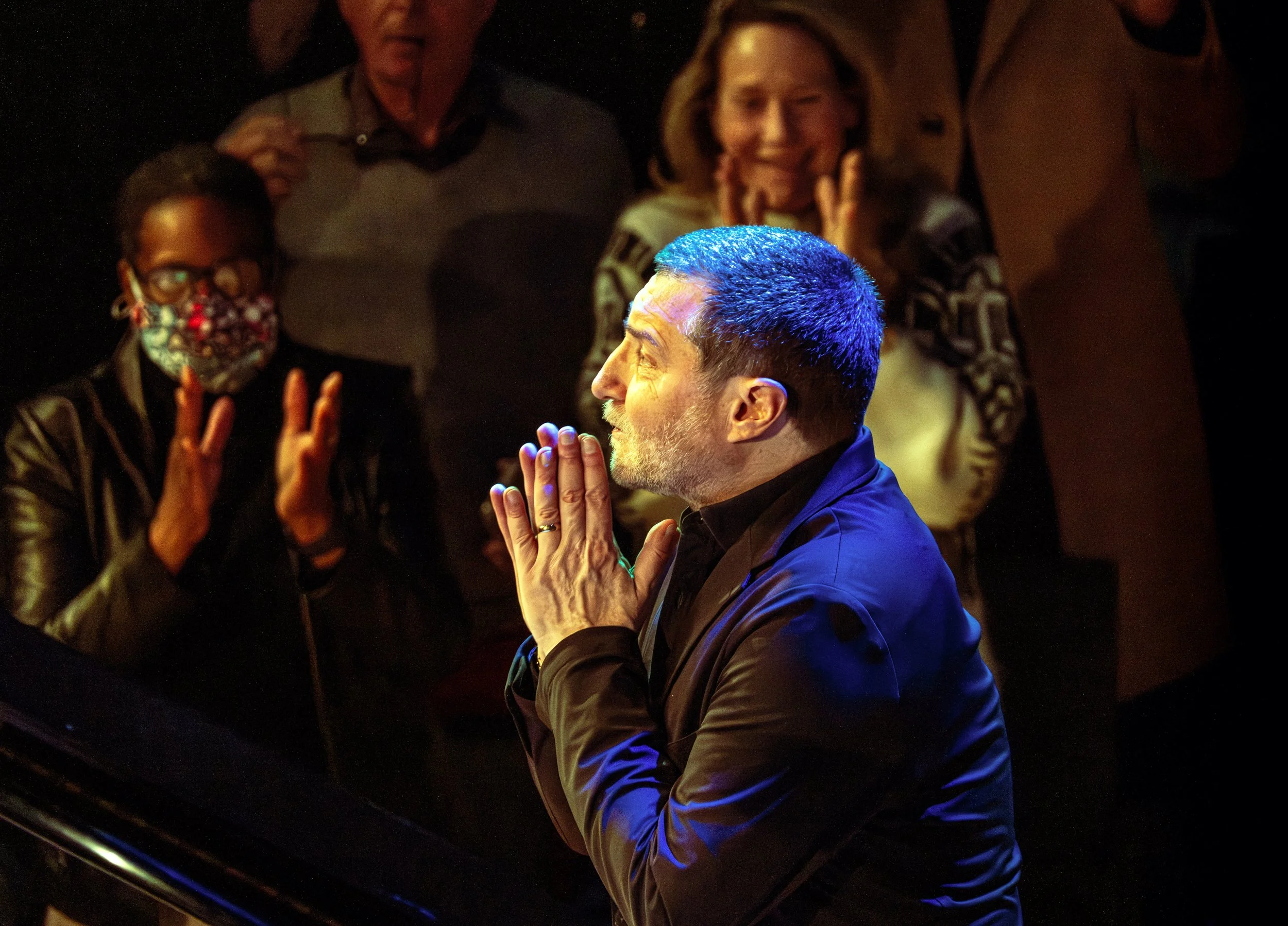
Benny Green recieves a standing ovation at SFJAZZ. Photo: Steve Roby
The evening concluded with "My Girl Bill," an encore dedicated to a beloved dog, featuring close voicings and a forthright melody that drew a warm, nostalgic response from the crowd. Throughout the performance, the audience remained rapt, applauding solos and waiting until the final evaporation of the notes to express their appreciation.
Benny Green’s performance at SFJAZZ affirmed The Young Lions Project of the 1980s as a necessary preservation of a sophisticated language. By weaving together his heroes’ compositions with his own tributes, Green built a living archive of the jazz piano tradition. His playing confirmed that innovation finds fertile ground in deepening one’s relationship with the roots. As a Dazzling Docent of the genre, Green ensured that the voices of Art Blakey, Ray Brown, and Cedar Walton continue to resonate with vibrant, swinging joy.
Program Notes
In the hands of Benny Green, the hard-bop vernacular is never static; it is a living, breathing language. On Sunday evening at the SFJAZZ Center’s Miner Auditorium, Green closed out the 2025 calendar with a performance steeped in gratitude and technical brilliance. Navigating a repertoire that explicitly honored the architects of his sound—chief among them Oscar Peterson and Kenny Barron—he approached the keyboard with a mixture of scholarly precision and soulful abandon, reminding the audience that the tradition of the jazz piano trio is as vital as ever.
Context: A hard-bop homage featuring tributes to Oscar Peterson, Kenny Barron, and Duke Pearson.
Artist: Benny Green (solo piano)
Date: Sunday, December 28, 2025
Showtime: 7:00 p.m.
Location: Miner Auditorium, San Francisco, California
Setlist: “Cedar Wood” (Benny Green); “For Duke Pearson” (Benny Green); “Two Sleepy People” (Hoagy Carmichael); “If You Could See Me Now” (Tadd Dameron); “New York Attitude” (Kenny Barron); “Quiet Girl” (Billy Strayhorn); “Sophie’s Chant” (Benny Green); "The Fallen Warrior" (Oscar Peterson); "Pittsburgh Brethren" (Benny Green). Encore: “My Girl Bill” (Benny Green).