Night 4: Omar Sosa’s SUBA — A Bridge Across the Atlantic
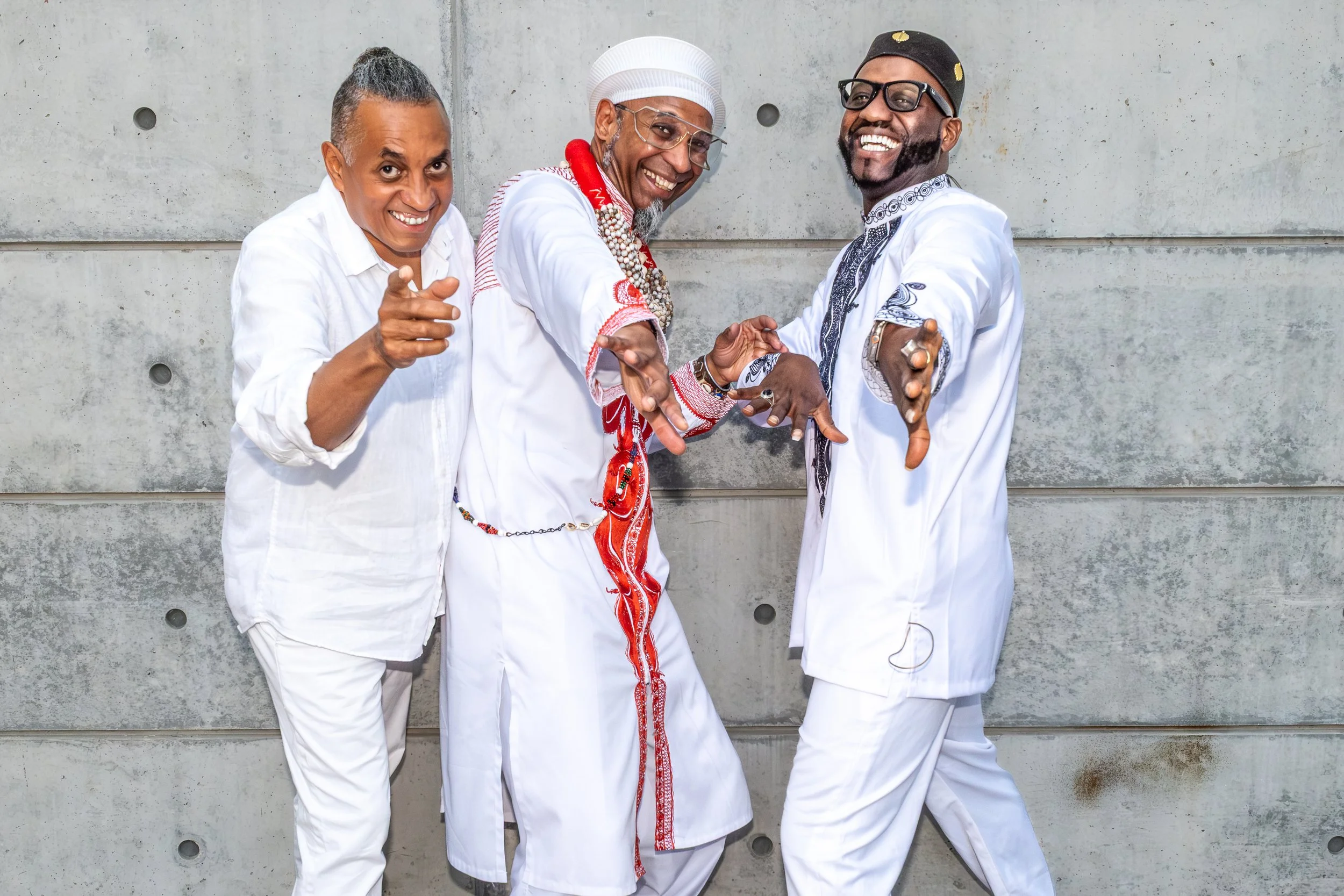
For the final night of his SFJAZZ residency, Omar Sosa performed with Senegalese kora master Seckou Keita and Venezuelan percussionist Gustavo Ovalles in a thoughtful, luminous set that transformed Miner Auditorium into a chamber of resonance, memory, and shared frequency.
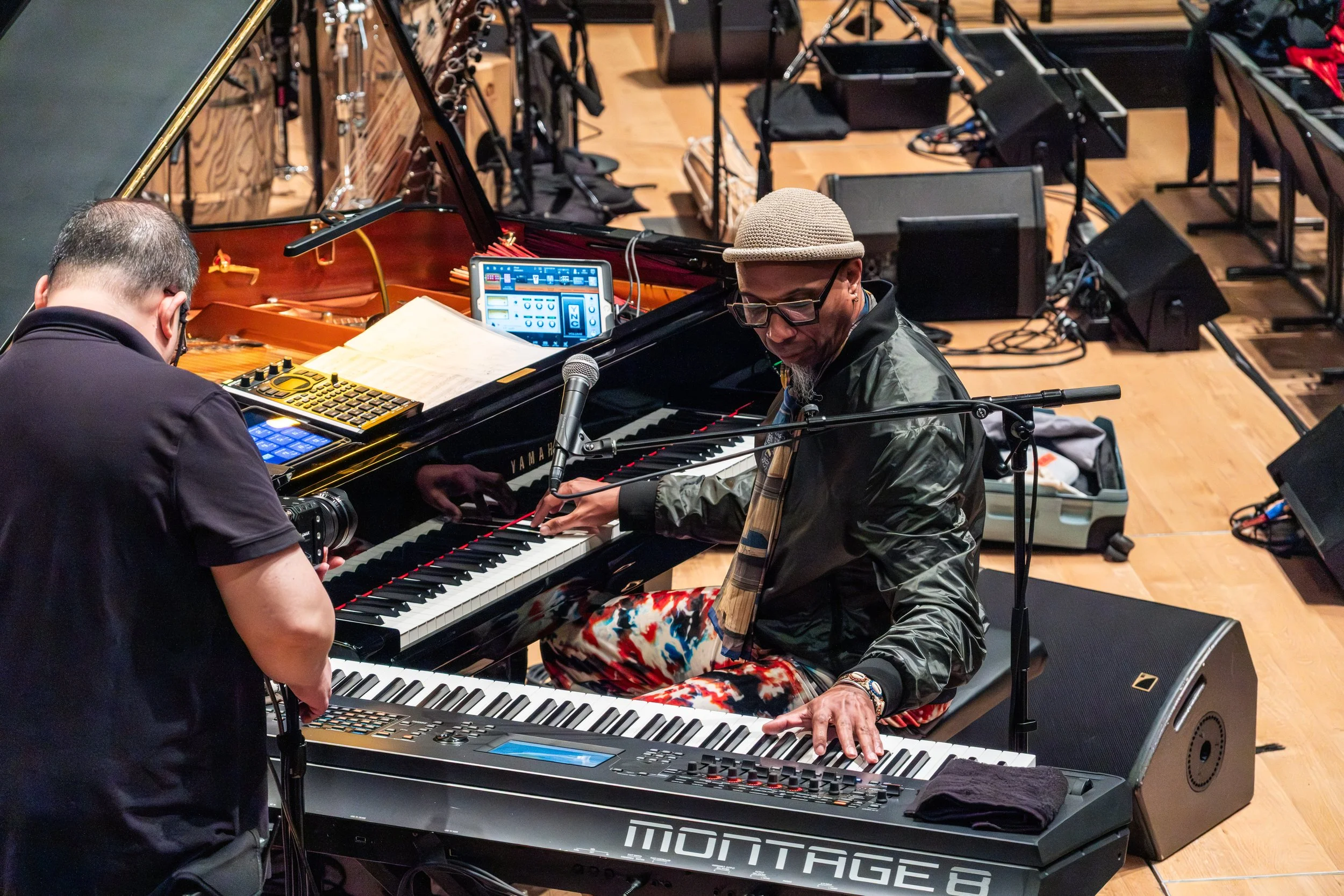
Omar Sosa at soundcheck. Photo: Steve Roby
The Room Before the First Note
Before the downbeat, the stage already told the story. Omar Sosa’s grand piano sat angled toward the center, with a Yamaha Montage keyboard positioned on the left side for added color and bass depth. Seckou Keita’s kora rested upright on its stand like a carved idol waiting to speak. To the right, Gustavo Ovalles had arranged an intricate array of percussion: congas, bongos, stacked hand drums, trays of shakers and bells, bamboo sticks, tuning forks, a paver stone, and a gong near the water tub that would matter later. The layout felt spacious and deliberate. Each station had its own world, and Miner Auditorium’s spacious warmth gave each one room to breathe.
The trio’s clothing enhanced that sense of occasion. Offstage and on, they wore variations of white, with Sosa at the center in a white tunic outlined with red embroidery and shells, Keita in a white embroidered top and dark cap, and Ovalles in a simple white shirt and white trousers. The overall look was radiant and relaxed, formal enough to suggest ritual and intimate enough to suggest friendship.
That combination set the tone for the final night of the residency. Night 1 had the structure of a big band. Night 2 revealed an inner ceremonial landscape. Night 3 engaged with sharper edges and urban heat. Night 4 arrived as a coda, slower in tempo and broader in scope, with Cuba, Senegal, and Venezuela converging.
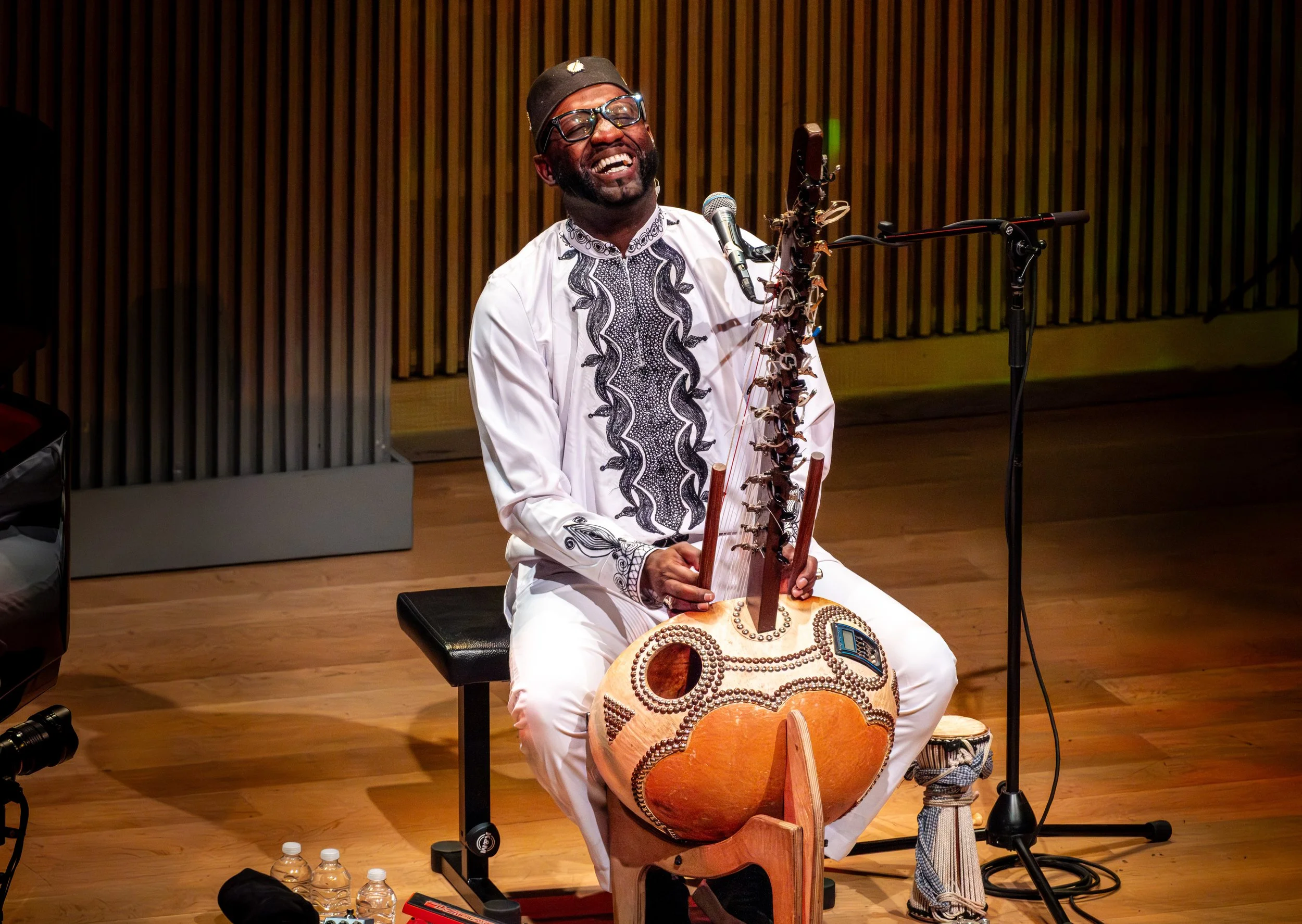
Seckou Keita. Photo: Steve Roby
How the Bridge Was Built
Keita’s account of the first meeting with Sosa explains why this collaboration feels so natural. The two were brought together in London through drummer Marque Gilmore and ended up improvising onstage for hours with almost no preparation. The connection came through instinct and listening before it became repertoire. Later, in Germany, they spent a week recording, cooking, shopping, and building music day by day. By the time they reached the projects that became Transparent Water and SUBA, the partnership already had the habits of genuine collaboration.
Keita describes Ovalles as “the glue,” and that phrase provides the clearest internal map for the trio. Sosa and Keita drive the main melodic and harmonic exchange. Ovalles joins them from the edges and below, cooling, tightening, coloring, and redirecting the flow. Keita also speaks of the kora in spiritual terms, as an instrument with several souls inside it, and sees its relationship with the piano as complementary rather than competitive. The two instruments share similar emotional territory while speaking with distinct accents.
That balance was immediate in “Maam,” the opening piece of the concert. Sosa established the harmonic foundation, warm and spacious, then Keita responded with luminous, intricate lines that floated above and within the keyboard texture. Ovalles moved around them with subtle percussion that enriched the music without creating a rigid beat. The trio’s approach was clear from the start: complementary textures, patient pacing, and a trust in resonance.
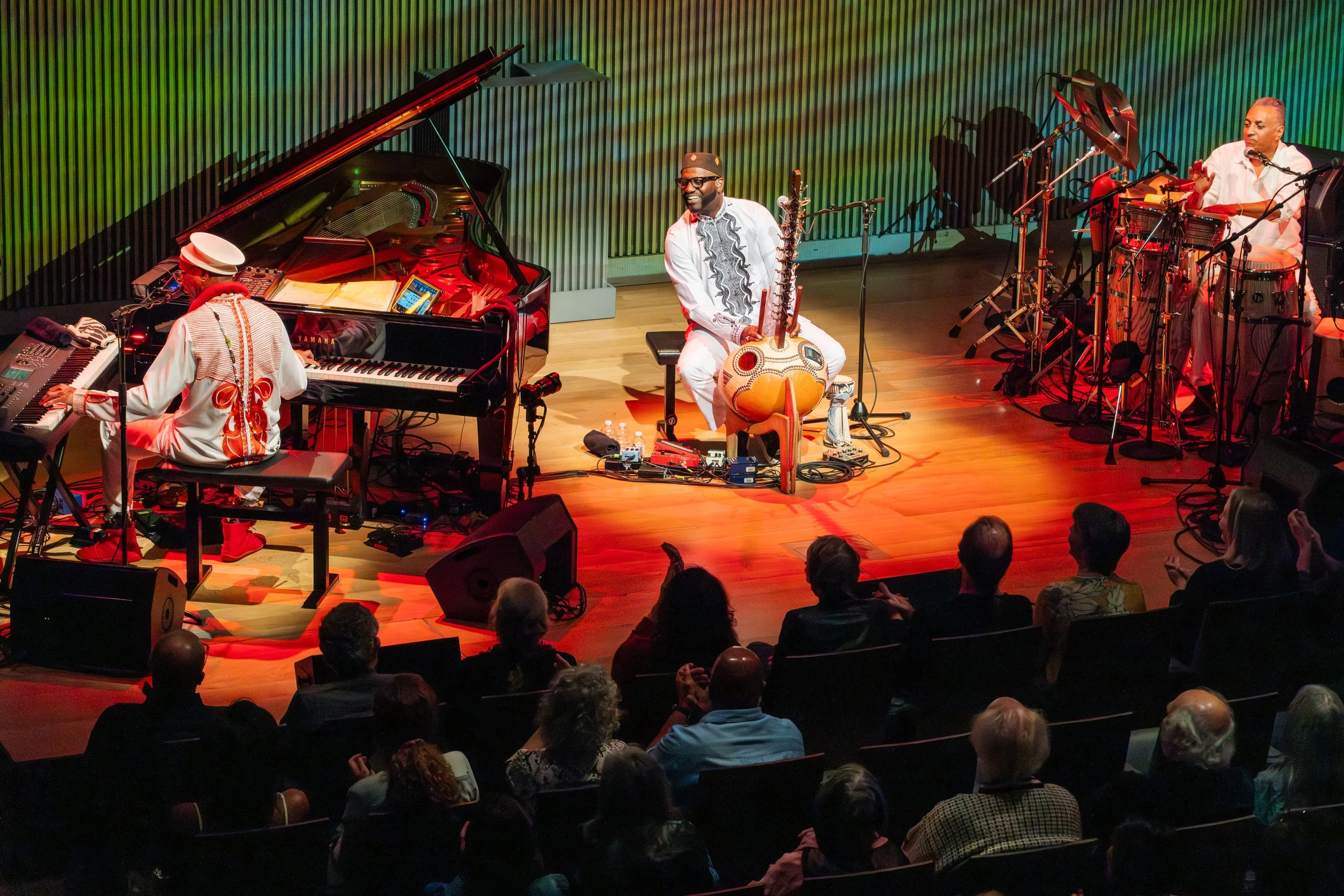
The Suba Trio. Photo: Steve Roby
Piano, Kora, and the Art of Restraint
The strongest aspect of the performance was restraint. Sosa and Keita gave each other space. They avoided overcrowding the music. They progressed in deliberate phrases, then withdrew and re-entered. Sosa used the acoustic piano for richness in tone and harmony, while the keyboard added atmosphere and extended the bass. Keita’s kora provided quicksilver articulation and brightness, with plucked lines that had a gentle attack, keeping the music lively even in quiet moments.
This kind of interaction required the audience's attention, and the hall responded. Miner Auditorium leaned in. The pacing built with increasing power. The trio would start with a simple statement, let a figure repeat just long enough to create meaning, then gradually expand the texture. A phrase on the kora would sparkle through the piano. A brushed accent or dry rattle from Ovalles would change the atmosphere around both. The music moved in waves rather than peaks.
Ovalles’ contribution was central to that balance. His position appeared broad, but his choices remained precise. At times, he shaded the trio with dry hand percussion. Other times, he added a metallic shimmer or a low pulse that seemed to come from beneath the room. Even his more expressive tools followed the same logic. The bamboo sticks on the paver stone, the tuning forks raised in the air, and the small objects spread across his trays all expanded the trio’s vocabulary of resonance.
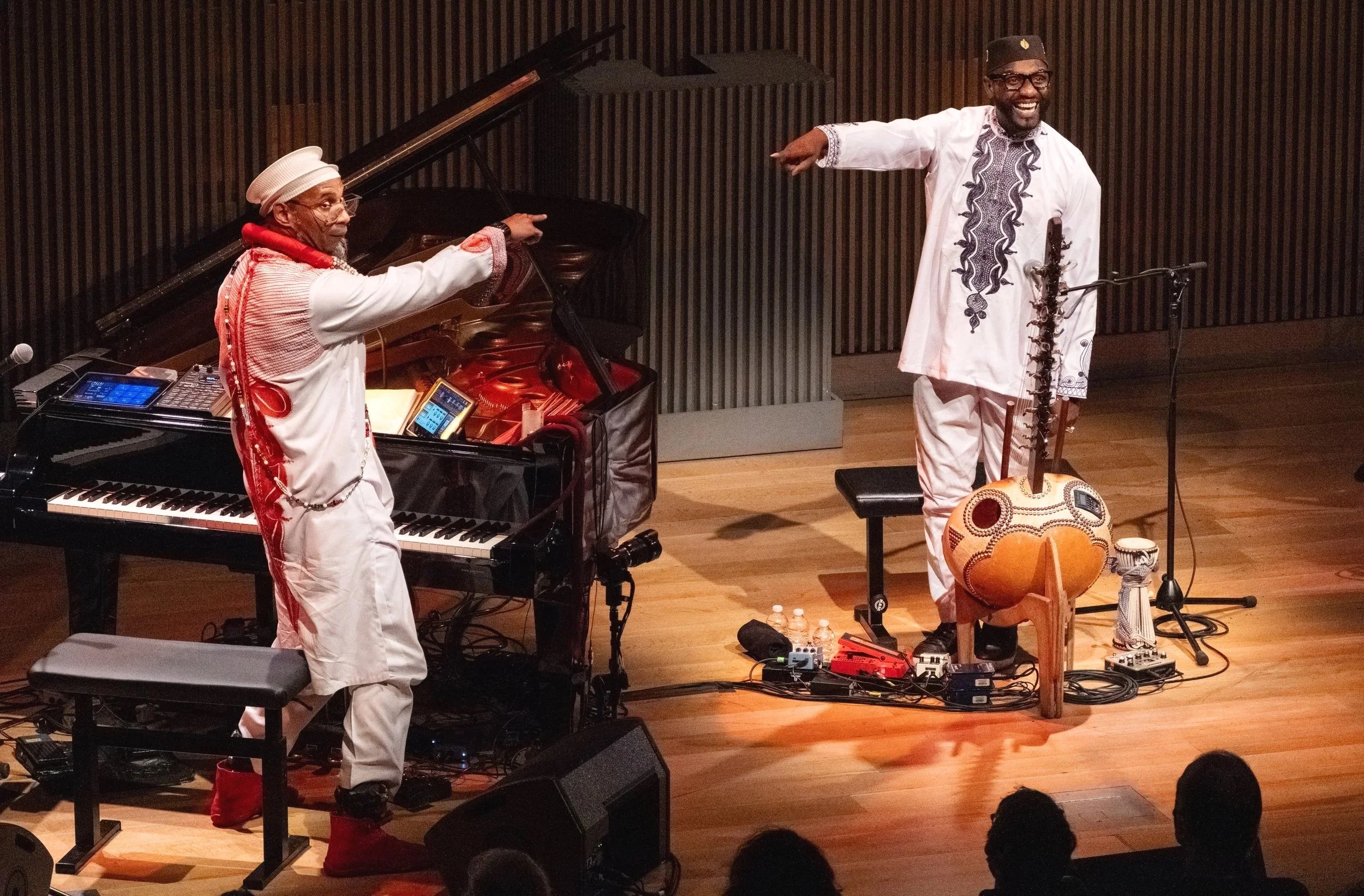
Sosa and Keita. Photo: Steve Roby
When the Room Answered Back
About halfway through the concert, the atmosphere grew warmer. Keita, friendly and humorous from the stage, invited the audience into what he jokingly called a kind of “music certification.” He led the room into a simple sung phrase, and within moments, the hall responded with genuine confidence. Clapping spread, and voices joined in. The trio’s transatlantic conversation became a local one.
That shift mattered because it altered the social dynamic of the evening. Until then, the concert had played out with a chamber-like focus. Now, the audience became part of the rhythm. Keita’s invitation softly opened the space, and the audience responded by singing and clapping confidently enough to become part of the performance’s structure. The bridge across the Atlantic turned into a bridge across the footlights.
The moment also showcased the trio’s emotional range. This was a carefully planned set, which also kept joy evident. Keita talked about making people smile, dance, and cry tears of joy, and the room’s response demonstrated how effectively that goal had been reached.
Gustavo’s Ground, the Water’s Return
Late in the evening, Ovalles stepped forward for a solo that distilled the trio’s rhythmic intelligence into pure texture. He built the passage through touch and resonance, drawing movement from dry attacks, ringing overtones, and subtle shifts in density. The solo had an earthy core. It reoriented the room’s pulse without disrupting the concert’s measured arc. Where Sosa and Keita traced the Atlantic bridge through harmony and plucked line, Ovalles provided ground, weight, and breath.
Then came the return of water.
At one point in the set, Ovalles repeated the tub-of-water ritual that had appeared on Night 2 in a different context. Here, it served as a continuation, another sign that the residency had been speaking a shared language of flow, transmission, and frequency all along. The sound of water entering water was captured by the microphones with striking intimacy. Sosa responded softly on the piano. The room became quiet enough to hear the gesture as both sound and symbol.
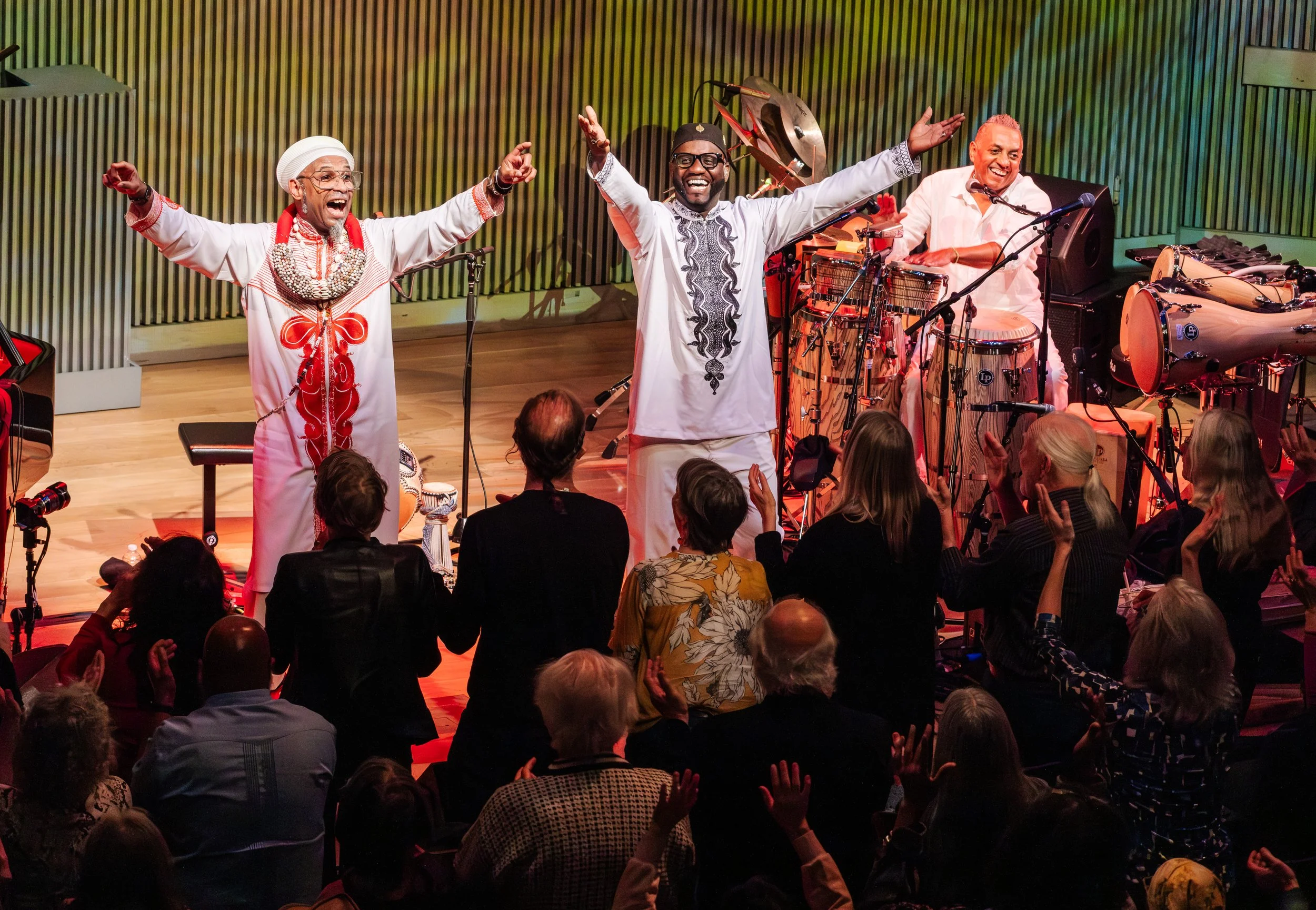
A standing ovation for the Suba Trio. Photo: Steve Roby
The Last Lift
The encore brought a sense of release. The audience had already been captivated by the music, and now the final part became lively and playful. At one point, Sosa and Keita danced together onstage, laughing as they moved, before Sosa turned the moment into a joke and walked away pretending he had thrown out his back dancing too hard. The audience loved it. After so much patience and luminous control, the ending came with warmth, wit, and shared joy.
When the music stopped, the evening still had one final moment to share. In the lobby, Sosa sat at a table signing albums and CDs, greeting fans, taking selfies, and ending the night with direct contact with the community that had supported the residency from its first note to its last. It was the perfect conclusion to a four-night showcase.
Over the week, Sosa held four roles. He was an architect with the Stanford Jazz Orchestra, crafting large forms and sharing knowledge. He was a priest with the Aguas Trio, opening ritual space. He was a brother with Quarteto Americanos, reconnecting Bay Area history and bandstand trust. On the final night, he was a bridge, linking Cuba and Senegal, memory and presence, structure and flow.

Keita and Sosa post concert event. Photo: Steve Roby
The residency ended the way the week had always been unfolding: through shared vibrations outward. Piano, kora, percussion, water, voices, laughter, applause, then the afterglow of fans waiting in the lobby with records in hand. The frequency shared.
Program Notes
Omar Sosa, Seckou Keita, Gustavo Ovalles: Suba Trio
Date: Sunday, March 8, 2026
Showtime: 7:30 p.m.
Venue: Miner Auditorium (SFJAZZ Center)
Location: San Francisco
About This Show: Wrapping up Omar Sosa’s week as Resident Artistic Director, this event reunites the pianist and composer with Senegalese kora master Seckou Keita. Their first meeting in 2012 sparked an immediate kinship, and their collaborative 2017 debut album, Transparent Water, was a largely improvised recording praised as “beautiful, rhapsodic... spiritual” by Songlines. Accompanied by Venezuelan percussionist Gustavo Orvalles, Sosa and Keita showcase their remarkable chemistry on stage with pieces from their 2021 album SUBA — a tribute to hope, a new beginning of compassion and authentic change in a post-pandemic world.
Personnel
Omar Sosa: piano
Seckou Keita: kora, vocals
Gustavo Ovalles: percussion
Setlist: “Maam,” “Drops of Sunrise,” “Tama Tama,” “Allah Leno,” “2020 Visions,” “Kharit,” “Gniri Balma,” “Voices on the Sea”
Tech Staff
Marco Melchior: Front of House (FoH) - Live Sound Mix Engineer and Production Manager for Omar Sosa
SFJAZZ Tech Crew
Alex Espolet: Front of House (FoH) Engineer
Martin Carmona: Monitor Engineer
Masanori Yura: Multitrack Recording and Mix Engineer
Emmett Reed: Audio Assistant
Dylan Lewis: Video Director and Camera Operator
Albert Wong: Video Mixer, Camera Operator
Jeremy Guy: Lighting Director
Matthew Moreau: Lighting Director
Chris Edwards: Production Manager for SFJAZZ
Taylor Rivers: Stage Manager
Photos: Steve Roby