Night 3: Omar Sosa Reimagines the Quartet
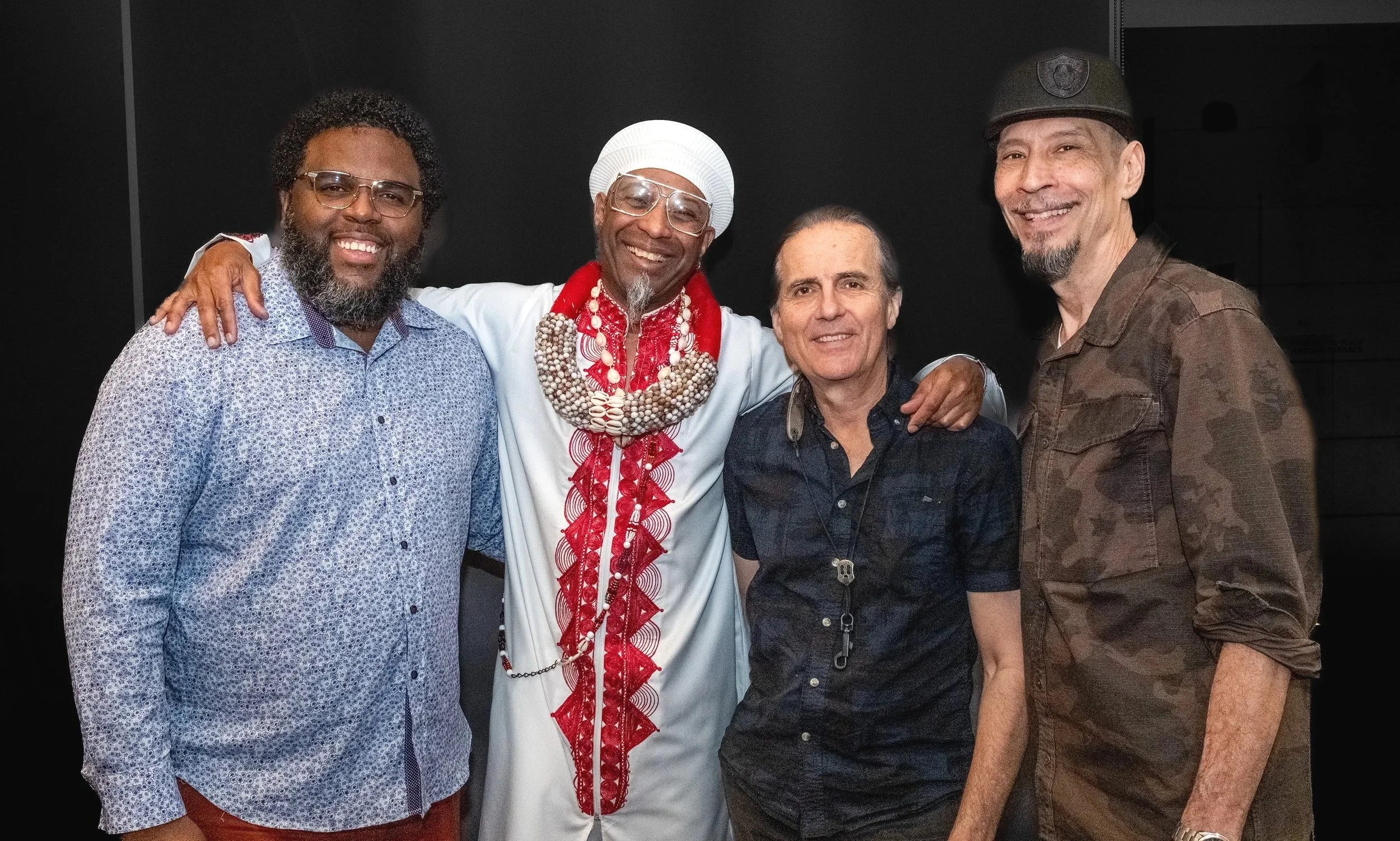
On the third night of his SFJAZZ residency, Omar Sosa transformed Miner Auditorium into a space of rhythm, color, and top-tier improvisation, using Quarteto Americanos to connect Bay Area history with the vibrant energy of today.
A Working Band in Full View
Omar Sosa’s SFJAZZ residency began its third night with the feeling of a focused band. During the afternoon soundcheck, Ernesto Mazar Kindelán arrived carrying a long case with his custom Azola electric upright “baby” bass, the instrument Sosa specifically requested for its deep, punchy low end. Onstage, the setup already suggested a different vibe from the previous night’s ceremony: Sosa on grand piano with keyboard and effects layered above; Sheldon Brown surrounded by reeds; Josh Jones at a compact yet responsive drum and percussion setup; and Mazar Kindelán anchoring the center with a single sculptural piece of wood and wire. The room seemed designed for precision. The music that followed capitalized on that clarity.
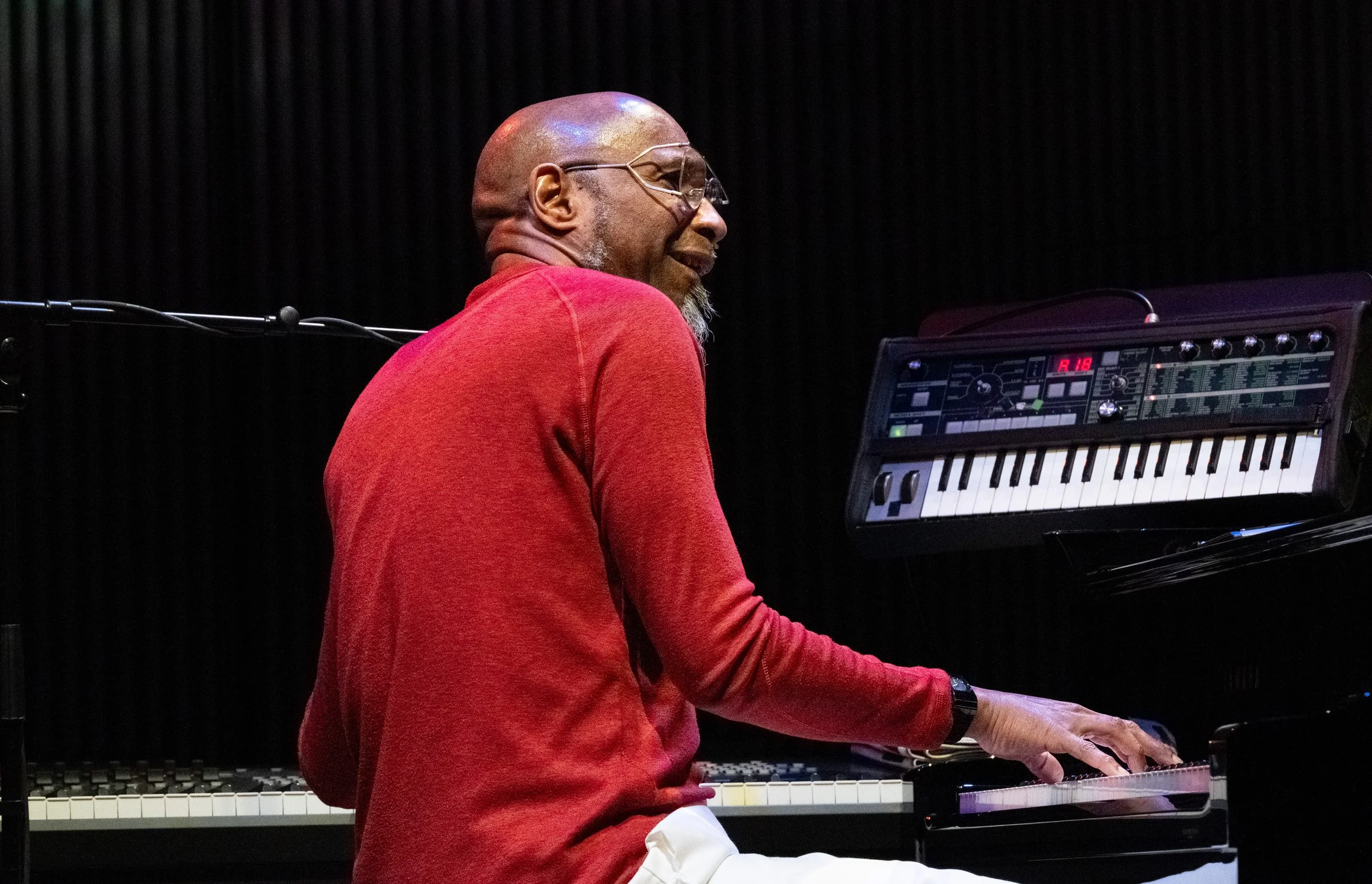
Omar Sosa during soundcheck. Photo: Steve Roby
Quarteto Americanos dates back to Sosa’s early days in the Bay Area in the mid-1990s. Josh Jones, who met him at the Up and Down Club during the acid-jazz and Latin-jazz boom of that period, recalls that the chemistry reacting immediately. Jones hired him on the spot, and the two continued crossing paths through tours, recordings, and new projects over the years. Sheldon Brown’s involvement came just as swiftly. In 1996, Sosa called him directly and invited him to appear on an album, even before they had played together in person. Brown still remembers hearing that unmistakable voice on the other end of a landline and then spending hours at Scott Price’s house learning tunes and jamming.
Quarteto Americanos delivers that rich history into today. Jones describes it as a band that has toured off and on over the past four years, with a new recording in progress. That long journey from club stage to Miner Auditorium gives the quartet a seasoned authority. This music carries a sense of memory.
Listening as Method
This history matters because the quartet sounds experienced. Jones calls it “a listening band,” and that phrase captures the evening better than any single stylistic label. Each musician brings a unique background to the set: Sosa’s Cuban roots and years of travel through Africa and Morocco; Jones’s experience in Latin jazz and beyond; Brown’s wide-ranging reed vocabulary; and Mazar Kindelán’s grounding in Cuban dance music and arranging. The result is a small group that moves quickly and powerfully together while leaving space for each player. The music breathes through constant adjustments. It surges, swerves, and reconnects.
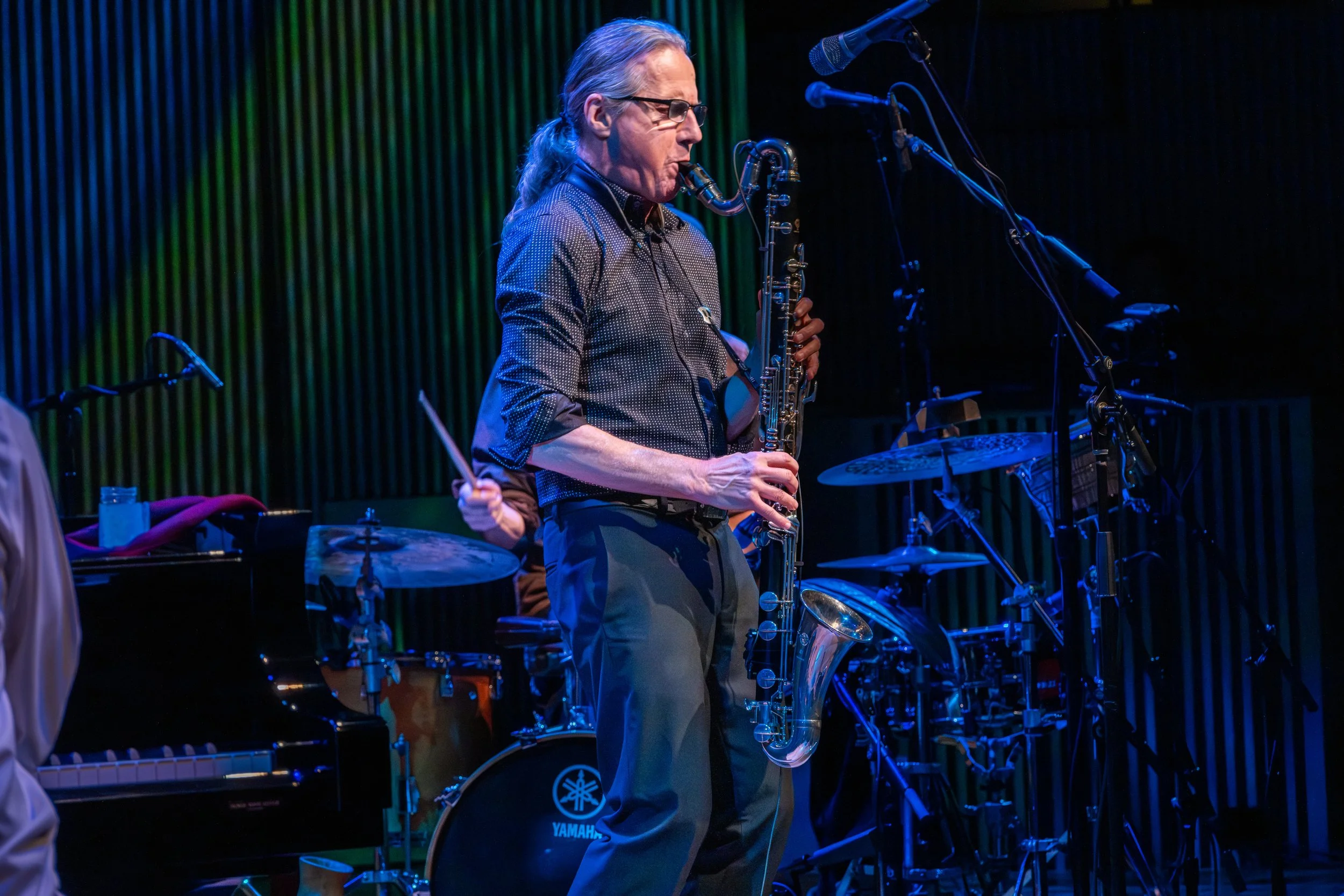
Sheldon Brown during soundcheck. Photo: Steve Roby
Brown’s shifting instrumental palette broadened the group’s sound in every tune. He had six wind instruments ready, each assigned to a specific slot in the set: soprano saxophone, tenor saxophone, bass clarinet, Turkish G clarinet, bawu, and xiao. That range gave Quarteto Americanos a broader tonal scope than most piano quartets. Brown acted as more than a reed soloist. He served as a tonal architect, shifting the room’s atmosphere with every horn change.
Scott Price’s stage introduction described the ensemble as Sosa’s “local band” from his early San Francisco years, and the set immediately lived up to that idea. The sound had the flexibility of a quartet and the power of a much larger group.
Pulse, Color, and Momentum
“El Bola” opened the concert with passionate energy, its quick Latin-jazz rhythm driven by a dense montuno pattern from Sosa and strong support from Jones and Mazar Kindelán. Brown entered on the saxophone, slicing through the texture with sharp, rapid lines. The tune stretched to fifteen minutes, not so much a test of endurance as a statement of approach: this band would develop its case through movement, interaction, and growing momentum.

Quarteto Americanos. Photo: Steve Roby
“D2 de Africa” pushed the quartet further into a chase-scene urgency. Brown and Sosa traded energetic figures before reshaping the mood, turning the piece into a compact study in tension and release. The African-diasporic framework of the composition came through in the rhythm section’s feel. Jones kept the groove fluid without losing weight, while Mazar Kindelán gave the music a rounded, resonant center that maintained the energy even at full speed.
One of the most powerful moments of the evening happened during “Light in the Sky.” Sosa manipulated the synth’s notes as if he were pulling at their edges, leaning back on the bench while the sound distorted beneath his hands. Midway through the piece, prerecorded rap and sung vocals joined in, giving the tune an urban, modern feel. Brown followed with a flute-led section that reopened the space, guiding the music from grit toward air.
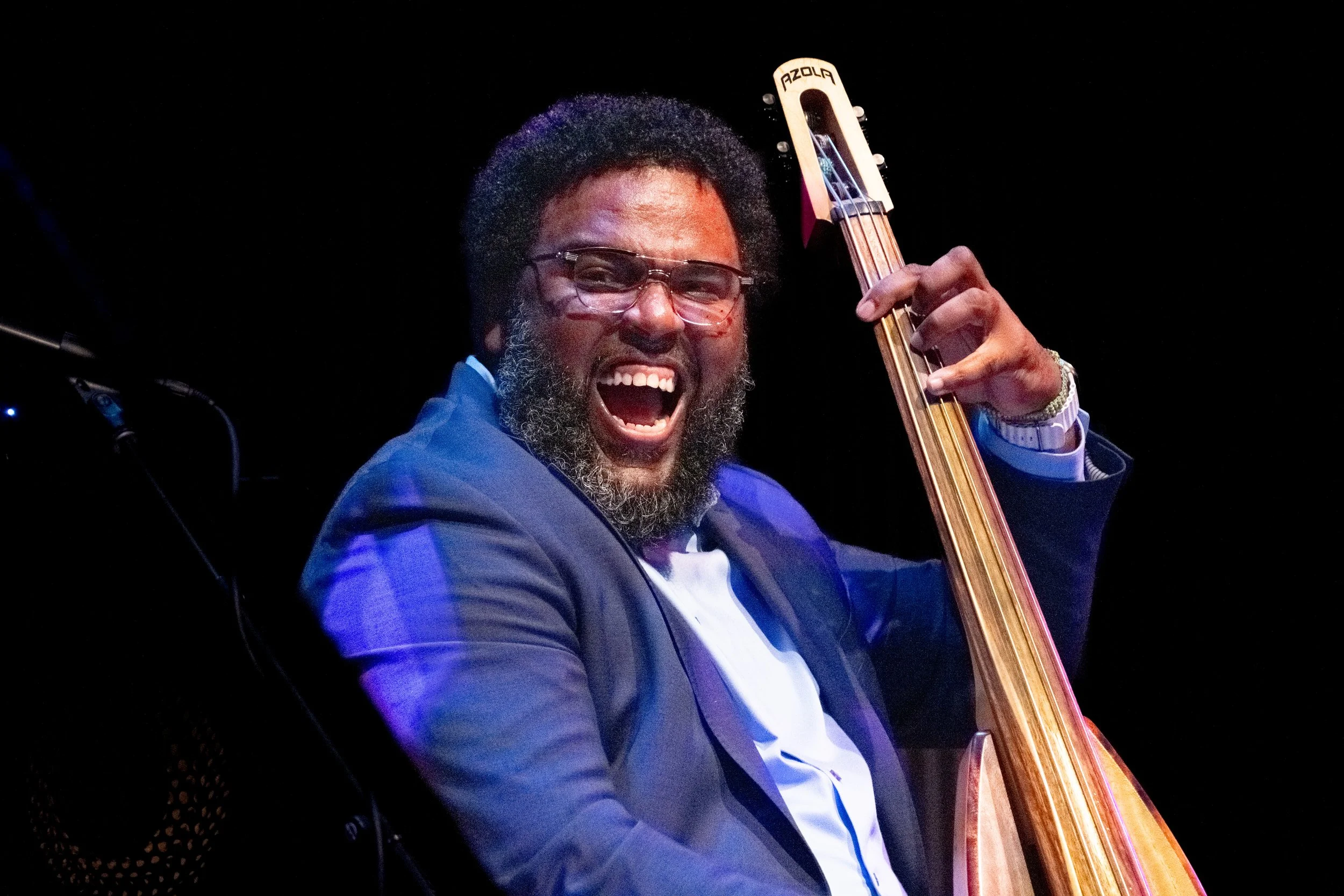
Ernesto Mazar Kindelán. Photo: Steve Roby
That ability to pivot without losing direction defined the set. Miner Auditorium’s acoustics made every transition audible. The room rewarded nuance without softening attack. Jones’s cymbal work remained crisp. Brown’s phrases maintained their full contour. Mazar Kindelán’s baby bass landed with tactile presence. Sosa’s keyboard textures never blurred the piano’s attack. This was a night built for acoustic detail and rhythmic clarity.
Bay Area Lineage on Stage
Halfway through the show, Sosa paused to address the sold-out crowd. He thanked Jones for expanding his musical journey when he first arrived from Cuba and recalled hearing Brown’s "Shifting Currents," which made him decide he needed to find the saxophonist right away. He also shared how the band re-formed during the pandemic, initially to change the energy during a tough time and later as a resilient quartet playing both old and new music. At its core, he said, the project was about peace, love, and unity.
That brief talk mattered because it clarified that Quarteto Americanos is more than just a repertory group. It is a band built from memory, survival, and renewed purpose.

John Santos. Photo: Steve Roby
Then came the evening’s highlight. Sosa introduced John Santos, the respected Bay Area percussionist, composer, and educator, whose career has established him as one of the region’s key voices in Afro-Latin jazz and a mentor, brother, and central figure in Sosa’s life.
Sosa welcomed him to the stage with the reminder that freedom is one of jazz’s core principles. Santos entered carrying a large gourd Shekere decorated with shells and joined the band on “Changui.” His presence immediately changed the social energy in the room. He expanded the music. The groove grew stronger, the stage relaxed into a party atmosphere, and Mazar Kindelán asked the audience if they spoke Spanish before reassuring them that what mattered most was joining the Cuban celebration already underway.
By then, the crowd was standing, dancing in the aisles, and responding to the band with the kind of movement Miner Auditorium prompts when the rhythm becomes irresistible. Santos returned later for the encore, “Muevete en D,” reinforcing the night’s feeling of Bay Area continuity and shared heritage.
Monk, Motion, and the Explorer’s Mind
The last major moment before the encore was “Remember Monk,” which clarified the evening’s main message. Sosa approached Monk’s uneven rhythm, angular phrasing, and off-center attacks, blending Afro-Cuban energy into a tribute that felt fractured, soulful, and intensely alive. Jones added a sizzling forward drive to the tune. Brown’s lines wrapped around the piano’s rhythmic texture. Mazar Kindelán kept the pulse steady and buoyant even when the phrasing turned jagged. Monk’s influence was a living language, absorbed into Sosa’s quartet style and expressed by a different voice.
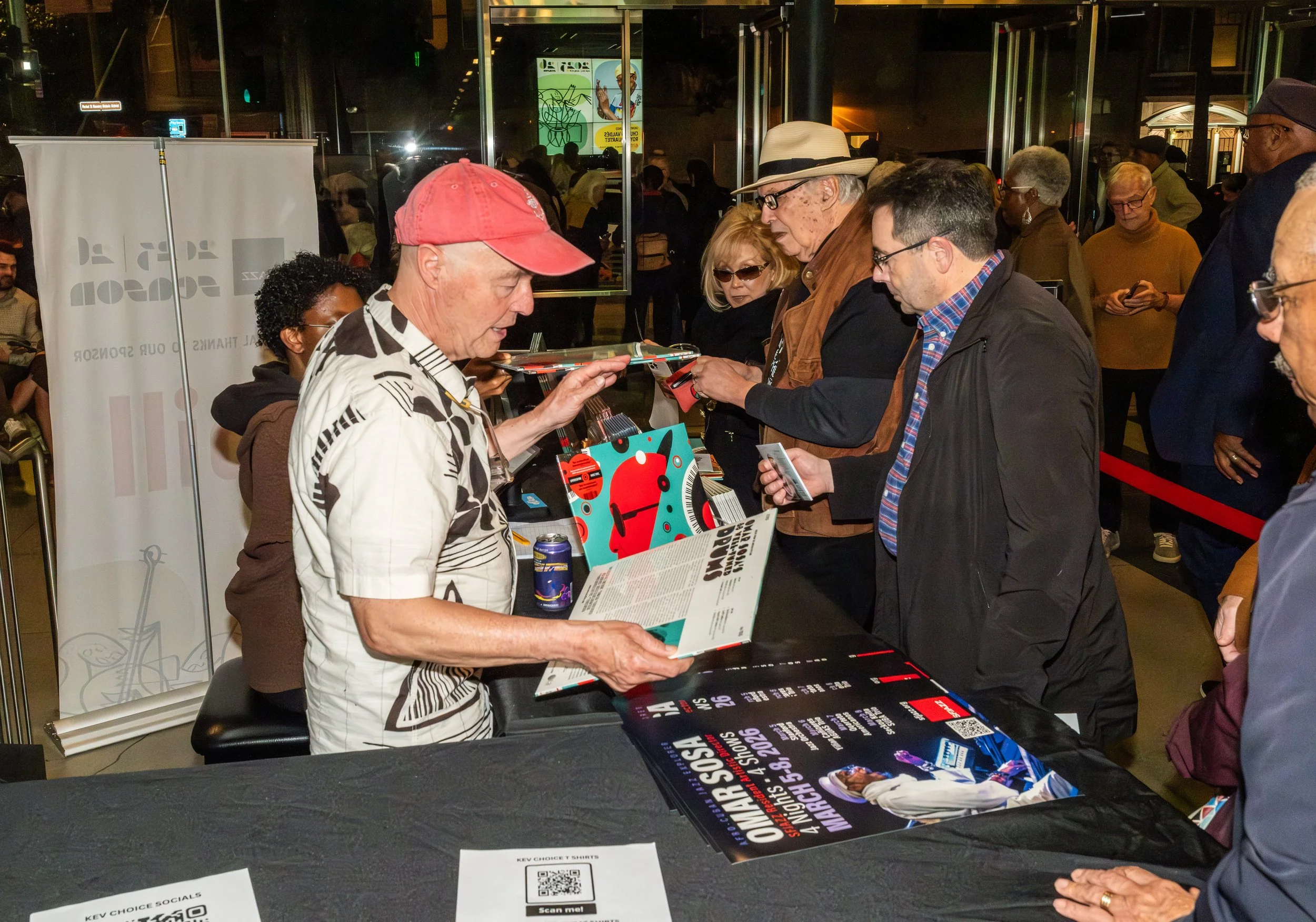
Fans line up to have albums signed by Sosa. Photo: Steve Roby
Night 3 revealed Sosa as the explorer of this residency: a bandleader fluent in Bay Area memory, Cuban rhythm, and global jazz conversation, using the quartet form as an engine for discovery. Night 1 showcased mentorship. Night 2 opened the spiritual core. Night 3 moved with sharper edges and street-level energy, drawing on decades of partnership to make advanced ensemble playing feel urgent, physical, and communal.
The final night still awaited, but Quarteto Americanos had already made one thing clear: Sosa’s music keeps evolving because he continues to find new ways to hear history and transport it into the present.
Program Notes
Omar Sosa: Quarteto Americanos
Date: Saturday, March 7, 2026
Venue: Miner Auditorium (SFJAZZ Center)
Location: San Francisco
About This Show: Omar Sosa’s third night of residency is dedicated to an electro-acoustic ensemble formed during his time living in the Bay Area in the 1990s. It features an all-star lineup including longtime collaborators, drumming legend Josh Jones, and wind master Sheldon Brown. The quartet is rounded out by bassist Ernesto Mazar Kindelán, and it began in early 2021, during the pandemic, when Sosa returned to the Bay Area for online performances. They later toured the U.S. in 2024 to celebrate the release of director Soren Sorensen’s documentary film on Sosa, Omar Sosa’s 88 Well-Tuned Drums.
Personnel
Omar Sosa: keyboards, piano, special audio effects
Sheldon Brown: multi-reeds, flute
Ernesto Mazar Kindelán: Azola electric upright baby bass
Josh Jones: drums and percussion
John Santos: percussion on two songs
Setlist: “El Bola,” “D2 de Africa,” “Light in the Sky,” “Changui,” “Estancia,” “Remember Monk,” “Muevete en D”
Tech Staff
Marco Melchior: Front of House - Live Sound Mix Engineer and Production Manager for Omar Sosa
SFJAZZ Tech Crew
Alex Espolet: Front of House Engineer
Martin Carmona: Monitor Engineer
Masanori Yura: Multitrack Recording and Mix Engineer
Emmett Reed: Audio Assistant
Dylan Lewis: Video Director, Camera Operator
Albert Wong: Video Mixer, Camera Operator
Jeremy Guy: Lighting Director
Matthew Moreau: Lighting Director
Chris Edwards: Production Manager for SFJAZZ
Taylor Rivers: Stage Manager