5 Miles Davis Albums to Listen to This Week
A concise guide to five pivotal records across Miles Davis’s evolving sound world.
As SFJAZZ marks the Miles centennial with its “Miles Davis: A Century of Cool” program in the Joe Henderson Lab through March 26, these five albums offer a sharp path through one of the most restless careers in modern music.
To listen to Miles Davis in sequence is to hear an artist refusing to settle. The trumpet sound changes. The bands change. The scale changes. Even the idea of what a jazz record can be changes. These five albums do not cover everything, but they trace a clear arc: small-group poise, modal spaciousness, orchestral color, post-bop volatility, and, finally, electric transformation.
1. Workin’ With the Miles Davis Quintet
Officially released in December 1959 from sessions recorded in May and October 1956, Workin’ catches Davis in a compact-group setting that still feels conversational and loose-limbed. Nothing here sounds overdetermined. The tempos breathe. The phrasing stays dry-eyed and exact. On “It Never Entered My Mind,” the muted trumpet carries a private, late-night gravity that makes the performance feel less played than remembered. This is the Miles album to reach for when you want intimacy, swing, and the sound of a band that already trusts silence.
Top track: “It Never Entered My Mind”
2. Kind of Blue
Released on Aug. 17, 1959, Kind of Blue remains the most welcoming entrance into Davis’s catalog and one of the deepest records in American music. Its spaciousness is the key to its durability. “So What” is the obvious starting point, but what lingers is the album’s poise. It leaves room around every idea. It lets tone do the work of argument. More than six decades on, it still sounds like a new way of hearing time.
Top track: “So What”
3. Sketches of Spain
Issued on July 18, 1960, Sketches of Spain expanded Davis’s palette without diluting his emotional focus. It was his third project with Gil Evans, and the record balances grandeur and solitude with unusual grace. “Concierto de Aranjuez: Adagio” sits at the center of the album’s power: orchestral, stately, and deeply human, with Davis shaping long lines that sound both ceremonial and wounded. This is the record for the amount of atmosphere one horn can hold.
Top track: “Concierto de Aranjuez: Adagio”
4. E.S.P.
Released on Aug. 16, 1965, E.S.P. introduced the Second Great Quintet on record: Wayne Shorter, Herbie Hancock, Ron Carter, and Tony Williams joining Davis for music built on tension, quick reflexes, and collective intelligence. The title track feels alert from the first bar, as if the ensemble is discovering the form as it plays. This is Miles at a point of transition, hearing a new language and stepping into it without hesitation.
Top track: “E.S.P.”
5. Bitches Brew
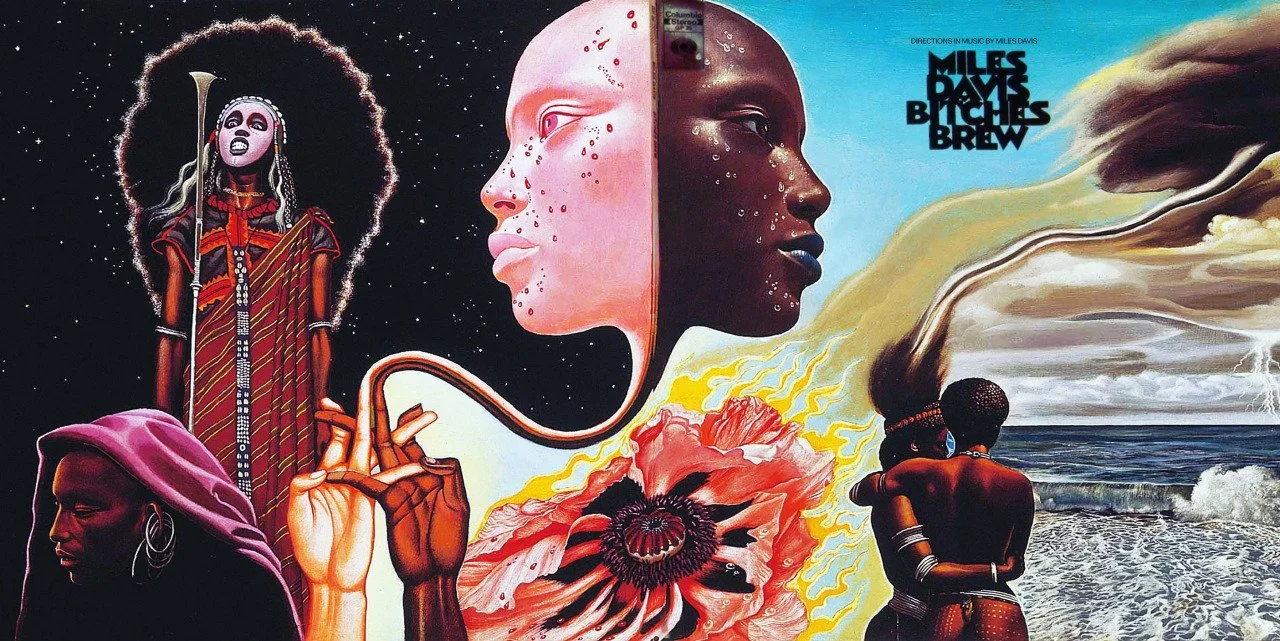
Released on March 30, 1970, Bitches Brew remains the great rupture in the Miles catalog: an era-defining double album that turned studio editing, electric instrumentation, and groove into compositional tools. The music advances by pressure, texture, and motion more than by tidy resolution. “Miles Runs the Voodoo Down” is a strong entry point because its pulse is immediate, even as the sound around it keeps shifting shape. If the earlier records invite close listening, this one demands surrender.
Top track: “Miles Runs the Voodoo Down”