“A Better Inner World”: Tyreek McDole’s Call to Stay Human in Crazy Times
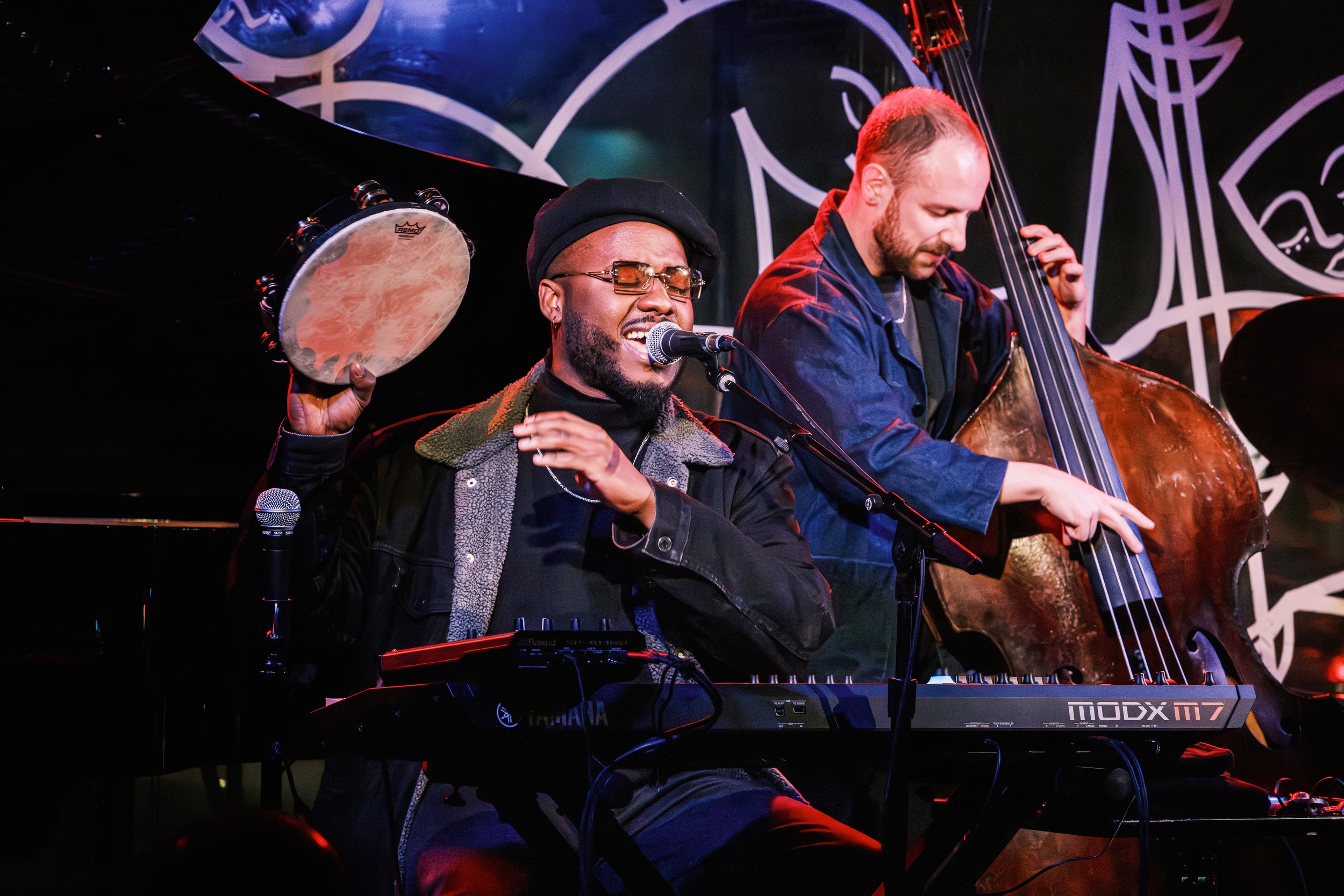
“We sold out tonight, make some noise, San Francisco!”
The siren came first. It pierced the low-lit hush of the Joe Henderson Lab at the SFJAZZ Center, then Martin Luther King Jr.’s gravelly cadence warned of “spiritual death.” Before a note had been sung, Tyreek McDole had framed the evening as more than a concert; it was a summons to collective awareness.
McDole, the 2023 winner of the Sarah Vaughan International Jazz Vocal Competition, stepped into that silence with a clear-eyed thesis. “My core belief,” he told the room, “is that if we, as individuals, engage in inner reflection and healing, we create a better inner world. That, in turn, inspires our neighbors to do better.”
He opened the one-hour set with Horace Silver’s “Won’t You Open Up Your Senses,” a composition that carries a natural urgency. Set against the backdrop of King’s 1967 speech, the tune became a living document. McDole delivered the lyric in a controlled baritone, beginning in near whispers that gradually widened into a spiritual call. He was not merely singing; he was imploring the audience—and world leaders—to wake up.
This performance marked the final night of a two-night residency, and McDole quickly acknowledged the energy in the room. “We sold out tonight, make some noise, San Francisco!” he said, his warmth cutting through the gravity of the opening. He humorously reassured the crowd that while the show began with a political edge, it would not remain there. That balance of gravity and grace defined his stage presence throughout the night.
McDole’s baritone moved like a tide, drawing the audience inward and then releasing waves of conviction. He used his breath audibly and deliberately, as if exhaling the weight of the text into the room. Even in hushed passages, there was a palpable density.
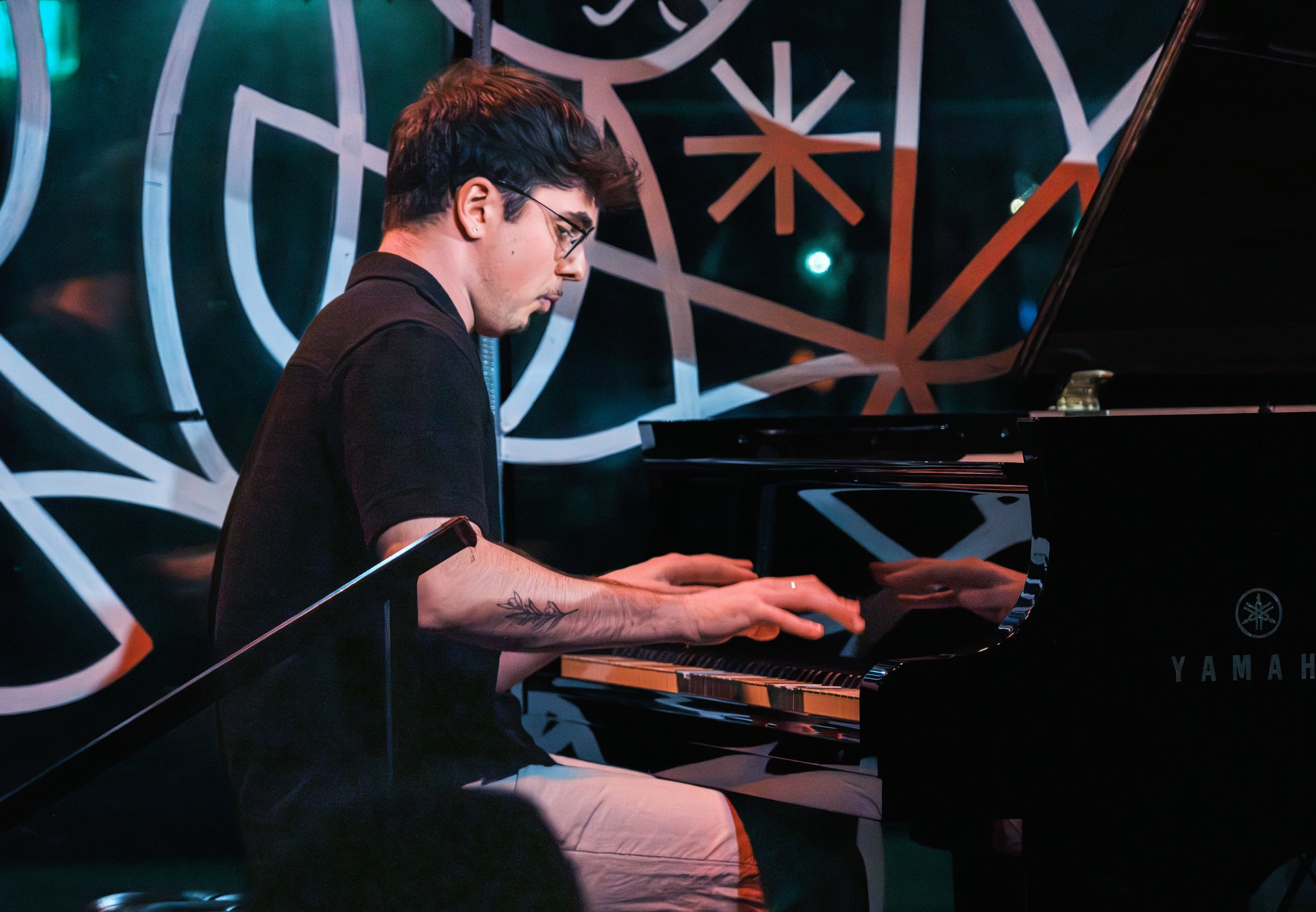
Caelan Cardello. Photo: ©Steve Roby
The band functioned as a single organism in service of that arc. Pianist Caelan Cardello offered lush, polyphonic harmonic substitutions that nodded to tradition while edging toward the avant-garde. His voicings often reframed familiar harmonic ground, creating vertical space beneath McDole’s lines without crowding them. The result was elastic harmony, capable of holding both prayer and protest.
On drums, Gary Jones III brought a supple authority. During “The Sun Song,” he leaned into a buoyant New Orleans bounce, inspired by Ahmad Jamal’s “Poinciana.” The groove carried that rolling, second-line lift—propulsive yet unhurried. It turned optimism into motion.

Tyreek McDole and Dan Finn. Photo: ©Steve Roby
One of the evening’s most arresting moments came with McDole’s interpretation of “She’s Alive” by Andre 3000. In lesser hands, a contemporary hip-hop meditation might feel ornamental in a jazz set. Here, it felt essential. McDole used the song to honor his mother’s decades as a nurse and to spotlight the systemic neglect Black women face in medical care. His delivery began almost conversationally, then tightened into a plea.
The spiritual thread deepened amid a medley of Alice Coltrane’s “Los Caballos” and Geri Allen’s “Skin.” Coltrane’s devotional expansiveness met Allen’s incisive lyricism. Cardello’s substitutions grew bolder, layering harmonies that shimmered and destabilized before resolving in clarity.

Dylan Band. Photo: ©Steve Roby
Jones responded with textural shifts, shaping cymbal washes that felt ceremonial. The ensemble achieved a rare balance: exploratory yet not indulgent, grounded yet not constrained. It was a conversation spanning generations of Black spiritual modernism, articulated through contemporary voices.
Throughout, McDole returned to the idea of the “backward step”—a meditation on looking inward before seeking answers externally. His voice thinned to a whisper, then rose again, tracing the argument’s emotional contours. The technique was precise. The effect was devotional. And yet the night never felt didactic.
McDole’s stage presence radiated warmth and even humor. He acknowledged the weight of politics and history, then smiled as if to say the room could bear it. That balance—gravity and grace—kept the set from hardening into rhetoric.
By the time the band reached “The Sun Song,” the thesis had taken shape. Jones’ New Orleans-inflected pulse lifted the room. Cardello’s harmonies brightened. McDole’s baritone rang with open clarity.
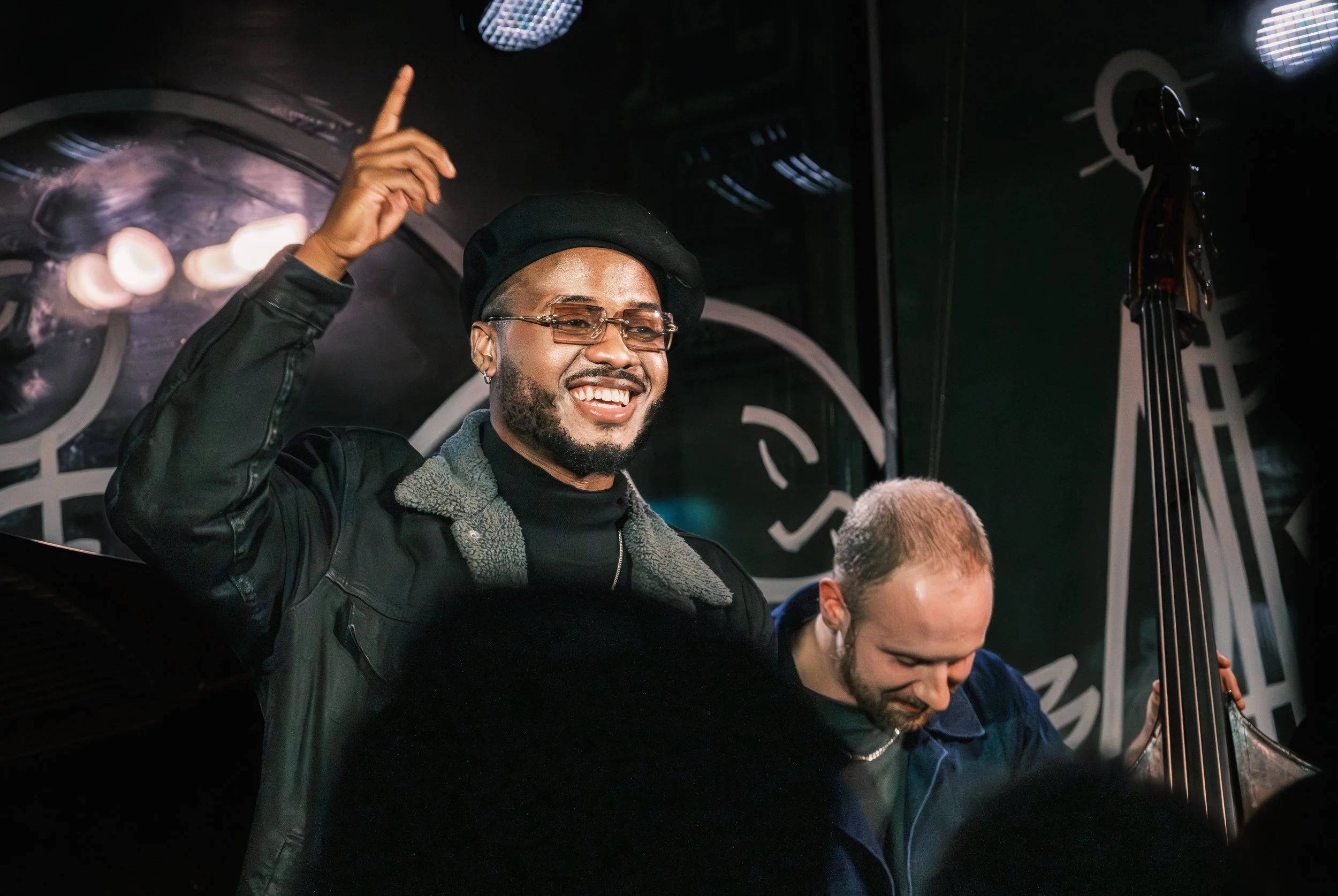
Tyreek McDole. Photo: ©Steve Roby
“I want to leave on a note of optimism,” he told the audience. “There’s a lot of crazy stuff going on outside, y’all. But now more than ever, we’ve got to hold on to what helps us keep our humanity.” The line might have sounded sentimental in another context. Here, it felt grounded in craft.
Because the optimism was not naïve. It had passed through King’s warning, Silver’s plea, Andre 3000’s testimony, and Coltrane and Allen’s spiritual architecture, absorbing criticism and emerging intact.
McDole’s belief—that inner reflection and healing create a better inner world, which then inspires social uplift—never drifted into abstraction. It was audible in the controlled swell of his baritone, tangible in the band’s collective cooperation, and rhythmic in the bounce that sent the audience out into the night with a kind of momentum.
In the Joe Henderson Lab, optimism was not an escape. It was discipline. In crazy times, that discipline felt like a form of hope.
Program Notes
Tyreek McDole Quintet
Date: Friday, February 13, 2026
Showtime: 7:00 pm
Venue: Joe Henderson Lab
Location: San Francisco
Personnel
Tyreek McDole Quintet
Tyreek McDole: vocals, percussion, pre-recorded sound effects
Dylan Band: tenor & soprano saxophones
Caelan Cardello: piano
Dan Finn: upright bass
Gary Jones III: drums
Setlist: "Won’t You Open Up Your Senses," "The Backward Step," “She’s Alive,” “Somalia Rose,” Medley: “Los Caballos/"Skin," “The Sun Song”
Photos: Steve Roby