Monty Alexander’s Musical Journey Live
At SFJAZZ, the Jamaican pianist turned a Sunday night set into a vivid memoir, blending swing, reggae, humor, and genuine emotion into a performance shaped by a lifetime of stories.
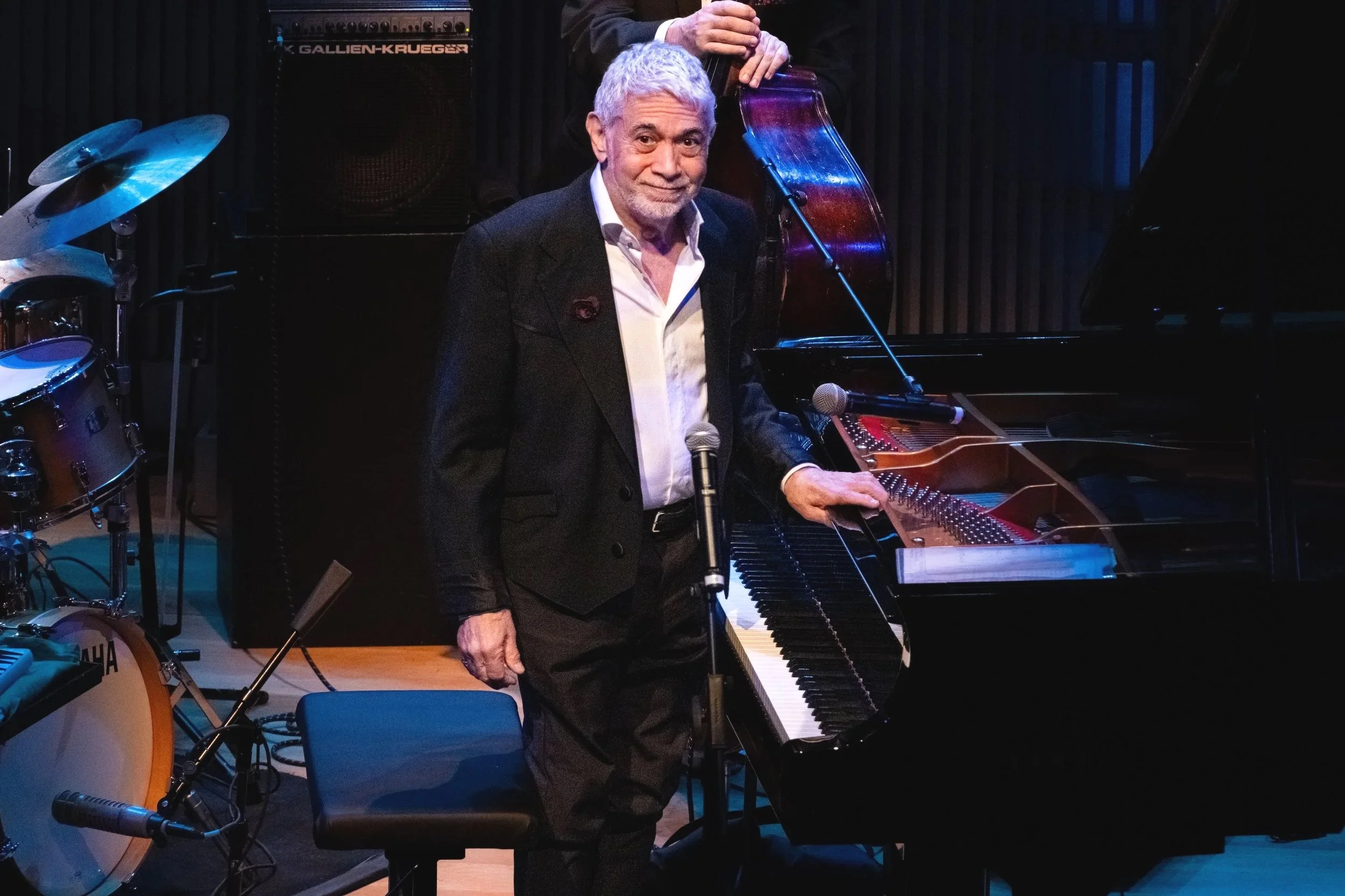
Monty Alexander at Miner Auditorium. Photo: Steve Roby
A Trio Built for the Moment
Monty Alexander’s Sunday night performance at SFJAZZ radiated the comfort of a seasoned band and the spark of an ongoing conversation. The trio sat closely together at center stage, which allowed Alexander to turn toward bassist Lorin Cohen mid-phrase, observe a reaction, and steer the music slightly in a different direction. Jason Brown maintained a lively and attentive pulse, giving the set both structure and energy. The onstage arrangement reflected the music itself: close, responsive, and interactive.
Alexander’s playing still had that unique blend of swing authority and conversational warmth. He could sharpen a phrase, tease a melody with a grin, then expand the sound with gospel depth or Caribbean buoyancy. At times, he reached inside the piano to pluck or brush its strings, in a gesture that suggested a harp, briefly turning the instrument into its own percussion section. These touches felt natural to the performance, appearing as extensions of his musical curiosity.
Early on, he introduced his composition "Look Up" as a tune "dedicated to the idea of thinking positively," then paused when a dog barked somewhere in the hall. Alexander, without missing a beat, fired back, "That dog knows the truth!" The room erupted in laughter. In a few seconds, he had set the tone for the night: intimate, relaxed, and happily open. Audience response would be part of the set.
Stories as Structure
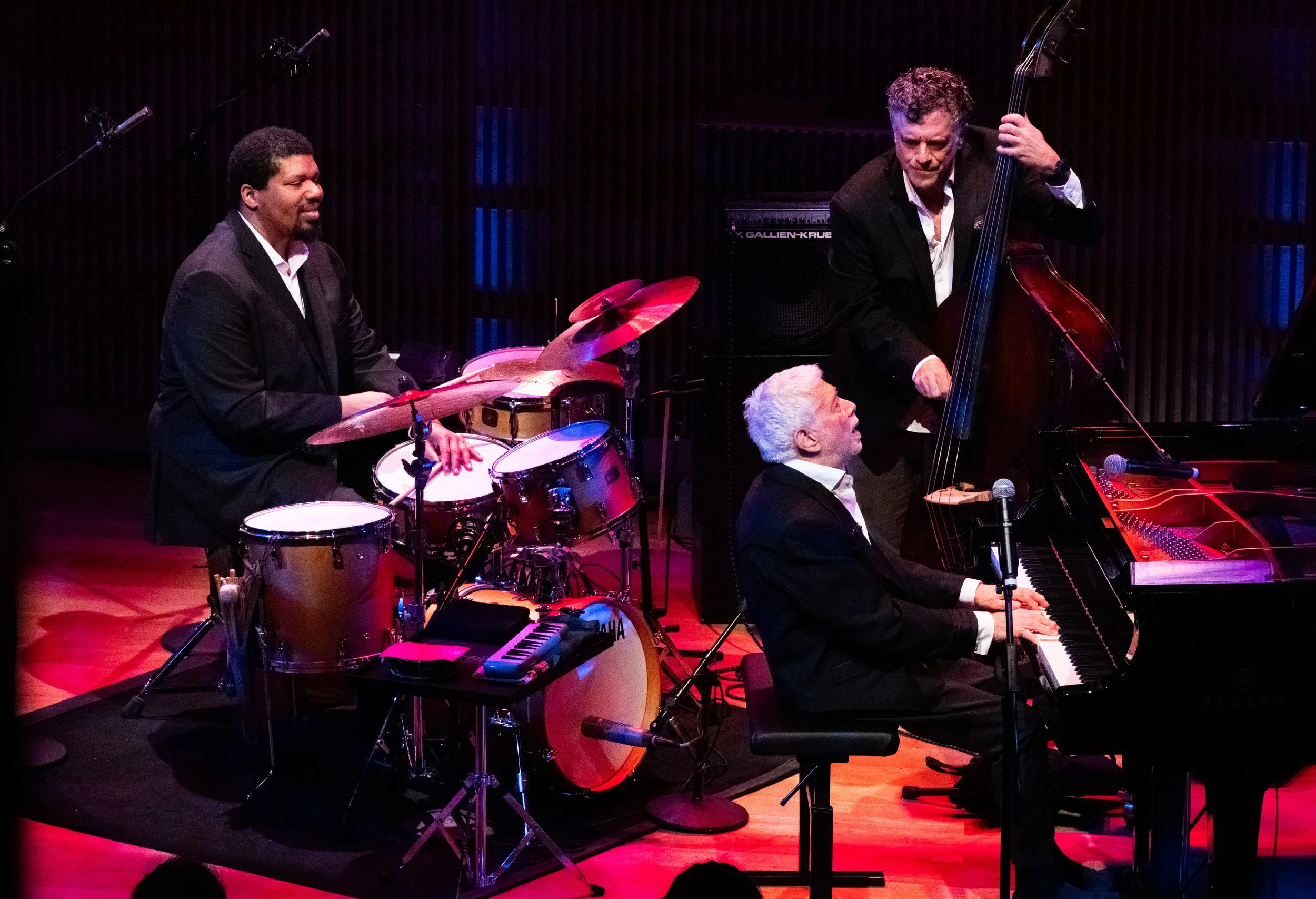
The Monty Alexander Trio. Photo: Steve Roby
Alexander offered a line that captured the evening’s theme: his life, he said, had been "one beautiful mistake after another." The phrase became a guiding idea for him. He used it to describe a journey guided by instinct, chance encounters, and a trust in feeling over formal methods. He also told the audience, with humorous honesty, that he never learned to read music the traditional way. "Everything I do is a mistake, so I’m a mistake," he said at one point, before noting that Cohen and Brown helped him turn those mistakes into something worthwhile.
Alexander treated his stories as part of the performance’s structure. Duke Ellington, Frank Sinatra, Miles Davis, Tony Bennett, Bob Marley, Louis Armstrong, and Nat King Cole appeared as presences in a long musical life. He spoke about Ellington telling him to "play the piano," and about the letter Duke later wrote to immigration that helped him stay in America. He recalled Sinatra as "bigger than Jay Z," then used that memory to talk about Miami, gangsters, bars, and the rough education of a young pianist learning on the bandstand. He spoke about Tony Bennett with visible emotion, recalling their recording together and the Fairmont Hotel’s tribute to Bennett, which nearly moved him to tears.
The stories had the pacing of a seasoned performance. Alexander knew when to linger, when to land a punchline, and when to let emotion sit in the room for a second before returning to the keyboard. More importantly, the stories deepened the music around them; each anecdote fueling the next tune with memory, gratitude, or mischief.
Jamaica in the Room
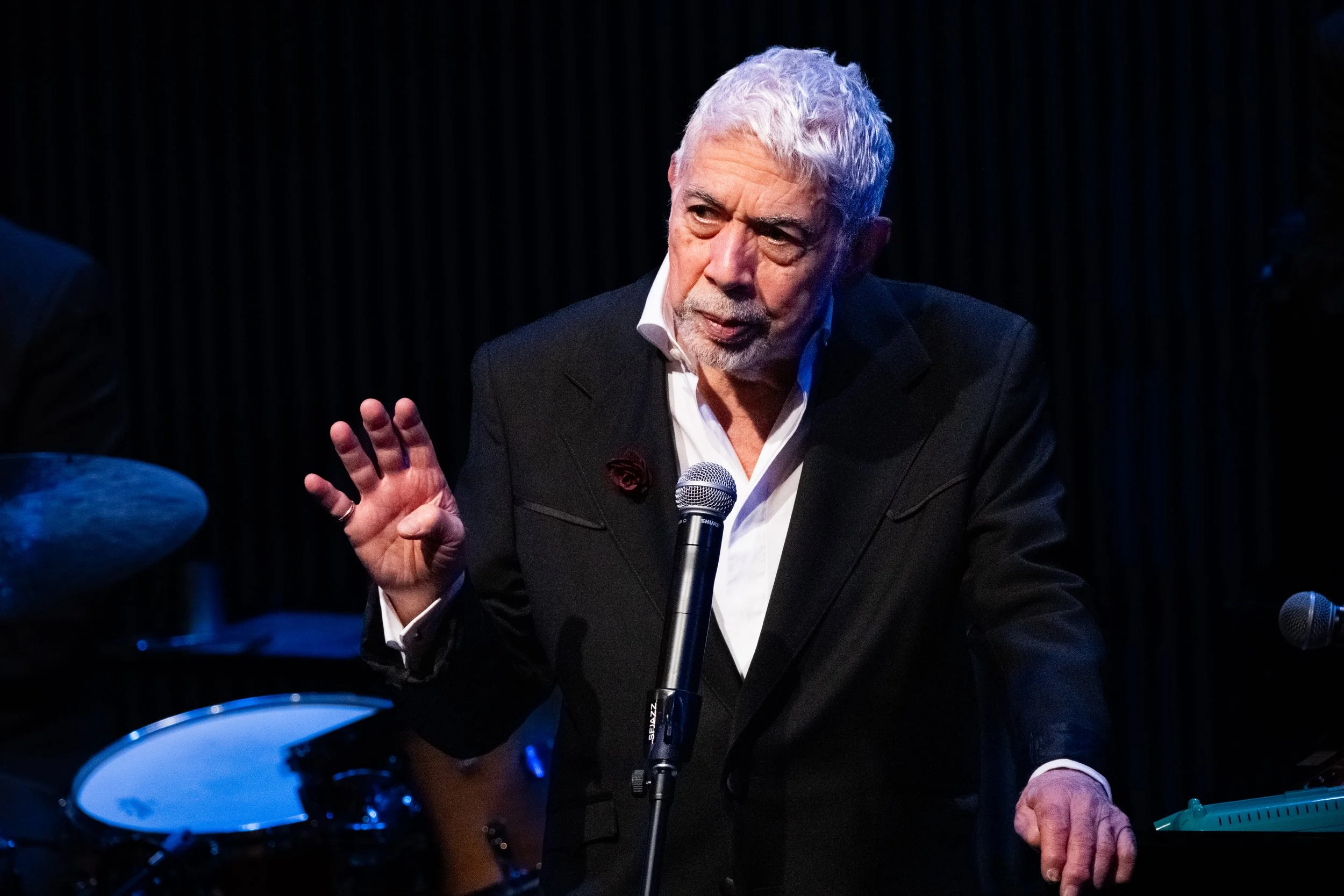
Monty Alexander. Photo: Steve Roby
The concert gained much of its strength by showing how Alexander combined Jamaican and American jazz. In a pre-show interview, he talked about hearing everything on Kingston radio and thinking of it all simply as "music," and that attitude influenced the set. The performance moved smoothly through jazz, rhythm and blues, calypso, ska, reggae, and songbook material as parts of one living language.
"Work Song" arrived with earthy momentum after a story about earlier San Francisco appearances and the musicians who had shaped him. "Maybe September" carried a Bennett glow, tender without becoming sentimental. Then came the Bob Marley sequence - “Natural Mystic,” “Get Up, Stand Up," and “No Woman, No Cry.” Alexander described Marley as a messenger of "important words of encouragement and commentary," and the medley highlighted that message musically. His remarks about Marley’s “important words of encouragement and commentary” helped explain why the medley felt so central. The jazz phrasing deepened the songs’ social force.
Later, "Dr. Yes," his clever twist on James Bond mythology, delivered a satirical nod tied to Jamaica’s film history. "Day O (Banana Boat Song)" turned the hall into an active space, with applause and a standing ovation that felt well-deserved. Throughout, the audience responded like devoted fans: people who understood Alexander’s humor, his groove, his repertoire, and his temperament, and were eager to follow him wherever the next story took them.
Feeling, Memory, and Motion
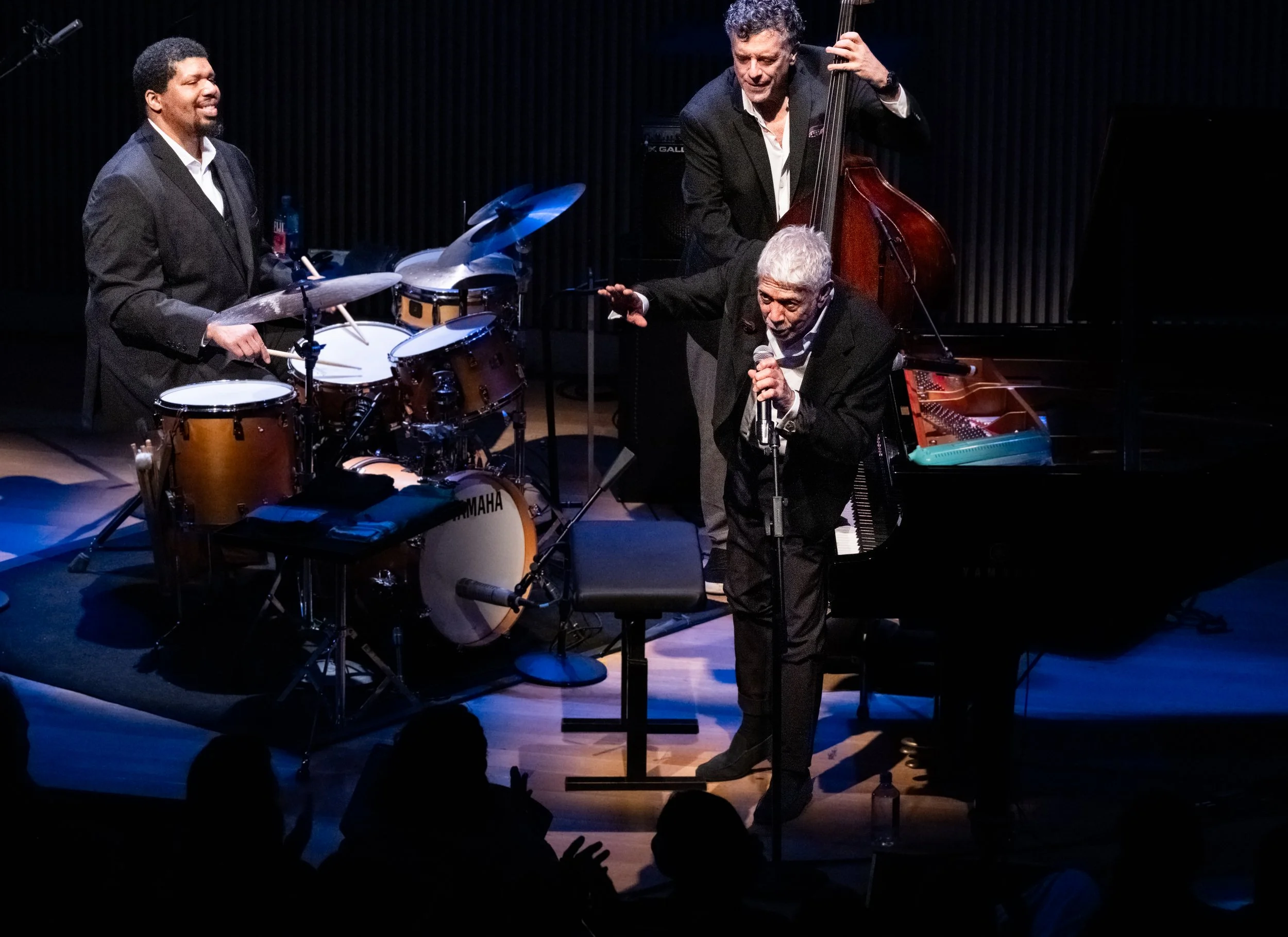
What stayed with you by the end was Alexander’s emotional openness. He let feeling into the room without overplaying it. His recollections of Bennett carried genuine tenderness. His comments near the end, touching on Jamaica, war, history, and the need to "send out good vibes," broadened the concert’s scope again. Here, his recent D-Day concerns seemed to linger in the background: a musician born on June 6, 1944, still contemplating conflict, peace, and human fellowship as themes for art.
During the encore, Alexander made his intentions clear. "This isn’t a typical concert performance," he said. "I’m just hanging out with you all." That was exactly the right description. The evening carried the feel of a visit. It had authority, polish, and command, yet also left space for tangent, laughter, memory, and sudden intimacy. When the trio returned for "Smile" and "The River," the encore felt like the natural final chapter of a long conversation.
By then, Alexander’s phrase about "one beautiful mistake after another" had grown well beyond a simple self-deprecating joke. It had become a way of understanding the entire night. Jazz, in his hands, became the art of turning detours into structure, chance into style, and memory into new motion. Sunday’s performance vividly brought a dramatic shape to life in real time. Monty Alexander played with wit, emotional clarity, and a deep trust in spontaneity, creating a concert that felt truly lived.
Program Notes
Artist: Monty Alexander Trio
Date: Sunday, March 29, 2026
Showtime: 7:00 p.m.
Venue: Miner Auditorium, SFJAZZ Center
Location: San Francisco, California
Personnel
Monty Alexander: piano, melodica
Lorin Cohen: bass
Jason Brown: drums
Setlist: “Look Up,” “Work Song,” “(I Left My Heart) in San Francisco,” “Maybe September,” Bob Marley medley: “Natural Mystic/Get Up, Stand Up/No Woman, No Cry,” “Dr. Yes,” “Day O (Banana Boat Song),” medley: “Georgia on My Mind/The Battle Hymn of the Republic”
Encore: “Smile,” “The River”
Photos: Steve Roby
Listen to our exclusive interview with Monty Alexander here.