Monty Alexander Hears One Word: Music
Ahead of his March 29 SFJAZZ appearance, Monty Alexander reflects on growing up in Kingston, absorbing every sound around him, and building a musical life that joins jazz, blues, calypso, gospel, and Jamaican rhythm into one joyful language.
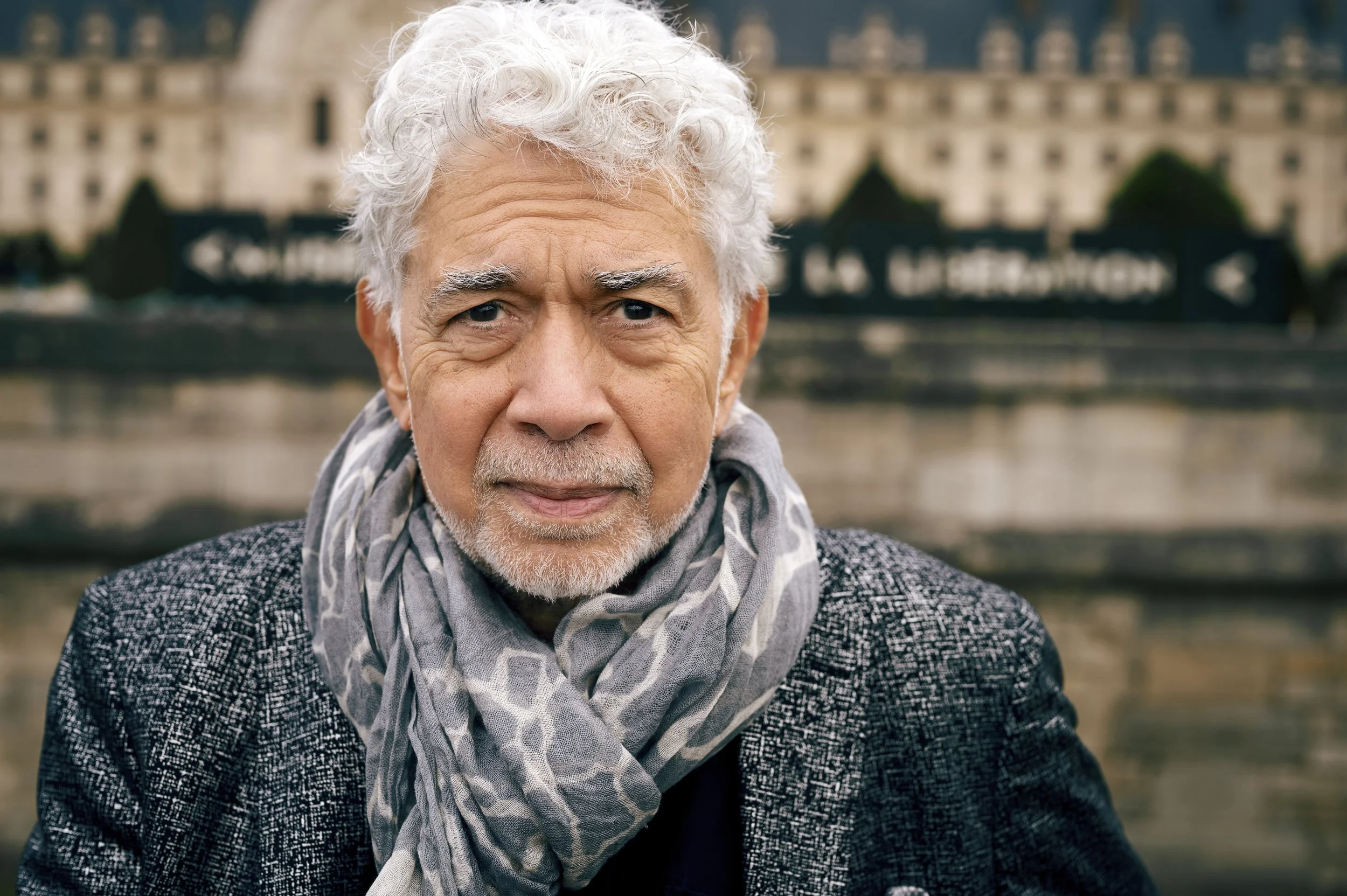
Monty Alexander. Courtesey photo
Listen to the full conversation with Monty Alexander below.
Monty Alexander doesn’t view music in fixed categories. He describes it as a living flow.
Growing up in Kingston, Jamaica, he listened to everything. Popular songs. Semi-classical music. Blues. Country. Radio programs of all kinds. Those sounds crossed borders, and he absorbed them.
“So, to me it’s just one word, music,” he said. “And it wasn’t jazz, it wasn’t this, it was just music. And I loved all of it.”
That sentence clarifies Alexander’s playing as well as any stylistic label ever could. For decades, the pianist has effortlessly blended swing, blues, calypso, gospel, bebop fluency, and Jamaican pulse, making them feel more like connected rooms in the same house than separate traditions. He performs with the ease of someone who never bought into the idea that music had to stay in compartments.
Kingston Beginnings
Alexander’s musical story began early. An old piano in the family living room became, in his telling, a favorite toy. Before formal training had much chance to shape him, he was already discovering sound on his own terms, picking out melodies and learning by ear.
“My mother would say, ‘Play that song,’” he recalled. “She started singing it. I’d go to the piano, play it.”
He resisted formal instruction and left behind lessons that felt punishing rather than illuminating. What remained was ear, instinct, and appetite. Those qualities stayed foundational. Alexander first experienced music as a physical delight, as sound made by touch, motion, and curiosity. That freedom never left his conception.
By the time he was around 12, the path ahead had sharpened. He saw American touring artists in Kingston theaters and felt the electricity of live performance. One encounter stood above the rest: Louis Armstrong.
“My biggest hero was this man, this jovial man that when he played his trumpet, the world shook with joy,” Alexander said. “I saw Satchmo. My daddy took me to the concert. I was about 11 or 12 years old. I met him backstage. I saw the concert. I said, ‘Man, I wanna do this!’”
The phrasing is important. Alexander did not talk about a career plan; he talked about involvement. The happiness in Armstrong’s playing gave him a sense of purpose.
Camaraderie and Motion
Soon Alexander was playing in Kingston with local bands, including calypso groups, and moving from place to place with an accordion his father had given him. What he remembers most vividly from those early experiences is community.
“That was the start of my, let’s call it, camaraderie,” he said. “Which is the biggest part of this music.”
That idea still lies at the heart of his musical identity. Alexander describes performance as a shared act, something built through affection, trust, responsiveness, and momentum. In his words, musicians tap into “loving life through music.” It’s an old-school way of talking about jazz, rooted in fellowship as much as virtuosity, and it feels completely natural coming from him.
When he moved to the United States in 1961, that spirit carried into tougher territory. Alexander often shared stories about learning in clubs, bars, and late-night rooms where the crowd could be as lively as the music. In this podcast interview, he chuckled about Miami as a kind of tough school, full of unpredictable energy and memorable characters. But even there, the bigger pattern remained: he was learning how music affected people in real time, how groove, swing, timing, and personality could change a room.
Storytelling at the Piano
Alexander’s recent work reflects that same expansive instinct. He spoke warmly about the newly released live recording of “St. Thomas,” taken from a 1988 concert collaboration with Randy Weston and issued in Weston’s centennial year. The piece carries Caribbean resonance, history, and friendship all at once. Alexander remembered Weston as a musical brother, a towering figure with deep roots of his own, and the recording as a document of thrilling live exchange.
He also discussed “D-Day,” one of his most personal recent projects. Born on June 6, 1944, Alexander used the piece to reflect on his birth date and its historical significance. The music, he said, was designed to tell a story about war, loss, and the need for peace.
“It’s not just the music,” he said. “It’s what it stands for.”
That phrase could describe a large part of his career. Alexander’s music exudes excitement, but it also has purpose. The joy isn't superficial. He seeks uplift, movement, tenderness, and release. He wants his music to represent something meaningful.
An Evening Built in the Moment
That sensibility should serve him well at SFJAZZ, where he returns with his trio on March 29. He will be joined by drummer Jason Brown and bassist Lorin Cohen, musicians he describes as a perfect fit for his highly spontaneous working style.
“Most of my playing is spontaneous,” Alexander said. “We don’t use sheet music. What I do is mostly spontaneous. It comes from the sky and is all about living in the moment.”
That is vintage Monty Alexander language: earthy, mystical, funny, direct. He talks about improvisation as both craft and faith. The music comes through deep knowledge, but also through readiness, openness, and trust in the players around him.
He was just as clear about what it was for. “The goal of the music is upliftment and joy,” he said. “When I play, I make myself happy, and I look at the audience, whether it’s 10 people or 10,000, we’re going to have a good time.”
That promise might be the best guide to what will emerge in San Francisco. Alexander also suggested that his performances often include stories, memories, and anecdotes from a life that has touched figures like Frank Sinatra, Duke Ellington, Oscar Peterson, and Miles Davis. Still, he understands the hierarchy. People come to hear him play.
“The main thing is I gotta play,” he said. “That’s what I do.”
Monty Alexander performs on Sunday, March 29, 2026, at 7:00 p.m., in Miner Auditorium at SFJAZZ. Joined by drummer Jason Brown and bassist Lorin Cohen, the evening promises the qualities his music has long delivered: deep groove, restless innovation, Caribbean warmth, jazz mastery, and the feeling that it all comes together in one joyful conversation.
Tickets can be found here: https://www.sfjazz.org/tickets/productions/25-26/monty-alexander/