Marcus Miller Closes Miles Davis Tour at SFJAZZ
Miller's We Want Miles septet marks the Davis centennial with a two-hour reunion spanning three decades.
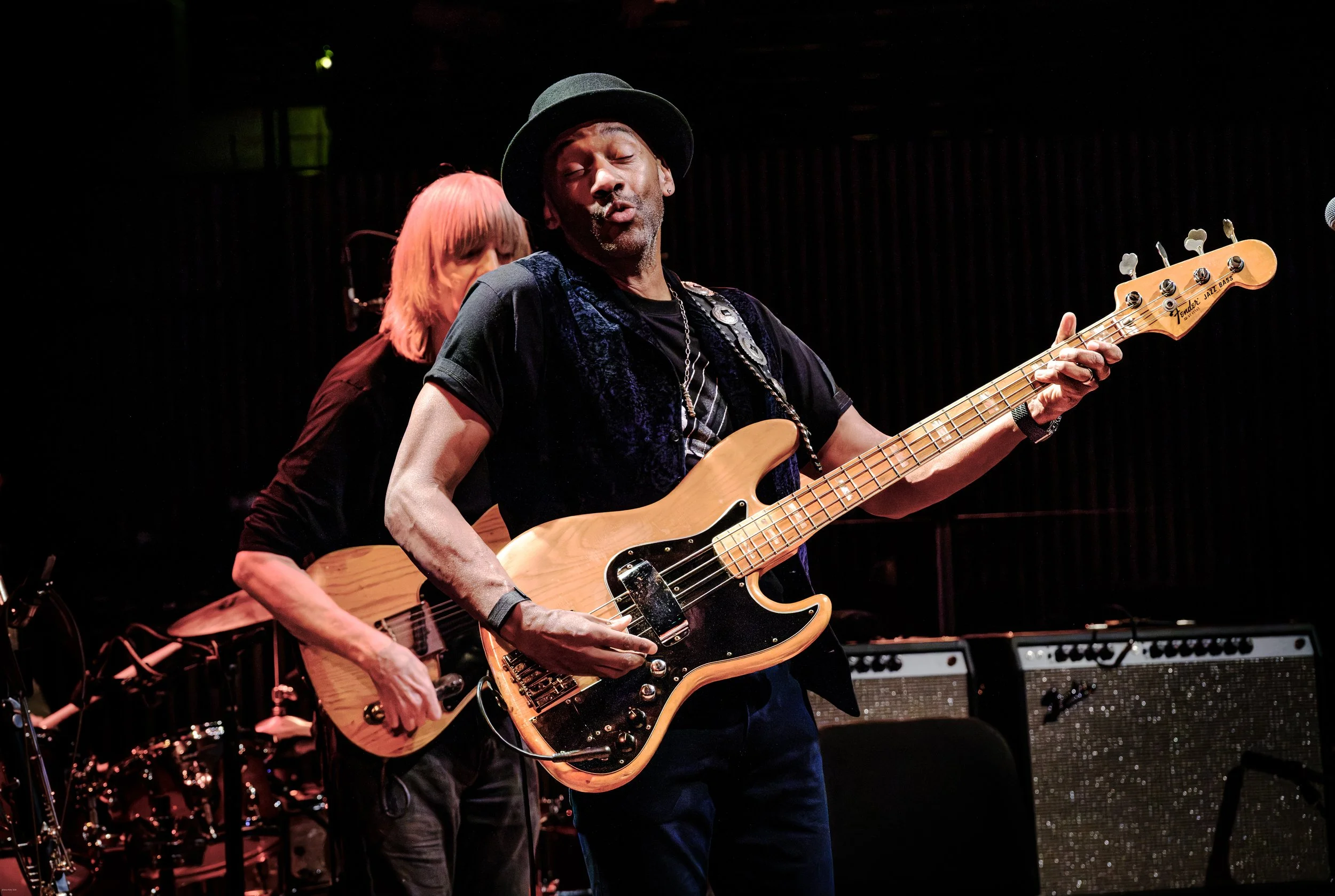
Marcus Miller at Miner Auditorium. ©Steve Roby
Last Sunday at Miner Auditorium, Mino Cinélu stepped down from his percussion riser, carried a large black gourd to center stage, and drew a startling range of sounds from it, wowing the crowd. No one onstage seemed in a hurry to leave.
They had reason to linger. This was the final show of Marcus Miller’s We Want Miles tour, a Miles Davis centennial celebration whose European leg spanned 23 dates over five and a half weeks, from late June to late July. After roughly two months apart, the septet regrouped for four nights at SFJAZZ, September 24–27. “Through the whole thing, I’m not lying,” Miller told the audience, “we couldn’t wait to get here.”
At soundcheck, Miller shrugged off the layoff. “Everybody here probably did three different projects in the meantime,” he told me. “But once we get going, it’ll all come back. I’m sure of that, and it’s actually more fun like this because it’s exciting and it’s jazz!”
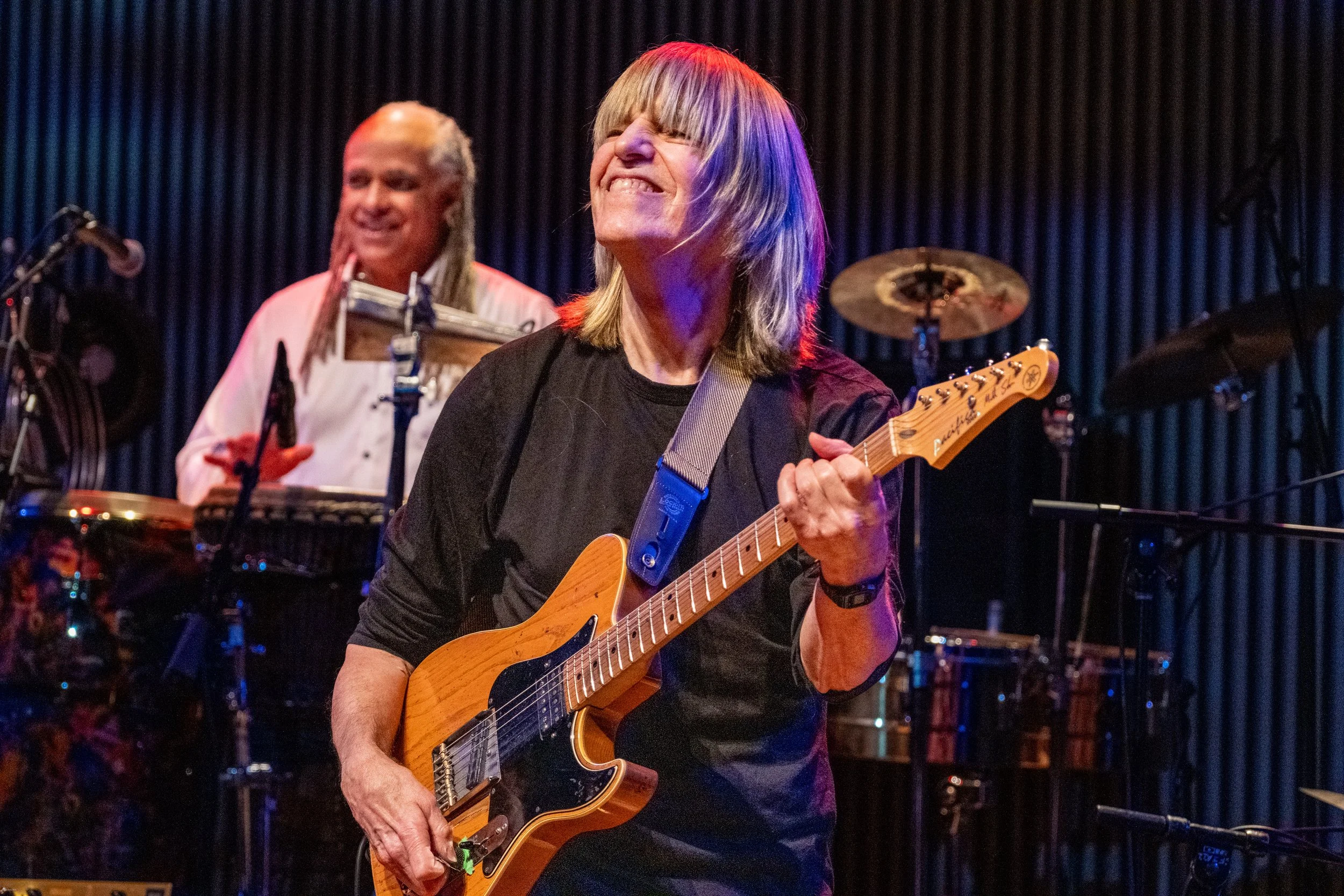
Mike Stern. © Steve Roby
The group’s core first assembled in 1981, when Davis broke a six-year silence and sought out young players. Marcus Miller, guitarist Mike Stern, saxophonist Bill Evans, and Mino Cinélu had not played together as a unit for 45 years. “It was like going to your high school reunion,” Miller recalled. “If they don’t have an afro, I don’t recognize them.” Some of his old bandmates, he added, were “way more confident than they were when we played with Miles.”
Onstage, Miller retraced the origin story. Dave Liebman, Davis’s reedman in the 1970s, recommended Evans, who spent a year coaxing Davis at the boxing club and over records. “First, I need a funky bass player,” Davis said. Evans replied, “Hey, man, you got to call Marcus.” Miller, busy on an R&B session, assumed the receptionist’s note reading “Call Miles” was a prank. When Davis asked for “a badass guitar player,” Evans brought Stern. Cinélu, a French percussionist playing at Mikell’s at 97th and Columbus, nearly knocked out the stranger staring him down until someone said, “Yo, that’s Miles!”
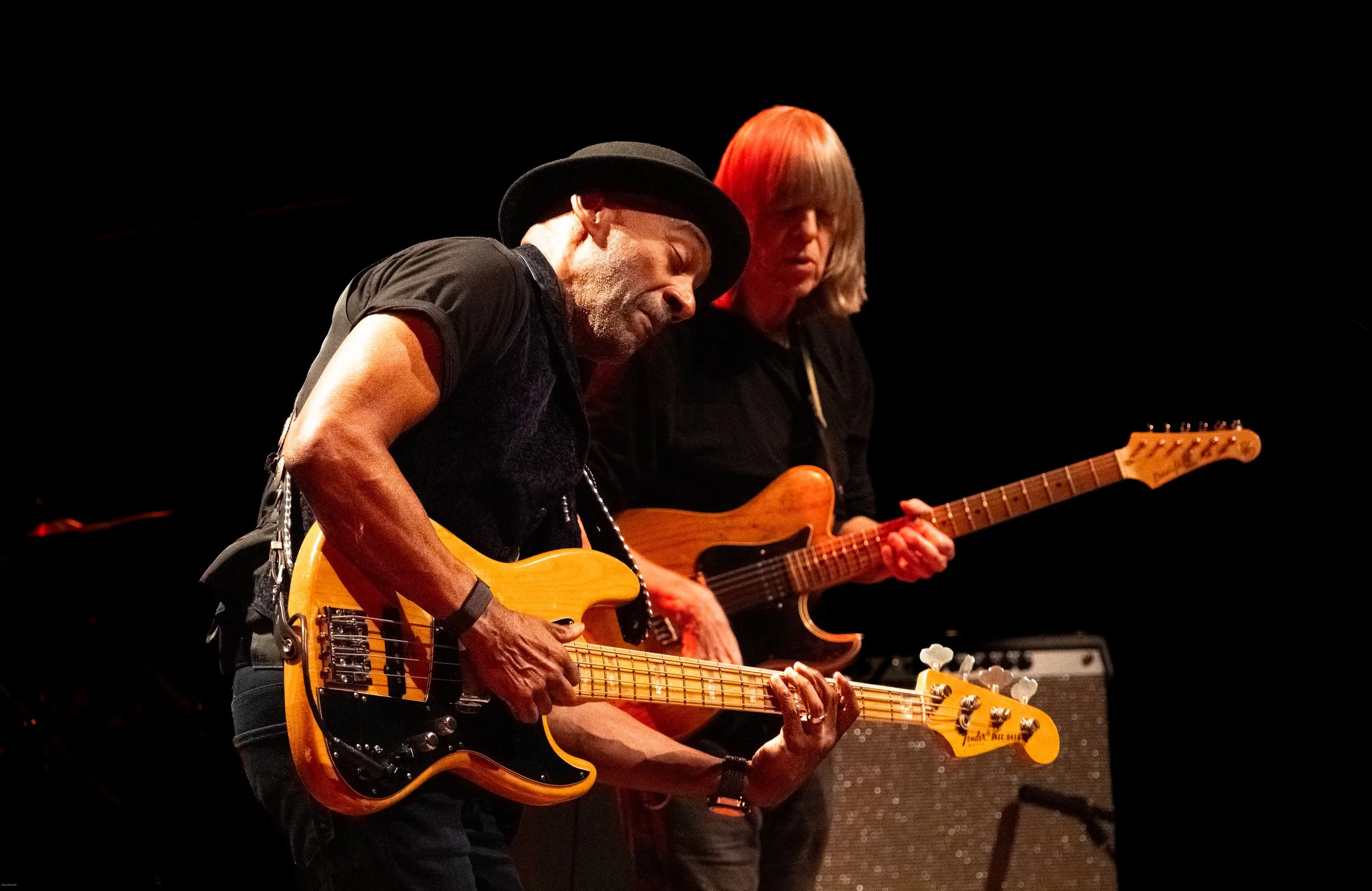
Marcus Miller and Mike Stern. ©Steve Roby
Rehearsals in Davis’s Upper West Side living room came with “minimal, minimal instructions.” Then the manager announced a gig for the following week. “Dude, it’s on us,” the young players decided. That self-reliance still shaped the band. Miller led without dominating and let the solos breathe. Before the show, he said he had reminded everyone to accompany the soloist; otherwise, “you feel like you’re strapped to the front of a train with bugs going into your teeth.”
Keyboardist John Beasley is an alumnus from a later chapter. He joined Davis in 1989, the Amandla period, when the music demanded “a lot of harmonies, a lot of stuff that you had to figure out,” Miller said. On Sunday, Beasley ranged across keyboards and synths. Two newcomers who never played in Davis's bands carry the legacy forward. For drums, “we had to bring some youth into the group,” and Philadelphia's Anwar Marshall answered the call. Miller joked that his bass is older than his drummer.
Every Davis tribute faced one question, as Miller put it: “Who’s gonna play the trumpet?” Russell Gunn settled it. His lines stayed sparse and landed with weight, true to Davis’s economy. Gunn grew up in East St. Louis, Illinois, where Davis was raised. A few years earlier, during a St. Louis stop, he took Miller across the river to the Davis family home. There, Miller recalled, Gunn was photographed playing in young Miles’s practice room.
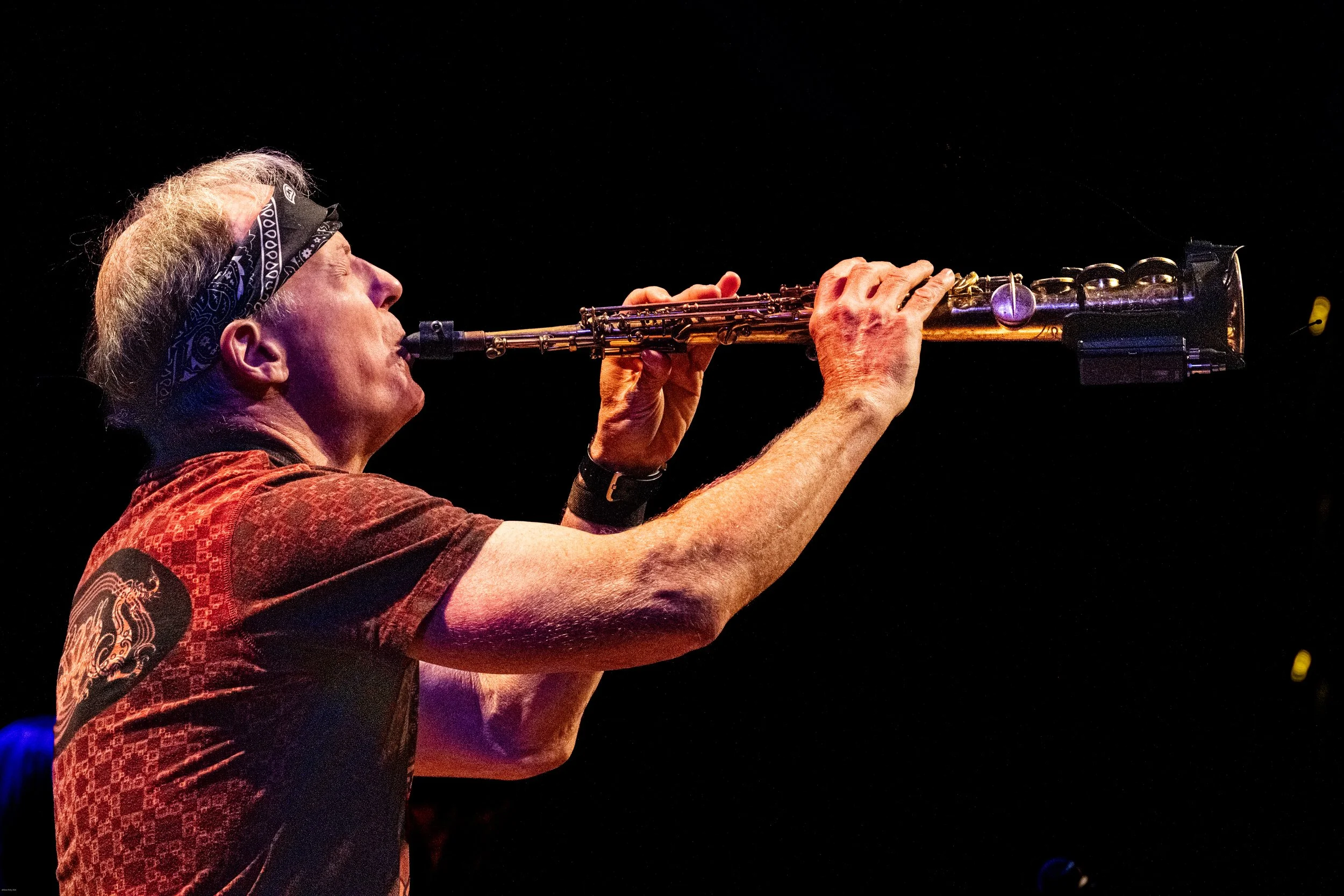
Bill Evans. © Steve Roby
The Sunday set list spanned three decades. “It’s About That Time” (1969) opened the set, followed by “Aida” and “Fat Time” from The Man with the Horn (1981). Davis named the latter after Stern, who was then heavier. Gershwin’s “My Man’s Gone Now,” from Davis’s 1958 Porgy and Bess and revived on We Want Miles, preceded Miller’s introduction of Gunn. “Catembe” and “Hannibal” came from Amandla (1989), an album that Miller largely composed and helped produce.
Then Miller rewound to 1968, when Davis was absorbing James Brown, Sly and the Family Stone, and Jimi Hendrix. “People up in Berkeley are still studying what Miles and the guys played in the ’50s and the ’60s,” he said. “In a Silent Way” flowed into “Bitches Brew,” where Stern and Miller’s dueling solos became one of the evening’s highlights.
Evans delivered what may have been the night’s strongest statements on tenor and soprano saxophone. Stern grinned throughout, applauding each bandmate’s turn. Miller launched the closing “Jean-Pierre,” the lullaby-simple We Want Miles tune, “the way all great songs should start, with the bass.” The encore was “Tutu,” his 1986 title track for Davis.
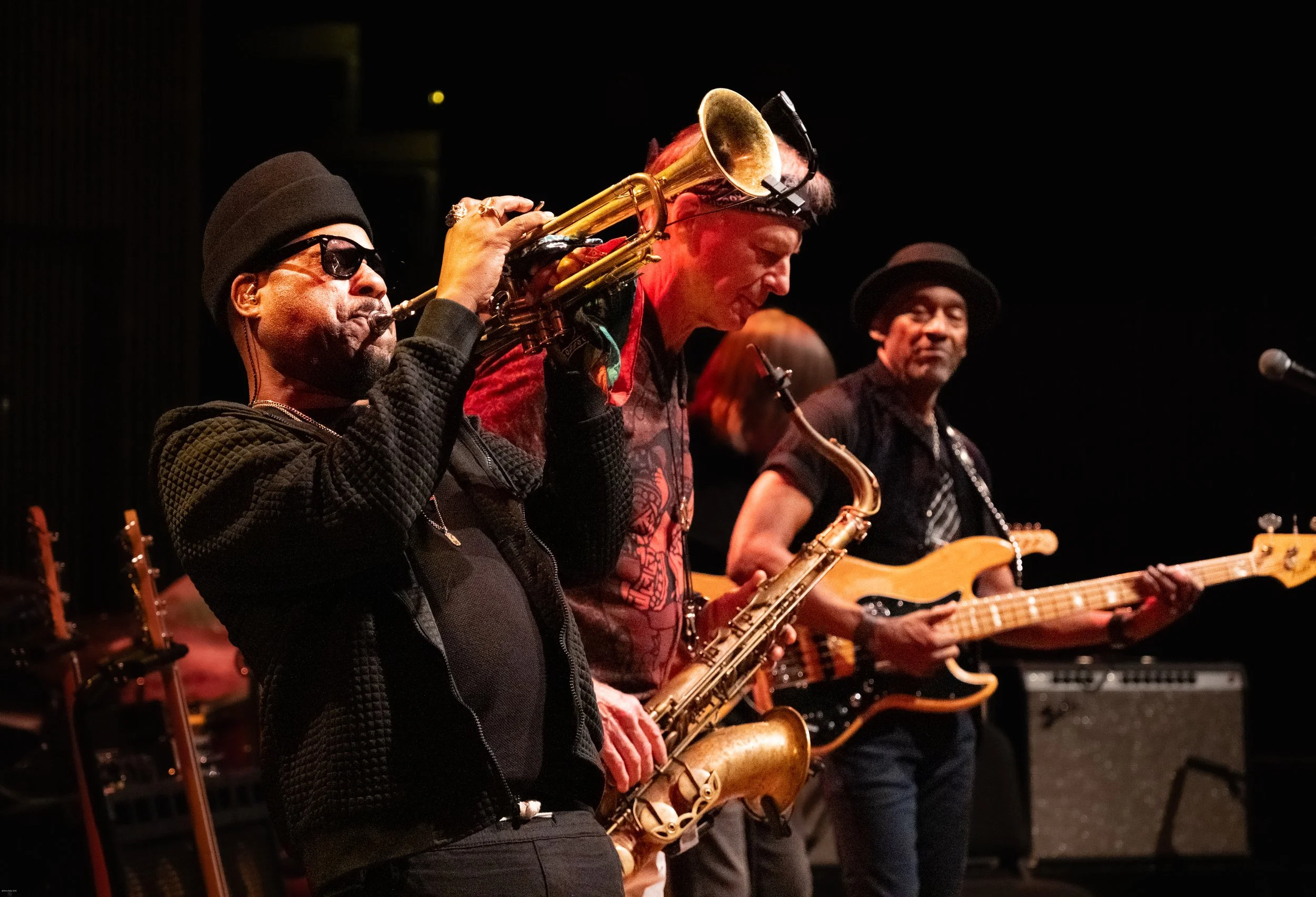
Russell Gun. © Steve Roby
One quibble: SFJAZZ promised classic Miles compositions "spanning from the 1950s right up to his final era," yet the set skips the decade between Porgy and Bess and In a Silent Way, including the acoustic 1960s quintet, and its lone 1950s tune arrives via We Want Miles. Beasley and Cinélu each staged Davis celebrations at the Presidio Theatre in the past year, and Beasley's May show leaned heavily on that quintet. Given this band's 1981 roots, the focus made sense, and the energy justified it: a standard 90-minute SFJAZZ set stretched to two hours.
Miller closed with gratitude. “This is our absolute final show of the tour,” he said. “SFJAZZ, this is the perfect place to end the tour!”
Program Notes
Event: Marcus Miller: “We Want Miles” Centennial Celebration
Venue: Miner Auditorium, SFJAZZ Center
Location: San Francisco
Date: Sunday, September 27, 2026
Showtime: 7:00 p.m.
Personnel
Marcus Miller (bass, bass clarinet); Russell Gunn (trumpet); John Beasley (keyboards); Mike Stern (guitar); Bill Evans (tenor and soprano saxophones); Mino Cinelu (percussion); Anwar Marshall (drums)
Setlist: “It’s About That Time,” “Aida,” “Fat Time,” “My Man’s Gone Now,” “Catembe,” “Hannibal,” “In a Silent Way,” “Bitches Brew,” “Jean-Pierre.”
Encore: “Tutu”