Hamilton de Holanda Trio Debut Ignites Miner Auditorium
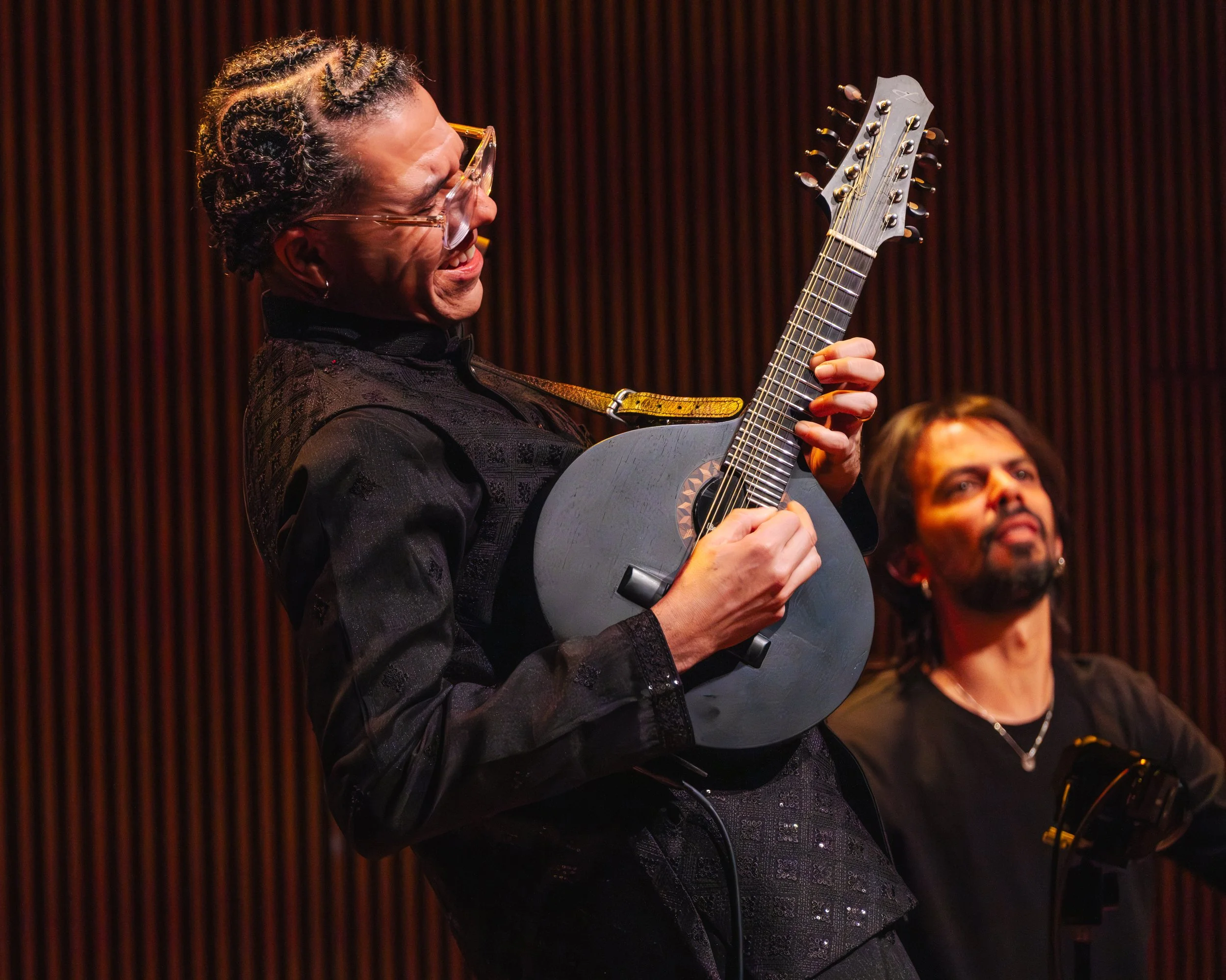
At his SFJAZZ debut, the Brazilian bandolim virtuoso reframed choro as a modern jazz language—bridging African rhythmic lineage, post-bop harmony, and chamber-like interplay among the trio.
The bandolim, the Portuguese ancestor of the mandolin, has long been associated with the parlor-scale intimacies of choro. In the hands of Hamilton de Holanda, who made his SFJAZZ debut at Miner Auditorium last Friday, the instrument shed its politeness for something more muscular, elastic, and combustible.
Arriving onstage with his signature wild hair neatly cornrowed, dressed head-to-toe in black with bright white sneakers cutting through the silhouette, de Holanda looked prepared for work rather than a recital. It proved a fitting image for a night that unfolded less as a tour through Brazilian tradition than as an architectural expansion of it. Fronting a tightly unified trio with keyboardist Salomão Soares and drummer Thiago “Big” Rabello, de Holanda deployed his custom ten-string bandolim—augmented with low-C strings—to widen the instrument’s harmonic gravity. At moments, its resonance rivaled the weight of a guitar, even without a bassist in sight.
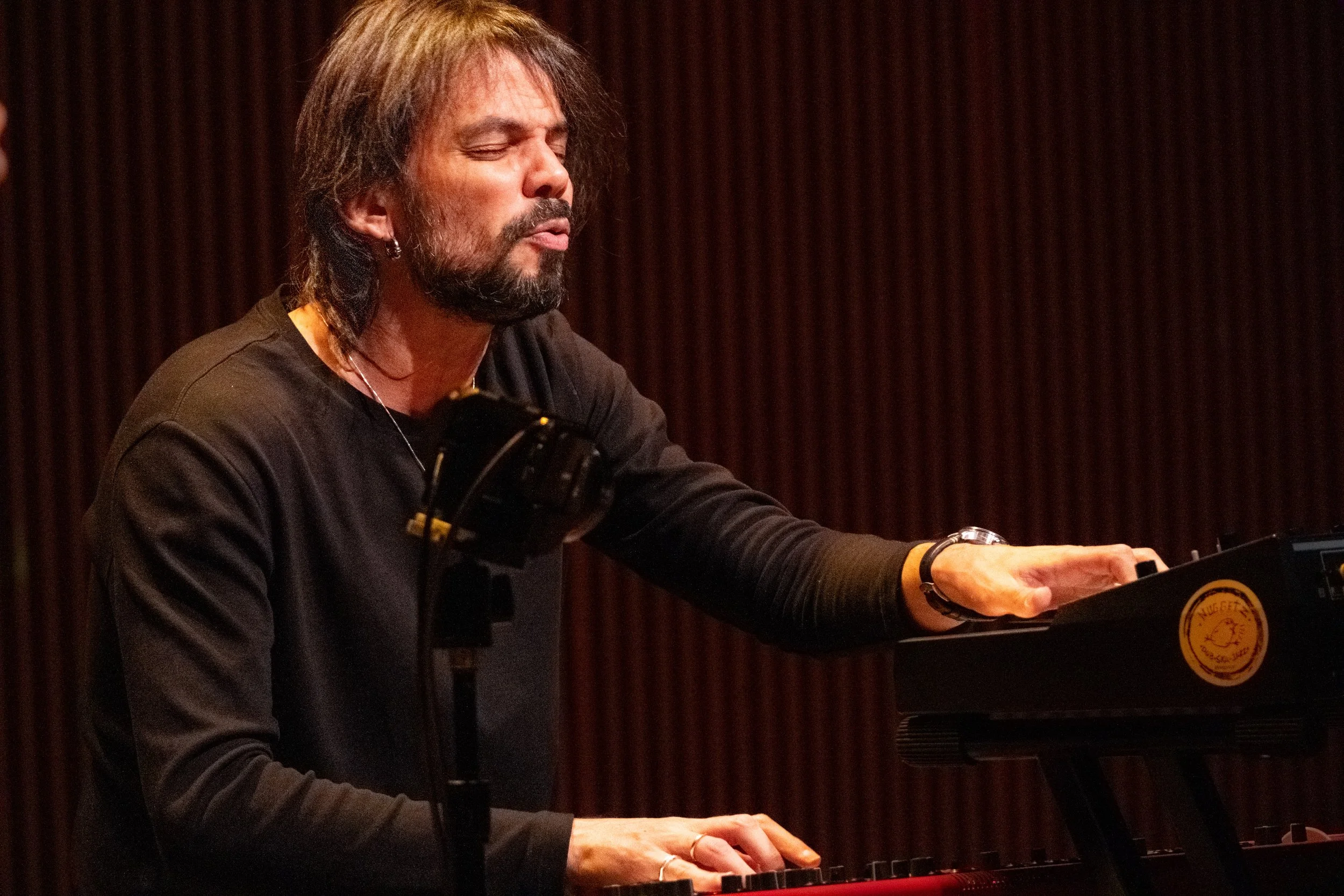
Salomão Soares. Photo: Steve Roby
The set opened with “Presente Para Sempre,” introduced as “a gift forever,” immediately establishing the evening’s sonic premise. Soares assumed the low-end role, steering his left hand to a secondary Moog synthesizer while his right hand cascaded across a Nord keyboard. The configuration allowed the trio to move fluidly between dense, polyrhythmic modern jazz and the exposed, conversational textures of chamber music. The absence of bass became a compositional advantage rather than a limitation.
A central thread of the performance centered on time—how it compresses, stretches, and fractures. Before “Afro Choro,” de Holanda spoke of the isolation of 2020, when he composed 366 pieces in a single year, treating the ritual as “medicine.” The tune served as a thesis statement for his aesthetic. He framed choro as a “grandfather to bossa nova” and a “cousin” to jazz, then led the trio through music that braided Brazilian rhythmic lineage with post-bop harmonic ambition. The groove breathed with flexibility, and the improvisations grew from collective momentum.
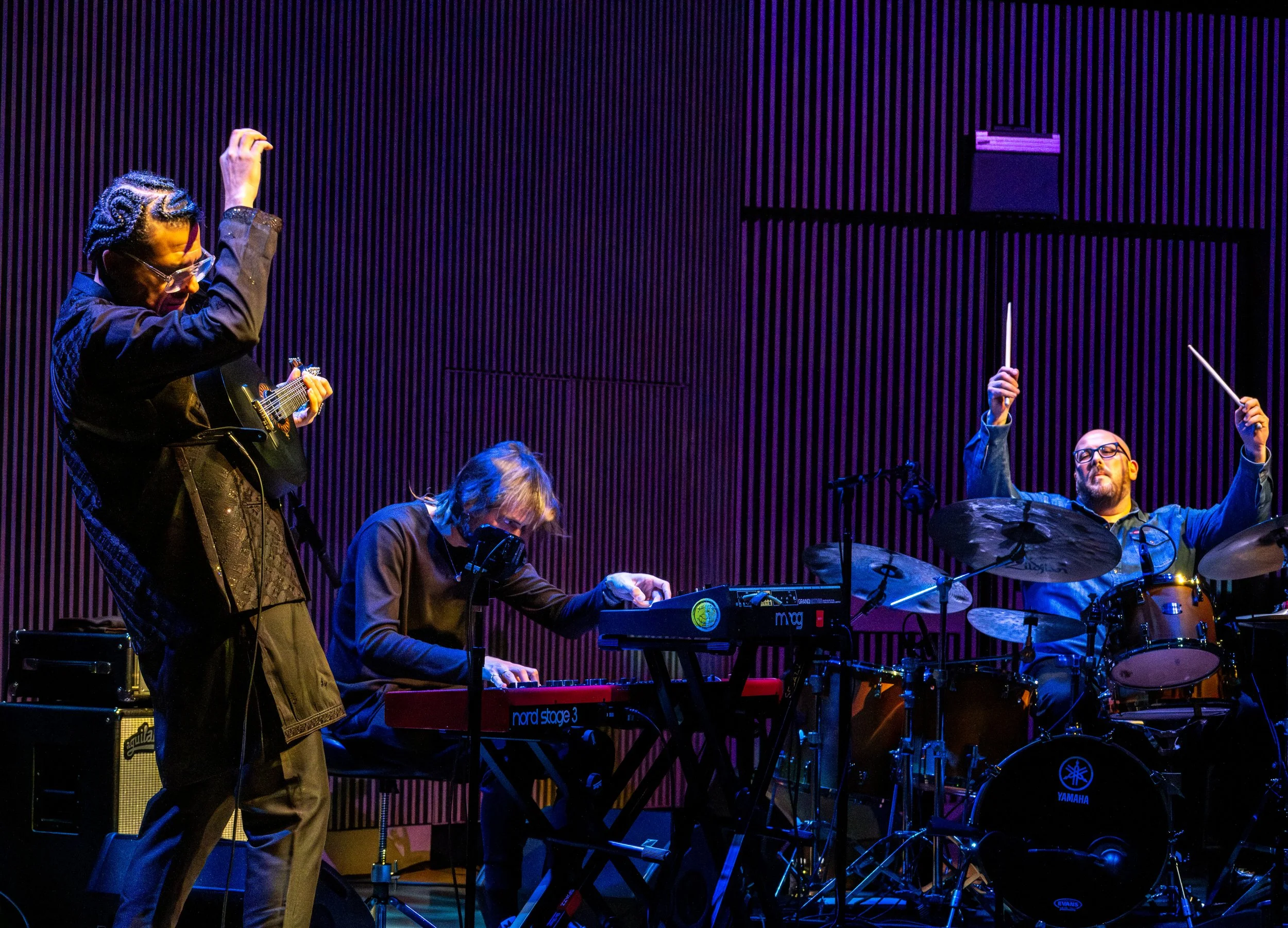
Hamilton de Holanda Trio. Photo: Steve Roby
That emphasis on lineage sharpened in “Luanda.” Introduced as “Semba,” a reference to the Angolan precursor to samba, the piece unfurled over a rolling, trance-like pulse that brought Rabello to the fore. Throughout the set, Rabello resisted fusion vocabulary, favoring dry attacks, tuned cymbal color, and forward-moving restraint. His playing honored the dance logic embedded in the rhythms while pushing the trio into contemporary rhythmic terrain.
The technical summit arrived with “Flying Chicken,” a playful “Hard Choro Jazz” composition dedicated to the group’s sound engineer. De Holanda joked that although chickens normally cannot fly, this one could. The music followed suit. The spiraling theme and relentless tempo pushed the ten-string bandolim to its physical limits. Yet even at that velocity, the trio maintained internal clarity. When Soares launched into his solo, de Holanda pivoted seamlessly into a comping role, supplying bass lines and rhythmic punctuation. The hierarchy dissolved into function, with each musician sustaining the piece's architecture.
The most revealing moment, however, came not from virtuosity but from vulnerability. “Sol e Luz (The Night Sun),” written just a week earlier between tour stops in Cambridge and Cape Cod, offered a glimpse into de Holanda’s current creative state of mind. Framed as a meditation on endings and beginnings, the composition unfolded with luminous patience. The audience leaned forward, as if collectively aware they were witnessing a work still finding its public form.
The evening closed with “Eterno Momento Hora,” inspired by the Japanese concept of Ichigo Ichie—the idea that each encounter occurs only once. It served as an ideal conclusion to a Miner Auditorium debut, underscoring the irretrievability of live improvisation. The final resonance dissolved into silence, then a standing ovation summoned the trio back for “Nova Alvorada.”
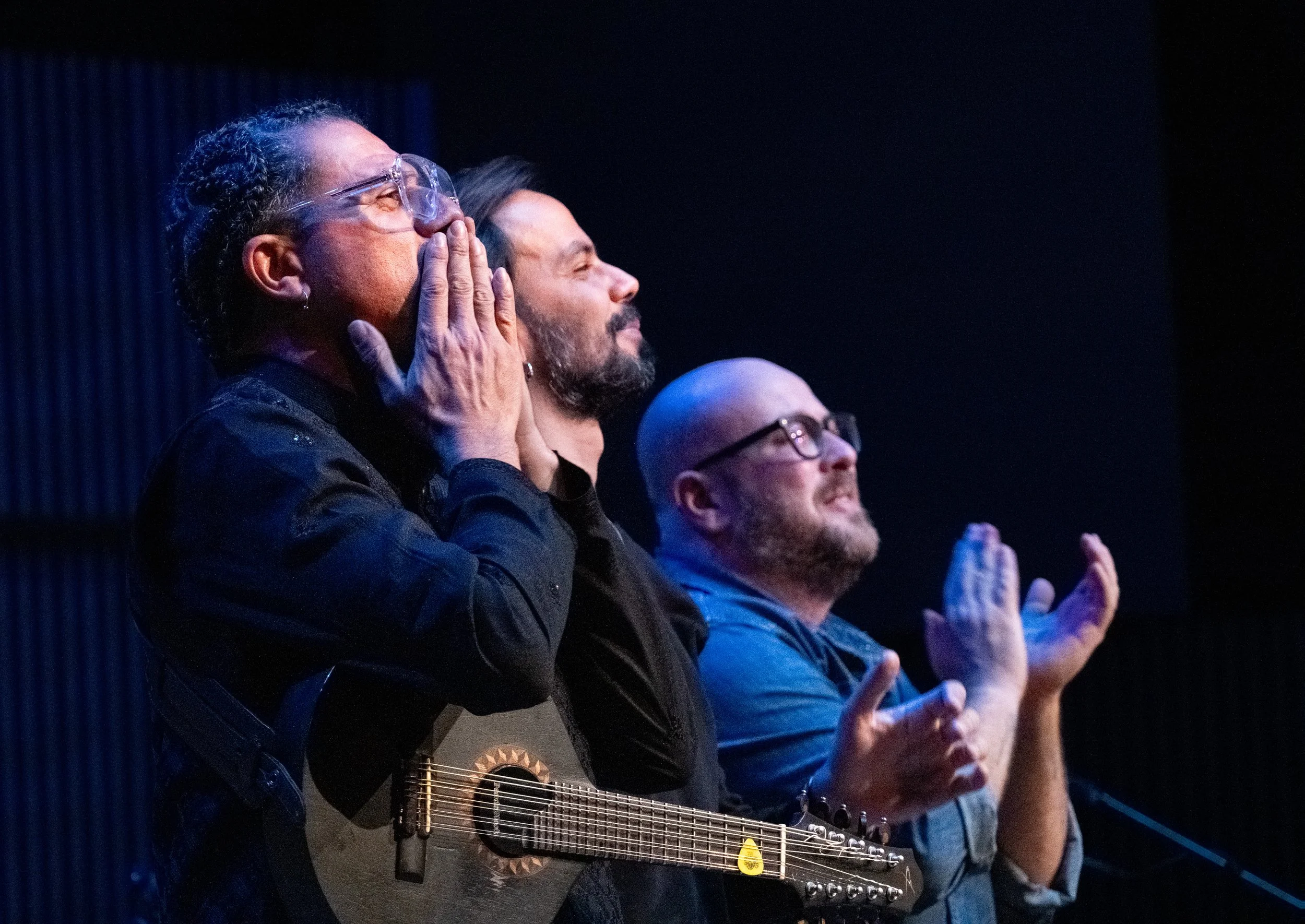
The Hamilton de Holanda Trio recive a standing ovation. Photo: Steve Roby
Hamilton de Holanda’s performance transcended the instrumental showcase. By grounding his soaring improvisations in the trio’s rhythmic foundation and collective listening, he made a compelling case for the bandolim as a contemporary jazz voice. On this night, Rio, Luanda, and San Francisco sounded like parts of the same musical conversation.
Program Notes
Hamilton de Holanda Trio
Friday, January 16, 2026
Showtime: 7:30 p.m.
Miner Auditorium, San Francisco
Personnel
Hamilton de Holanda: 10-string bandolim
Salomão Soares: keyboards (Nord Stage 3), Moog
Thiago “Big” Rabello: drums
Setlist: “Presente Para Sempre,” “Tamanduá,” “Vai Firme,” “Forró de Gala,” “Luanda,” “Afro Choro,” “Todo Dia É Um Recomeço,” “Dol Da Noite,” “Choro Fado,” “Flying Chicken,” “Eterno Momento Hora,” “Sol e Luz”
Encore: “Nova Alvorada”
Listen to our podcast interview with Hamilton de Holanda.