Dianne Reeves Shapes an Evening of Grace
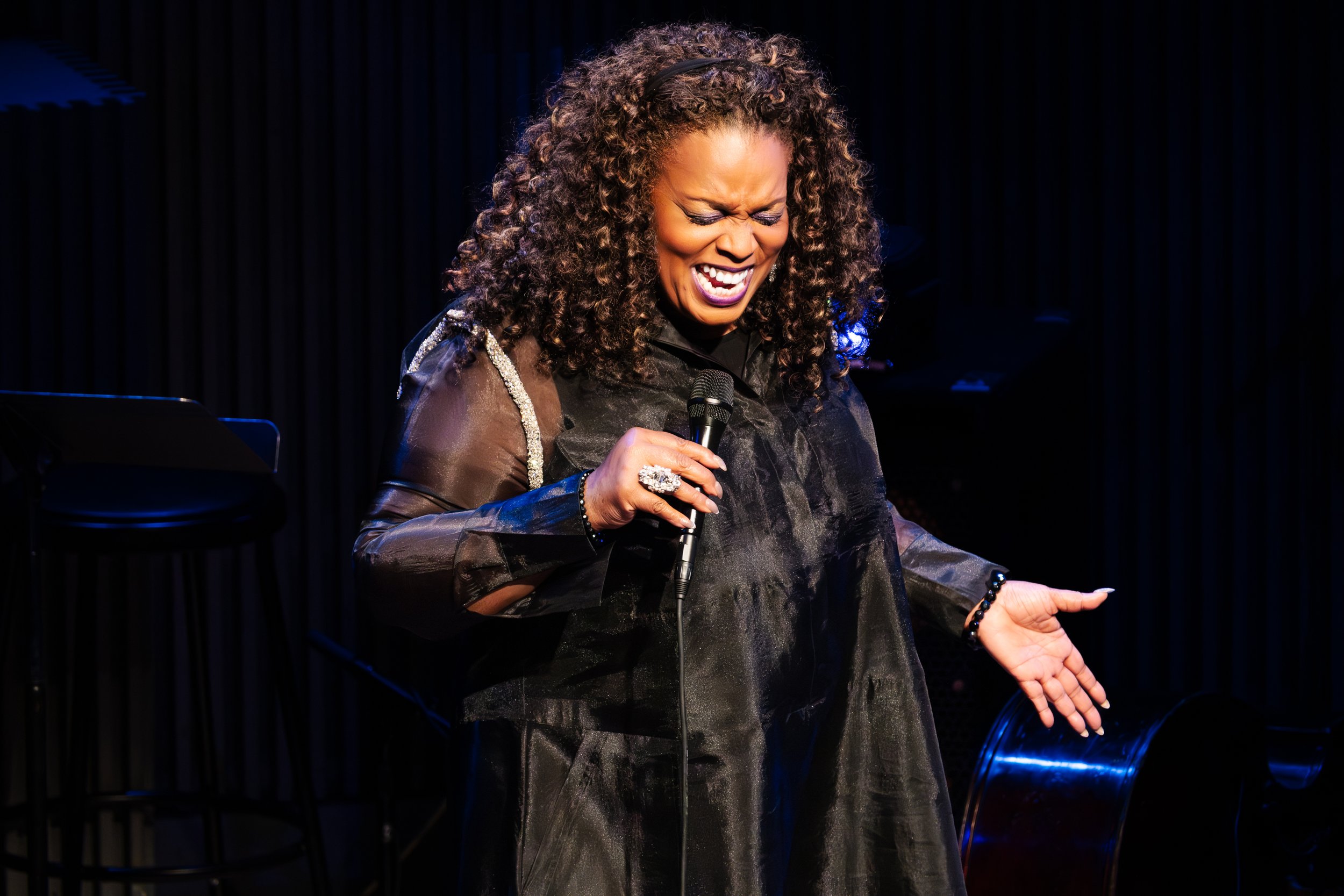
Dianne Reeves at Miner Auditorium. Photo: Steve Roby
Transforming Miner Auditorium, the vocalist commanded 50 years of jazz history with precision and domestic warmth.
“Is this your first Dianne Reeves concert?” an usher asked, guiding a listener down the aisle. When the woman nodded, he smiled with the quiet confidence of a gatekeeper about to reveal a sweet secret. “You’re in for a real treat!”
From the moment Dianne Reeves stepped into the Miner Auditorium last Friday, the room was swept into her gravitational pull. Over 90 unhurried minutes, the five-time Grammy winner shaped the evening with a warm authority that was quiet yet genuine. The performance was a gift of an invitation into a curated musical sanctuary.
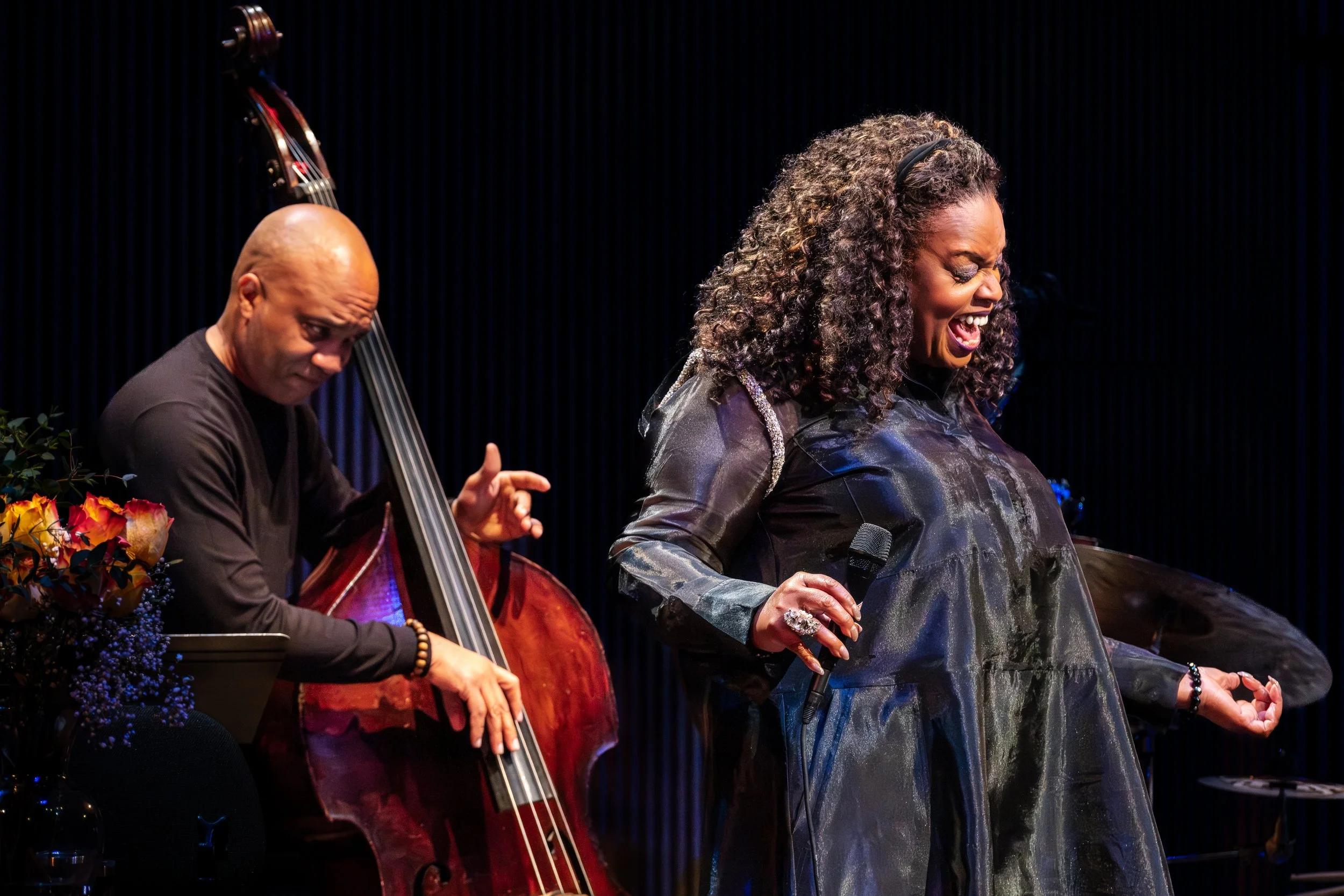
Photo: Steve Roby
The stage design evoked domestic intimacy long before the first note. A cozy chair, a red Persian rug, and a vase of fresh roses filled the stage. A cup of tea and a glass of white wine sat within arm’s reach, suggesting a space of comfort rather than a cavernous performance hall. Reeves entered the stage wearing a long black satin dress accented by rhinestone epaulets. She projected the image of a sovereign who had agreed to host a private salon. Between songs, she traced her path from a determined young singer in bustling Los Angeles to the assured artist standing in San Francisco. This grounding in humility balances her formidable virtuosity.
Before Reeves appeared, her long-standing quartet took their places to establish a sonic foundation. John Beasley handled piano, keyboards, and melodica; Reuben Rogers stood at the acoustic and electric bass; Terreon Gully manned the drums and percussion; and Romero Lubambo held the acoustic and electric guitar. They opened with a bristling take on Herbie Hancock’s “Eye of the Hurricane.” The piece surged with the mechanical weight of industrial pistons. The quartet generated a restless momentum that felt charged and kinetic. It was a gathering force, a storm of melody and rhythm that cleared a path for the vocalist to enter.
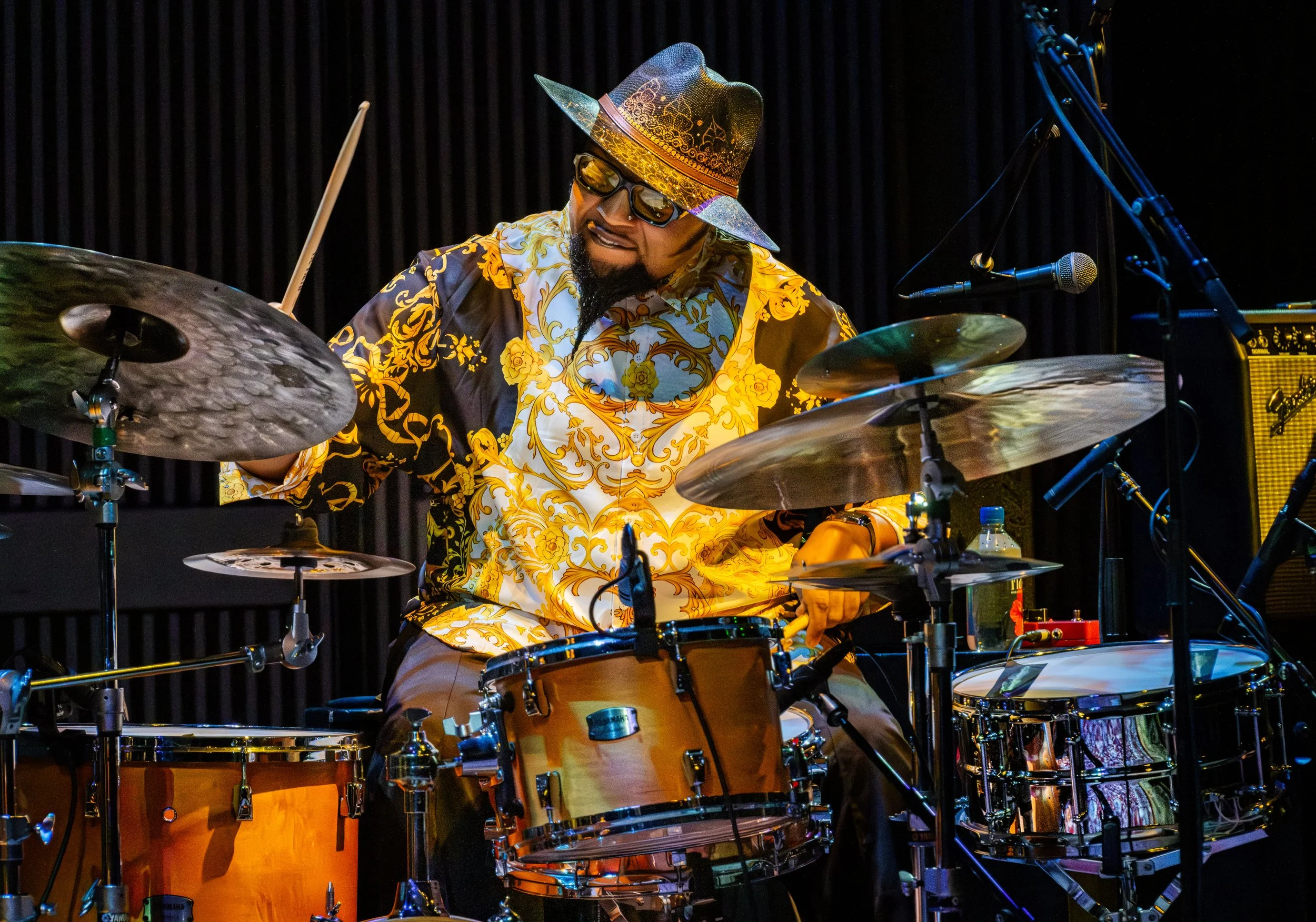
Terreon Gully. Photo: Steve Roby
Reeves began with a lively rendition of “What’s New?” Her voice has a striking depth—a plush, faintly smoky contralto that glides with velvet ease through its lower register. As she climbed into the upper reaches, the tone retained its clarity and control. Every phrase reflected a seasoned instinct for the song and the room’s acoustics.
When inspiration arrived, she slipped effortlessly into scat. She shaped these improvised lines with the same percussive assurance and swing that defined her lyric delivery. Her voice felt like a polished object in the air, weighted yet airborne.
The "living room" vibe remained central. Reeves acknowledged the weight of the outside world with sharp, improvisational lyrical changes. “Surprises with the Supreme Court today. I had to put that in just for you,” she sang, acknowledging the audience’s shared reality. She urged the room to lean in: “All you have to do is sit back and pretend this is my living room.” This intimacy invited deep reflection on her career, as she prepares for her 70th birthday this October, and contemplates 50 years onstage. “No night has been the same,” she remarked. “I might have sung the same songs, but not the same way.”
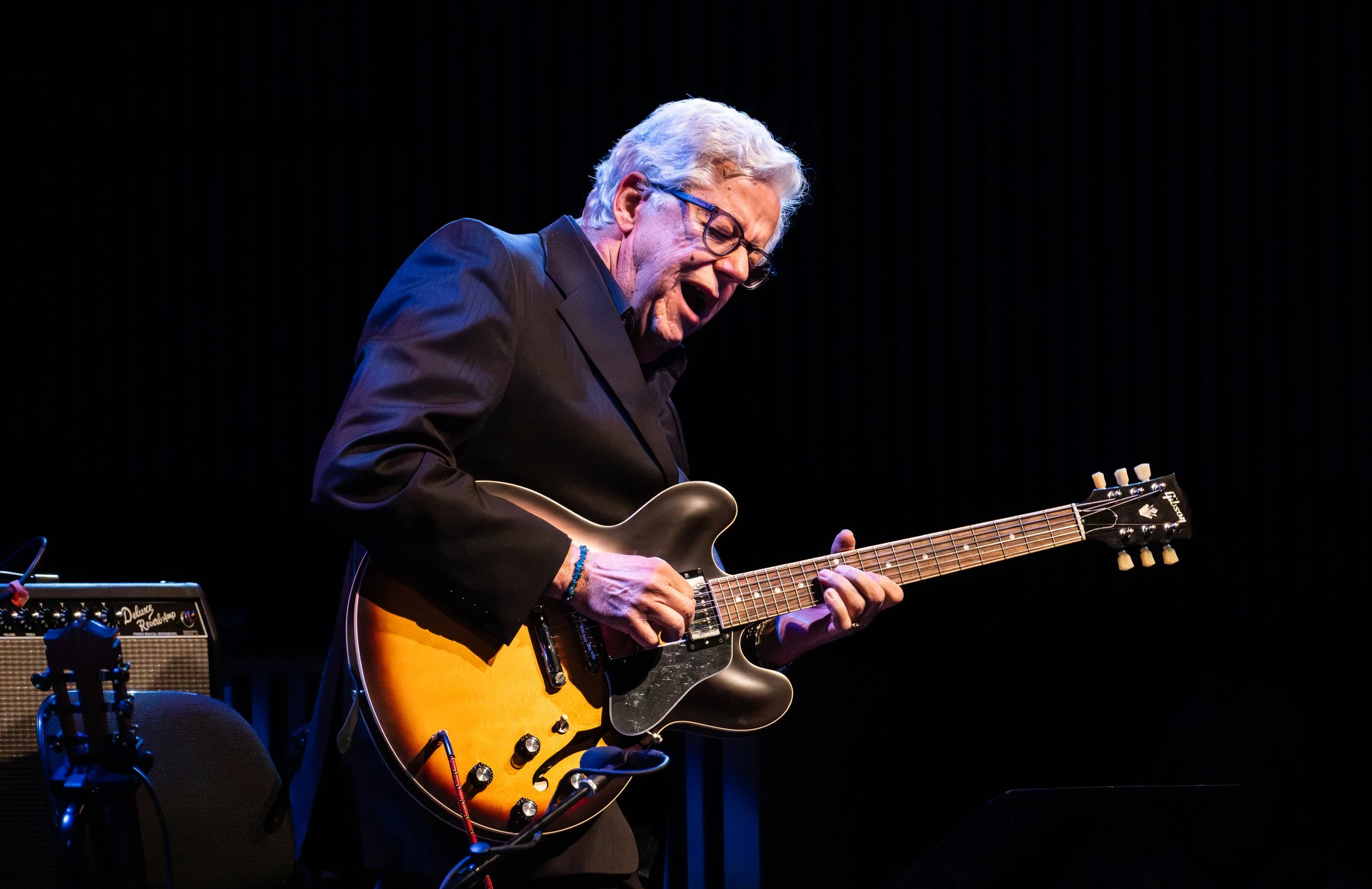
Romero Lubambo. Photo: Steve Roby
Midway through the set, the texture thinned to a visceral duo. Reeves stripped the quartet down to herself and guitarist Romero Lubambo. Lubambo switched to a Spanish guitar, an instrument that felt like sun-warmed wood in the hall. He brought delicate, intricate beauty to Reeve’s autobiographical song “Nine.” Reeves spoke of their meeting in Rio de Janeiro in the late 90s, when they worked with Michael Brecker. “I didn't know the language. Loved the music, and I looked at him, and he looked at me, and I realized he was my brother from another mother,” she recalled. She announced that their partnership had finally been documented on a forthcoming album titled Us.
The performance of “Nine” provided the evening’s emotional anchor. Reeves spoke of the transition from the single digits of childhood to the double digits of maturity. She recalled a neighborhood where children played in the street while parents sat on front porches as silent sentries. “In these times that we're in, I gotta reach out,” she noted, using the memory of neighborhood connection to critique modern isolation. “There are just too many babies [who don't] really know each other.”
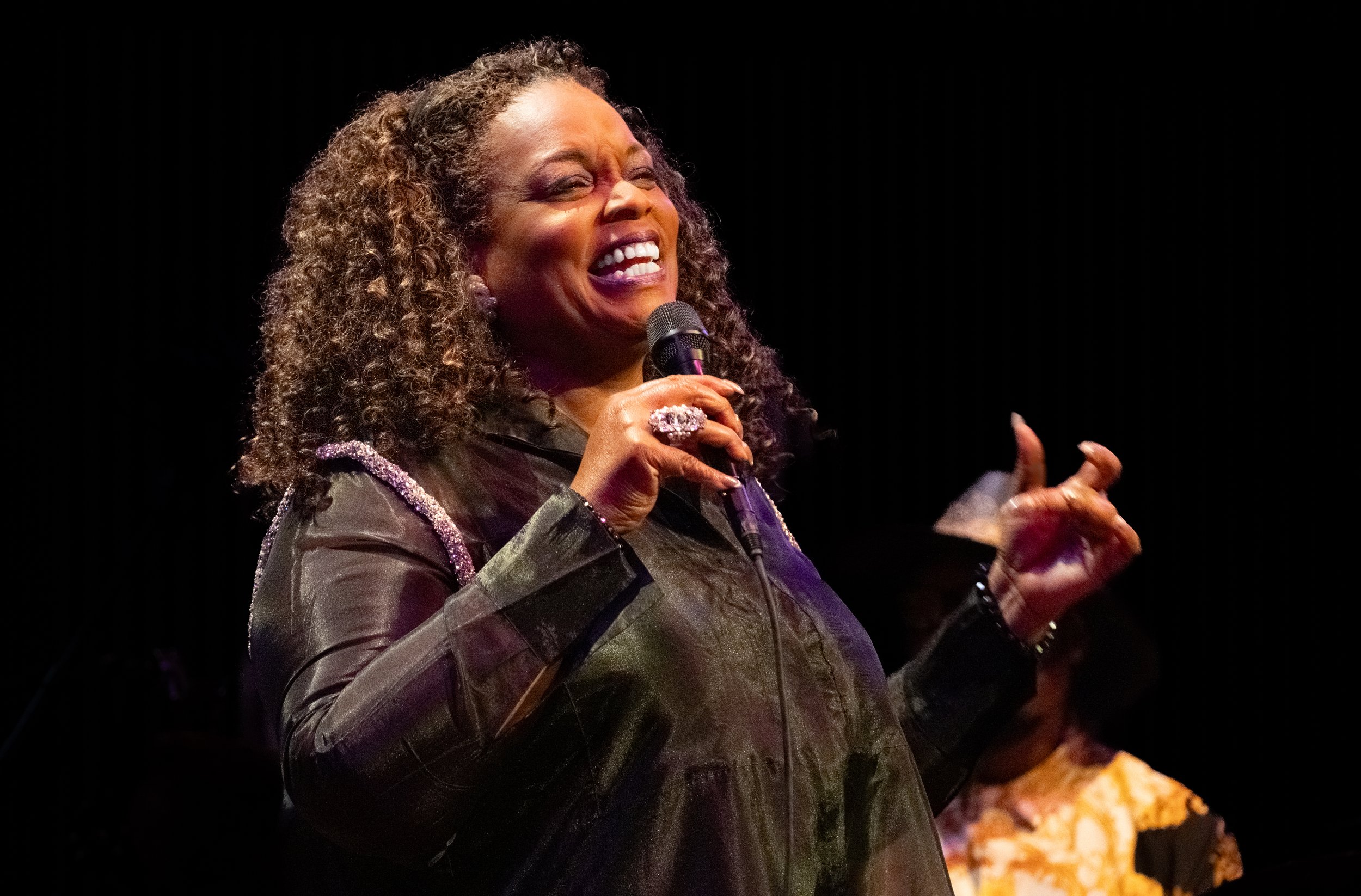
Dianne Reeves. Photo: Steve Roby
As the full quartet returned, Reeves introduced each member with individual stories, reinforcing a shared history. The set shifted toward a global perspective, reflecting the bridge-building spirit of her influences. She cited Cuban and Indian music, as well as the legacies of George Duke and Wayne Shorter. “This music brings all kinds of people together,” she asserted. She also expressed her love for local funk favorites, Tower of Power, recalling a time when she led a band that covered their music.
The evening concluded with McCoy Tyner’s “You Taught My Heart to Sing.” For the final movement, Reeves set the microphone down entirely. She roamed the edge of the stage, singing a cappella with a resonance that reached the back of the auditorium without amplification.
The sound was unfiltered, human, and technically perfect. She blew a kiss to the audience, smiled, and exited through the stage door. The audience sustained their second ovation for the remaining guitarist, honoring the final notes of a performance that stood as a shared testament to longevity.
Program Notes
Artist: Dianne Reeves and her quartet
Date: Friday, February 20, 2026
Venue: Miner Auditorium, San Francisco
Personnel: Dianne Reeves (vocals); John Beasley (piano, keyboards, melodica); Reuben Rogers (acoustic and electric bass); Terreon Gully (drums and percussion); Romero Lubambo (acoustic and electric guitar)
Setlist: “Eye of the Hurricane,” “What’s New?,” “Social Call,” “Café,” “Peace,” “Minuano (Six Eight),” “Nine,” “I Wish You Love,” “Better Days”
Encore: “You Taught My Heart to Sing