Marsalis’ Mardi Gras Mayhem at Miner Auditorium
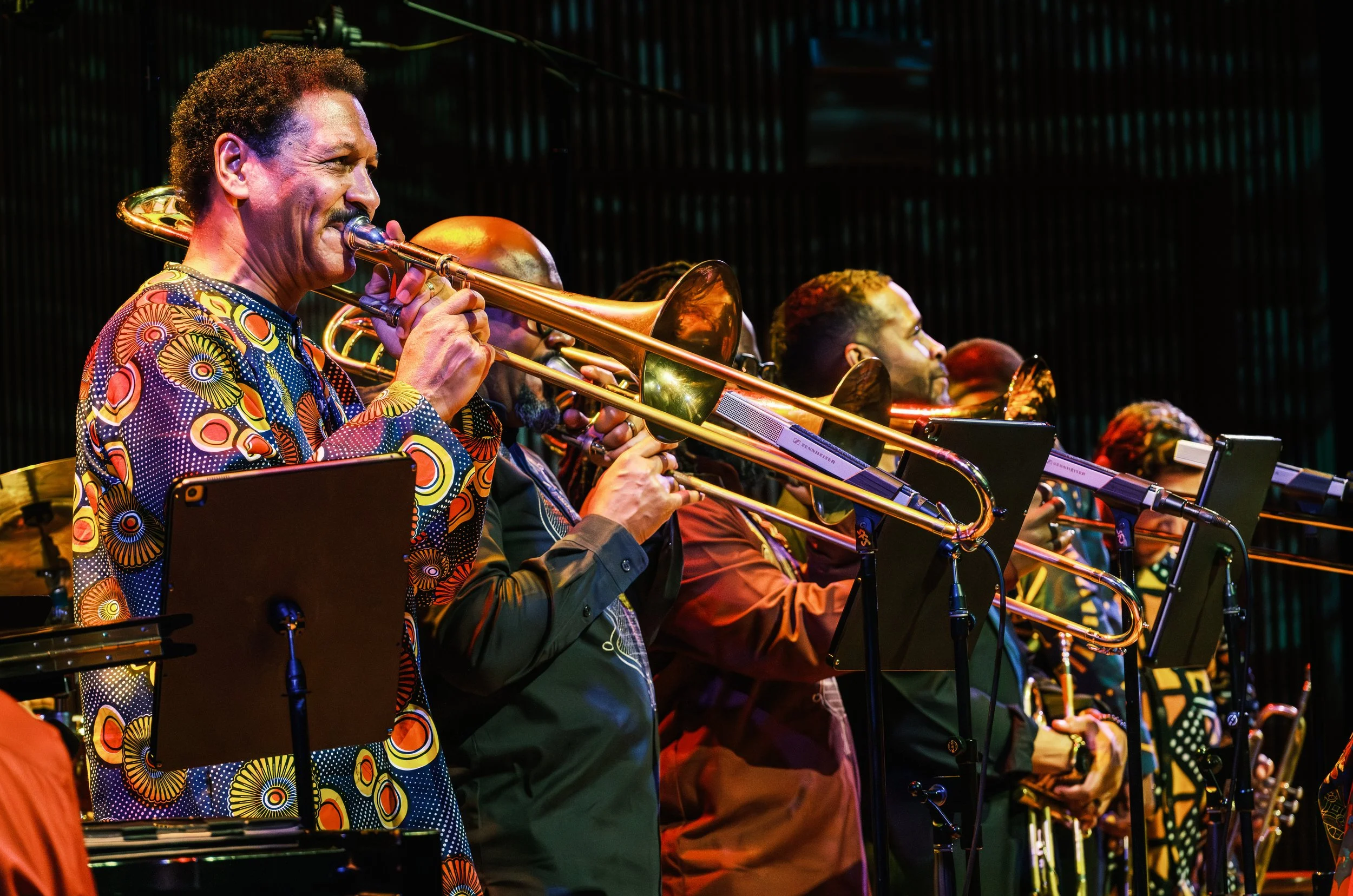
A brass-heavy New Orleans collective transformed the SFJAZZ Center into a technicolor street parade.
Bourbon Street sits more than 2,000 miles from Franklin Street, yet Delfeayo Marsalis and his Uptown Jazz Orchestra erased that distance in a single downbeat. From the opening bars, Miner Auditorium shifted into the atmosphere of a second-line procession. The Crescent City spirit settled into the room and stayed.
Nearly 150 people filled the dance floor. From the first notes, the audience responded to every prompt with clapping and response. Marsalis, trombone in hand, served as master of ceremonies, framing the set as a “10-course meal” of regional flavor.
The band began clapping out a pulse before launching into the Rebirth Brass Band staple “Feel Like Funkin’ It Up.” The groove immediately declared the evening’s purpose: participation. The rhythm section locked into a buoyant street beat while the brass answered with jubilant force.

“Snowball” followed, driven by a melodic saxophone lead and greasy trombone counterlines. Marsalis cited the Dirty Dozen Brass Band’s influence, whose modern approach reshaped the repertoires of Louis Armstrong and Charlie Parker through funk-inflected rhythms. The Uptown Jazz Orchestra carried that lineage forward with sliding, vocalized brass textures that felt both rooted and current.
A reflective tone emerged as Marsalis spoke of his father, Ellis Marsalis. Born in 1934, Ellis belonged to a generation defined by resilience and quiet endurance. That spirit inspired “Doing What We Gotta Do,” which opened with restrained piano and swelled into full-bodied saxophone, bass, and vocals. The arrangement balanced intimacy and resolve.
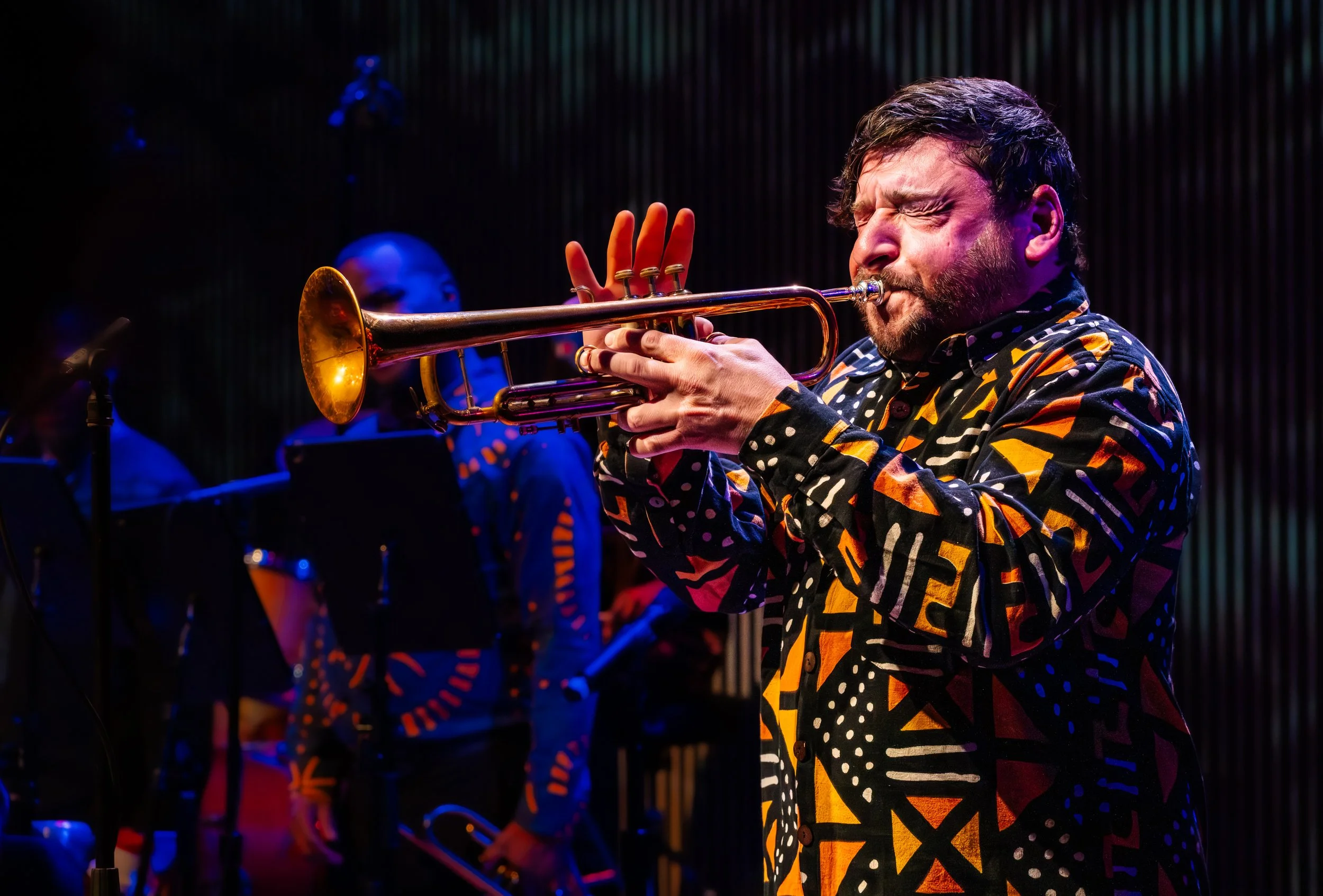
Community pride came to the fore during a tribute to New Orleans’ Black Masking Indians. Marsalis highlighted their pandemic-era efforts to feed community elders before the band performed Earl King’s “Big Chief.” The horns struck with sharp, percussive accents. The audience responded with eager clapping and finger snaps.
Marsalis then traced the cosmopolitan path of Quincy Jones, recounting his studies in Paris with Nadia Boulanger. The orchestra’s reading of “Stockholm Sweetnin’” reveled in harmonic sophistication. A prominent bass line anchored the arrangement, while muted trumpets produced a grainy shimmer that faded into a sustained single note.
Street energy surged again with “New Suit,” from the band’s Mardi Gras album. Marsalis emphasized the craftsmanship behind the elaborate beadwork and feathered regalia worn during Carnival, noting that artisans devote 300 days each year to sewing their suits. Featuring vocalist Aaron Narcisse, the piece rode a barrelhouse piano introduction into a chant-driven rhythmic foundation rooted in neighborhood ritual.
An intellectual aside followed, as Marsalis referenced ancient philosophers and the fate of Socrates, framing art as inquiry, before launching into Joe Henderson’s “Inner Urge.” The performance crackled with forward momentum. Scott Johnson’s tenor solo sliced through jagged piano figures, while the rhythm section pushed with controlled urgency.
Marsalis next recalled his participation in events surrounding Nelson Mandela’s 2013 memorial, reflecting on Mandela’s 27 years on Robben Island. “Dream on Robben” unfolded with solemn grace. An alto saxophone floated above crisp brushwork, then settled into a lingering outro that invited contemplation.
A tribute to Count Basie restored buoyant swing with “Doodle Oodle.” An opening drum feature commanded attention, leading to a standout trombone exchange between Marsalis and Terrance “Hollywood” Taplin. Their dialogue blended technical agility, warm, rounded harmonies, and a playful, competitive spark.
The emotional center of the evening came with a tender rendering of Louis Armstrong’s “What a Wonderful World.” Marsalis shaped the melody with spare, lyrical phrasing, supported by piano, bass, and brushed drums. A soft spotlight bathed the stage as couples swayed across the floor. In a playful aside, Marsalis urged listeners to use modern AI tools to summon Armstrong’s voice whenever they needed a reminder of humanity.

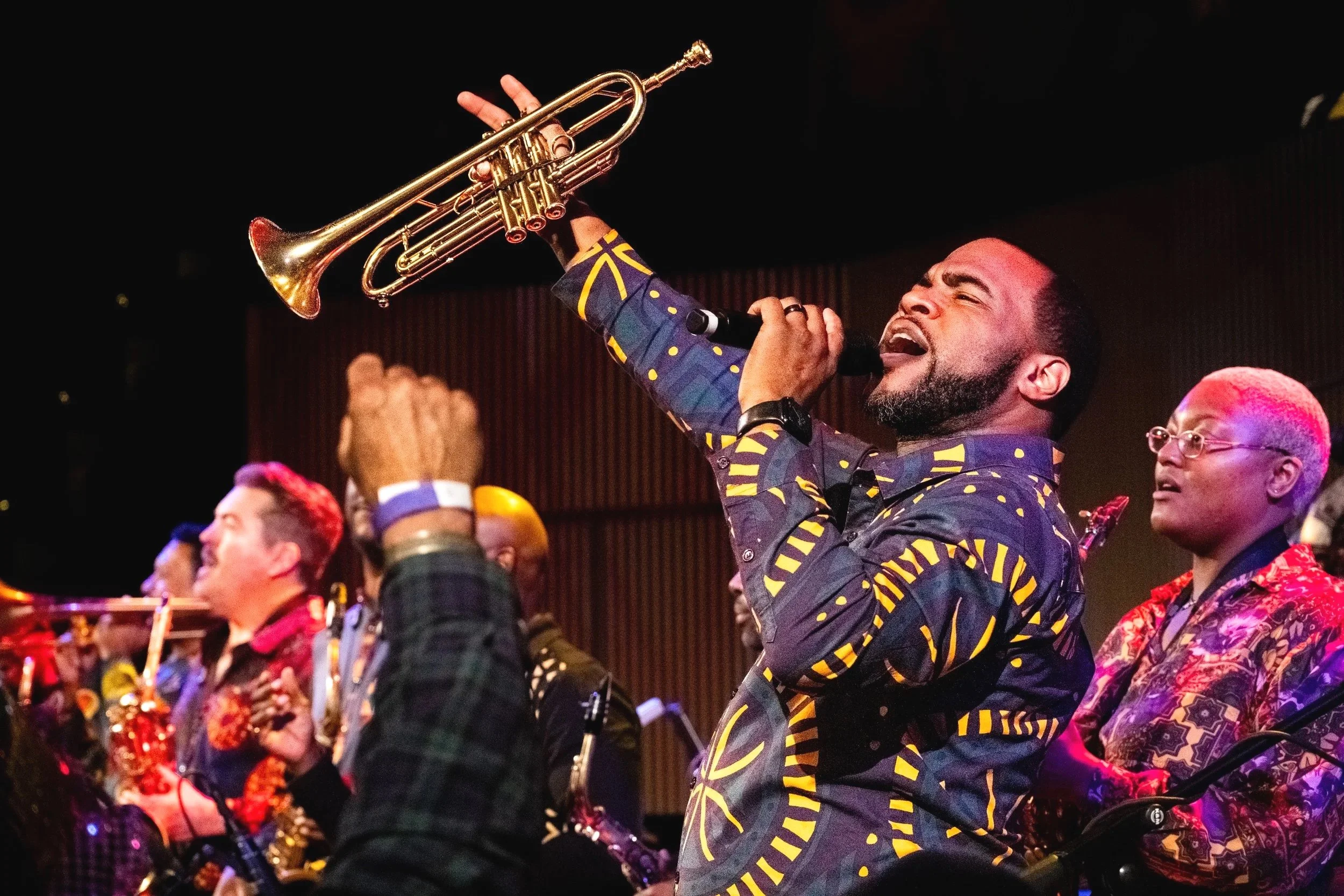
For the encore, the band reignited the carnival spirit with “Li’l Liza Jane.” The back-row horns stepped to the edge of the stage, closing the gap between musicians and audience. A sharply dressed man in a glittering suit paraded across the front, shaking a tambourine and draping Mardi Gras beads over outstretched arms. The closing strains of “Do What You Want To” sealed the transformation: Miner Auditorium pulsed like a jubilant New Orleans street corner.
For one night, a second line coursed through San Francisco, and the crowd moved with it.
Program Notes
Delfeayo Marsalis & Uptown Jazz Orchestra
Date: Thursday, February 19, 2026
Showtime: 7:30 p.m.
Venue: Miner Auditorium, San Francisco
Trombones: Delfeayo Marsalis, Terrance Taplin, TJ Norris
Trumpets: John Gray, Andrew Baham, Eric Bloom
Saxophones: Scott Johnson (tenor), Khari Allen Lee (alto), Aaron Narcisse (alto), Zahria Sims (tenor), Aaron Lington (baritone)
Drums: Jarrel Allen
Piano: Darrell Lavigne
Bass: Barry Stephenson
Audio supervisor: Patrick Smith
Setlist: “Feel Like Funkin’ It Up,” “Snowball,” “Doing What We Gotta Do.” “Big Chief,” “Inner Urge,” “Stockholm Sweetnin',” “New Suit,” “Dream on Robben,” “Doodle Oodle,” "What a Wonderful World"
Encore: “Li'l Liza Jane,” “Do What You Want To”
Photos: ©Steve Roby