Steven Bernstein’s Gumbo Homecoming
From July 16–19, the Berkeley-born trumpeter and Sexmob bandleader brings five decades of downtown-scene alchemy back to SFJAZZ’s Joe Henderson Lab for a residency built entirely from the sounds of his hometown.
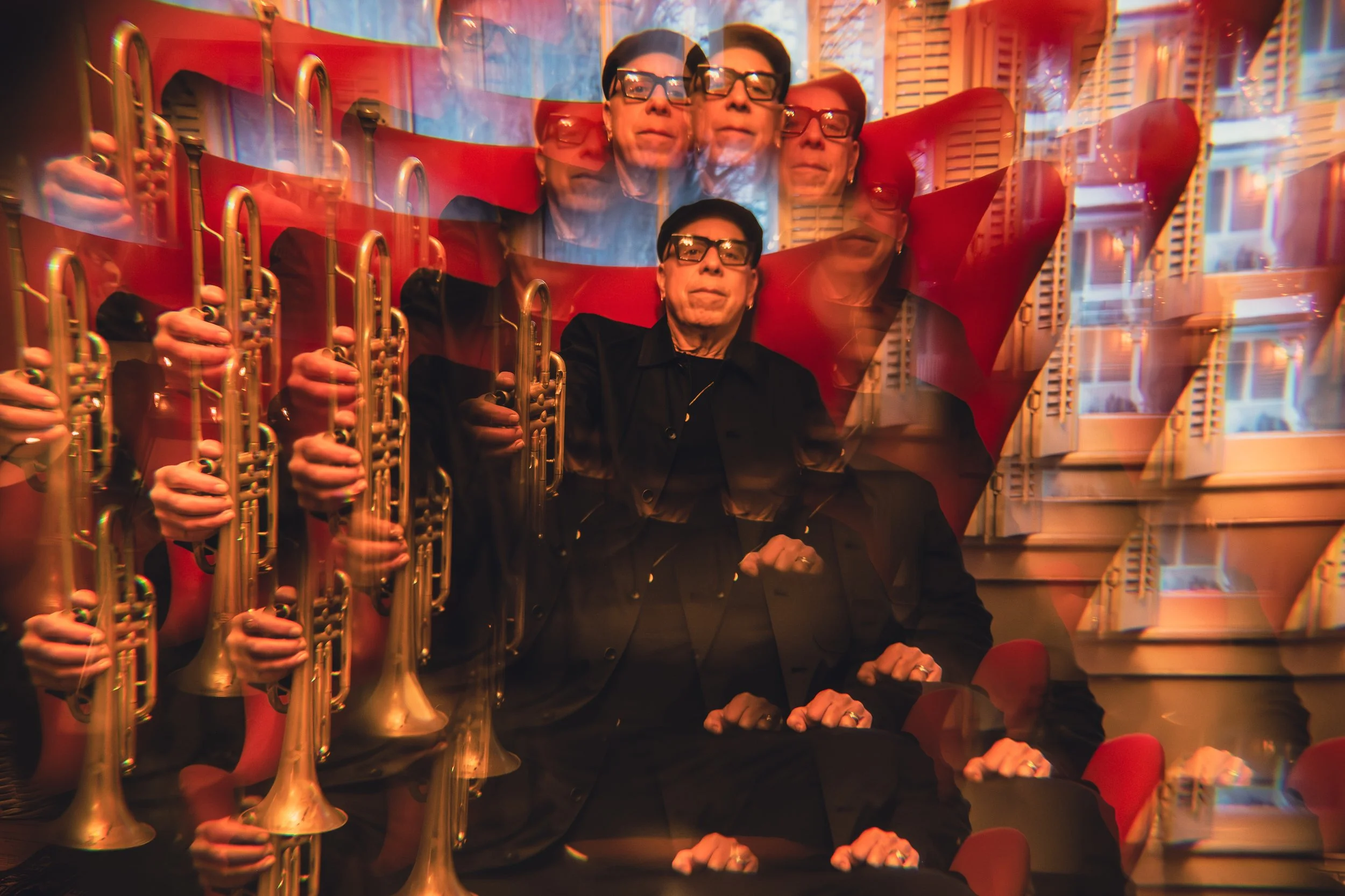
Steven Bernstein. Photo: Andrew Blackstein
Listen to the full conversation with Steven below.
Steven Bernstein was nine years old when Louis Armstrong died, and already obsessed enough with the trumpeter to keep a scrapbook about it. That kind of early, unlikely devotion has defined his career ever since — a trumpeter, composer, and bandleader who has spent more than five decades treating jazz, funk, rock, and free improvisation as one continuous conversation rather than separate rooms. He carried that instinct out of Berkeley and into New York’s downtown scene, where he built the long-running quartet Sexmob and collaborated with Lou Reed, Leonard Cohen, Levon Helm, and Laurie Anderson. This month, he brings that same instinct home, when Sexmob settles into SFJAZZ’s Joe Henderson Lab for four nights built entirely out of the music that raised him.
Bernstein’s ear was shaped early, and specifically, by Berkeley. Thanks to a school improvisation program founded by Dr. Herb Wong and run by Phil Hardiman and Dick Whittington, he started improvising in fifth grade. By seventh grade, he and his lifelong friend Peter Applebome were making regular trips to Keystone Corner — Eddie Harris was the first show he saw there, Roland Kirk the second — and by ninth grade, he’d taken in the Art Ensemble of Chicago, Art Blakey, and Cecil Taylor. None of it registered as avant-garde at the time, he said. “I don’t remember bebop musicians. I don’t remember people playing like that when I was young. Everybody was playing in this kind of very of-the-moment way.”
That grounding met its match when Bernstein arrived in New York in 1979 to attend Columbia University, landing at the exact moment the city’s punk-funk scene was taking shape around bands like Defunkt and James White and the Blacks. Funk wasn’t a genre to him growing up in Berkeley, he explained — it was the region’s default language, with Tower of Power looming larger in his childhood than the Beatles ever did. Hearing that same funk collide with the downtown avant-garde in New York cracked something open. “That was like, oh, now I can see how this can be done,” he said. “It’s not separate entities. It’s whatever gumbo you wanna make.”
That word — gumbo — has become something like Bernstein’s operating philosophy, and it runs through everything he’s touched since, including two brand-new companion albums, Resonation Trio and Ultra Resonance, which take the same source recordings and pull them in opposite directions: one an acoustic trumpet trio, the other a full dub reinvention by producer Scotty Hard. The idea traces back nearly forty years, to when a friend played him Burning Spear’s Garvey’s Ghost — a record Bernstein loved for years before learning it was a dub reworking of an entirely different album. A longtime reader of Borges and Cortázar, he’s chased that same doubling ever since — the idea, as he put it, of “opening the doors of perception” to find a second reality hiding inside the first.
The dub-record idea had been on his mind since his very first session, the Hal Willner–produced trio Spanish Fly, decades before he had the means to pull it off. Resonation Trio finally gave him the blank slate — a format with almost no history, since trumpet trios are far rarer than saxophone trios — and Ultra Resonance let Scotty Hard run those same performances through a completely different sonic filter, the way Garvey’s Ghost had once done to Bernstein without his even knowing it.
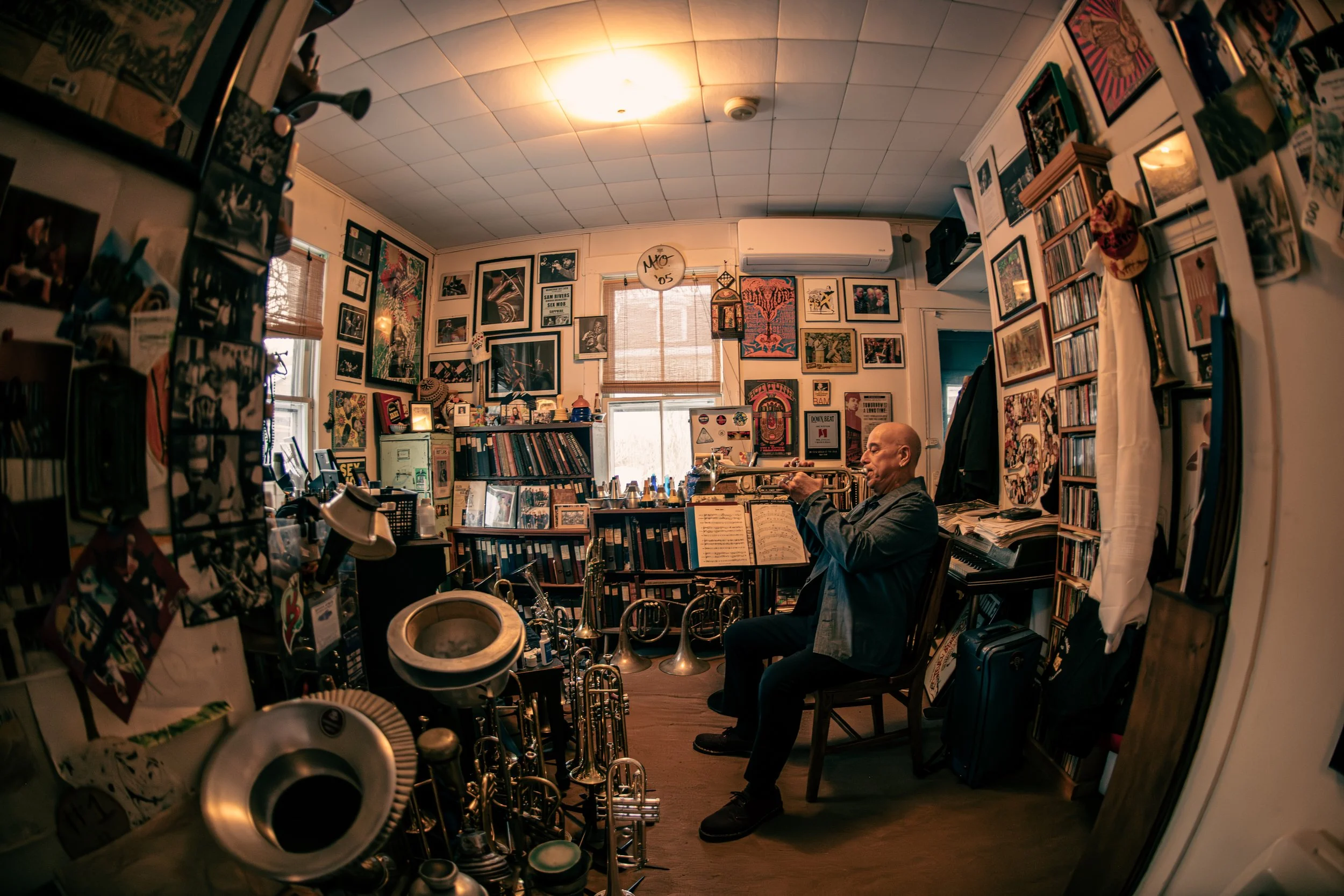
Photo: Andrew Blackstein
Sexmob’s ability to work a room this intimately traces straight back to how the band was built. It came together not in rehearsal rooms but in late-night residencies at the Knitting Factory’s Late Night Hang, playing Thursdays from 11 p.m. to well past 1 a.m. for whoever wandered down with a tap beer, then later at Tonic on midnight Fridays. “Everything we did, all the music we created, we created not for ourselves, but for the people we were playing for,” Bernstein said. That’s the same close, reactive listening the Joe Henderson Lab’s small room will demand — the kind Sexmob brought to reinventing Laurie Anderson and Lou Reed’s unreleased “Church of Panic,” built with no set arrangement, just the band answering whatever Anderson does next.
For the Bay Area run, Sexmob’s core lineup — with saxophonist Briggan Krauss — adds a different guest for each half of the residency: guitarist Liberty Ellman for two nights of Bay Area psychedelic rock, and percussionist John Santos for two nights of classic Latin soul. Bernstein sees the two elements as inseparable. “The two most essential parts of music are, in order, sound and rhythm,” he said. “Rhythm is what we feel in our bodies.” Santos’s job, in other words, is to make the Santana melodies and Latin soul grooves that scored Bernstein’s Berkeley childhood hit at that bodily level all over again.
It all loops back to that same Berkeley-born idea of gumbo, and to what a friend once nicknamed Bernstein and his peers: the Gumbo Children. “It’s about celebrating heritage,” he said. “The real heritage of America is all this beautiful art that came out of this incredible gumbo.” Sexmob Does the Bay is Bernstein bringing that heritage home to prove it — and, if the mood strikes, maybe slipping in a Jimi Hendrix tune or two, from an artist he insists might as well have been a Berkeley kid himself.
Show Details
Artist: Steven Bernstein’s Sexmob
Venue: Joe Henderson Lab, SFJAZZ Center
Date: July 16–19, 2026 (2026 SFJAZZ Summer Sessions)
Shows: Thu, July 16 & Fri, July 17 — Bay Area Psychedelic Rock, with Liberty Ellman; Sat, July 18 & Sun, July 19 — Classic Latin Soul, with John Santos. Showtimes: Thu–Sat 7:00 & 8:30 PM, Sun 6:00 & 7:30 PM.
Tickets: sfjazz.org
Listen to the full conversation with Steven on the Backstage Bay Area podcast — streaming on Apple, Spotify, and YouTube — and if you can, catch both programs. Four nights, one hometown, and a band that’s spent thirty years learning to read a room before deciding what to play in it.