Lenny White on Miles Davis’s Lessons
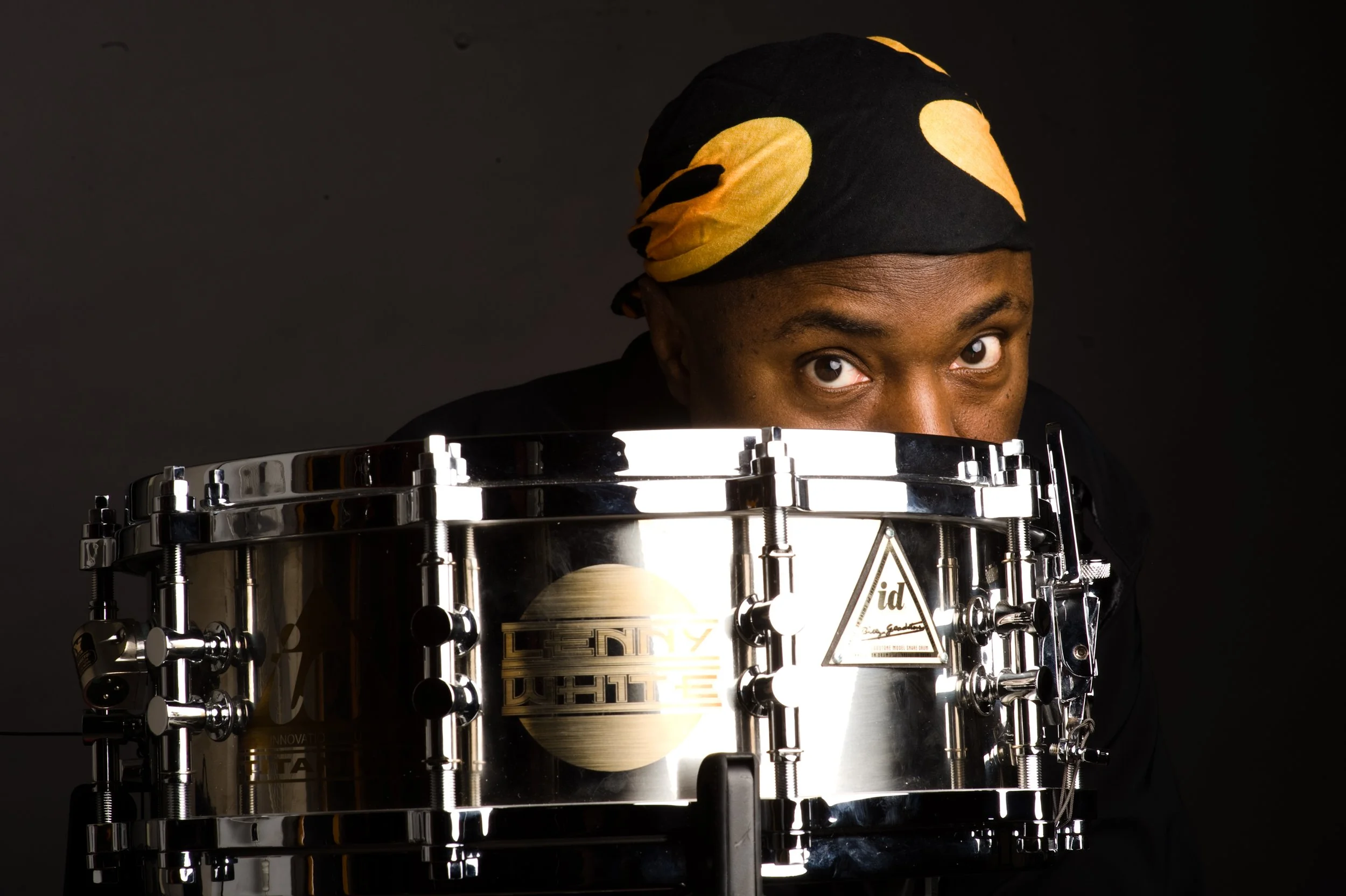
For drummer Lenny White, Miles Davis influenced musicians through pressure, metaphor, and imagination. The lesson extended beyond style. It taught players to listen to space, trust their instincts, and discover a personal voice within the music. That philosophy still guides White’s teaching today as he prepares to participate in the SFJAZZ March 21 Miles Davis tribute.
Listen to the full conversation with Lenny White below.
A Bandleader Who Changed the Question
When Lenny White discusses Miles Davis, he begins with scale. Davis changed music “a few different times, a few different ways,” White states, and that variety still defines the challenge of performing his work. The trumpet sound was important. The repertoire was important. The bands were important. What resonated most deeply with White, however, was the way Davis made musicians think.
“Miles Davis is an icon and he actually changed music a few different times, a few different ways”
That point gives the music its ongoing power. Davis didn’t just gather talented players and direct them through charts. He crafted situations that called for a response. He saw potential in people, then placed them in music that required alertness, courage, and imagination. White remembered that Davis wanted to work with him before hearing him directly, choosing him based on reputation and instinct, sensing the kind of presence he might bring.
That instinctive bandleading style shaped the music from the inside out. Davis trusted musicians enough to give them space. He also pushed them hard enough to prevent the room from going slack. White’s memories show Davis more as a catalyst than a lecturer. He set things in motion. The player had to discover the answer.
The “Salt” Lesson
White’s most vivid memory of Davis was tied to an image that lacked any clear musical significance.
“He told me,” White recalled, “‘Think of this as a big pot of stew, and I want you to be salt.’”
The instruction presented no clear markings on the chart, no note choice, and no technical directive. It required interpretation. White had to ask what kind of presence “salt” might be. Was it balance, heat, lift, texture, edge? Was it something that disappeared into the whole while transforming the entire composition?
“He told me, ‘Think of this as a big pot of stew, and I want you to be salt.”
That was the lesson.
White realized the genius of it years later. “I had nothing musical to use as a reference,” he said. “That in itself is how someone like a sorcerer would make a musician think differently, not just about music.”
That line reached the heart of Davis’s approach. He pushed players beyond just mechanics into perception. He wanted them to respond like artists, not as technicians waiting for instructions. In that sense, White’s story connected directly to Dr. Eddie Henderson’s elegant expression of the same idea: “The instrument is just the tool through which you play music.” Henderson’s quote clarified what White’s anecdote dramatized. Davis guided musicians toward something greater than fingerings, patterns, or chops. He aimed for the mind behind the horn, the imagination behind the hands, the person inside the sound.
Space, Restraint, and the Shape of a Phrase
That philosophy also influenced White’s understanding of Davis’s acoustic music from the 1950s and ’60s. He constantly revisits it with students, and he still finds new challenges in it. The records remain alive because the musicians kept exploring them from within. White recalled Ron Carter’s sharp summary of the second great quintet’s approach: Davis “paid them to experiment every night.”
For White, that experimental spirit has always been intertwined with clarity. Davis’s renowned use of space gave the music both mystery and structure. A few notes could carry significance because they came with a purpose. White applied that lesson to his own musical approach. The goal was never density for its own sake. Instead, it was to leave enough space around an idea for the listener to grasp its form.
“I think, basically, for me, the key is not cluttering the language,” White said. “The way you translate and say what you have to say should be done with space so people can understand your translation.”
That word, “translation,” feels especially useful here. White describes musical expression as a conversion from thought to sound. Space becomes part of the meaning. Restraint becomes part of the sentence. Davis’s economy, therefore, did more than create atmosphere. It sharpened communication.
Teaching Miles Forward
White now brings those lessons into classrooms at NYU and The New School, where Davis’s music remains a major focus. What interests him most is how young musicians respond once they move beyond the idea of the canon and start listening to the process. They wonder why the music still sounds open. They notice how one performance differs from the next. They begin to understand that the vocabulary of Davis’s bands came alive through risk.
White values those moments of recognition. He wants students to understand the difference between repetition and exploration. He aims to make them feel the challenge that motivated those classic groups. Wayne Shorter’s phrase “jazz means I dare you” still resonates with him because it captures the ethic behind the repertoire. Davis’s bands succeeded because they challenged each other to stay alert within the music.
That idea also helps explain why White speaks about Davis with such enduring admiration. Davis did not ask musicians to imitate a style. Instead, he asked them to develop the ability to respond. He encouraged them to listen more intently. He urged them to question simple habits. He inspired them to search for the sound they could create on their own.
The Music Lives in the Asking
That is why Miles Davis continues to matter. The legacy isn't just about reverence; it’s based on a way of thinking that still challenges today's musicians. White’s memories vividly illustrate that challenge. Davis saw beyond what was obvious. He communicated through imagery and suggestion. He demanded personal answers.
On March 21, White will bring that hard-earned perspective to SFJAZZ’s Miles Davis tribute shows, joining Eddie Henderson and Javon Jackson in a program dedicated to Davis’s acoustic years. The date offers more than just a look back. It provides an opportunity to hear musicians explore the same questions Davis pondered decades ago: How do you use space? How do you keep the music open? How do you find your own voice within a shared language?
White’s answer has remained remarkably clear. The lesson started with Davis. It continues each time a musician listens more intently, thinks more deeply, and brings something personal into the music.