Legacy Meets the Mothership: Harris and Croker Ignite the UpSwing Series
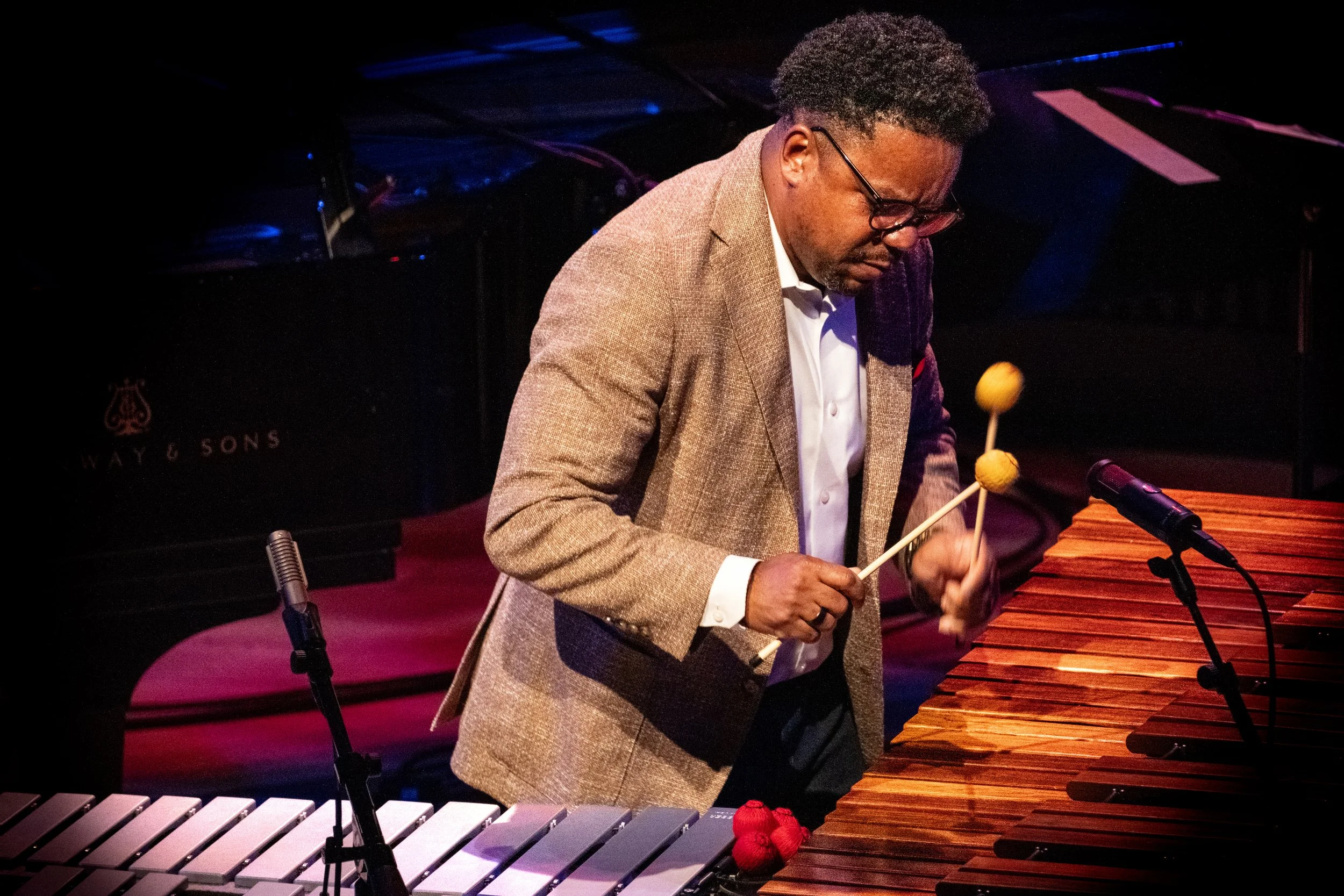
The UpSwing series, curated by Terence Blanchard at SFJAZZ, acts as a key indicator of the health of American improvised music. It is more than just a showcase; it functions as a laboratory. By bringing together established masters and emerging talent innovators in the expansive Miner Auditorium, the series fosters a dialogue essential for the genre's future. Last Saturday’s double bill featuring Stefon Harris & Blackout and Theo Croker offered a compelling insight into this relationship.
The evening strongly supported the idea that jazz must evolve, emphasizing that the future relies on a thorough understanding of its history. Mastery of the past provides the crucial foundation for the adventurous sound explorations needed to shape jazz’s future.
Theo Croker, performing the second set, showcased the expansive, almost sci-fi potential of the genre. His ensemble—a fluid group including keyboardist Idris Frederick, bassist Eric Wheeler, and drummer Miguel Marcel Russell—navigated the sonic landscape of his album Dream Manifest with digital precision. Croker’s stage setup, a complex arrangement of analog delay pedals and a laptop placed near his trumpet, acted as a command station for his soundscapes. On tracks like “4KNOWLEDGE,” he processed his horn through layers of effects, blending live improvisation with samples of chirping birds and ethereal, non-lyrical voices.
The result was immersive. Croker described this sonic texture as a narrative vehicle: a “mothership dropping off myself and my other musicians on Earth,” charging them with elevating vibrations. His approach broke down the boundaries of acoustic jazz by incorporating elements of hip-hop production and electro-acoustic textures, transforming the auditorium into a swirling display of trippy, animated light and sound. The lighting tech projected abstract, colorful animations onto the Miner walls, creating a visual complement to Croker’s delay-heavy trumpet lines.
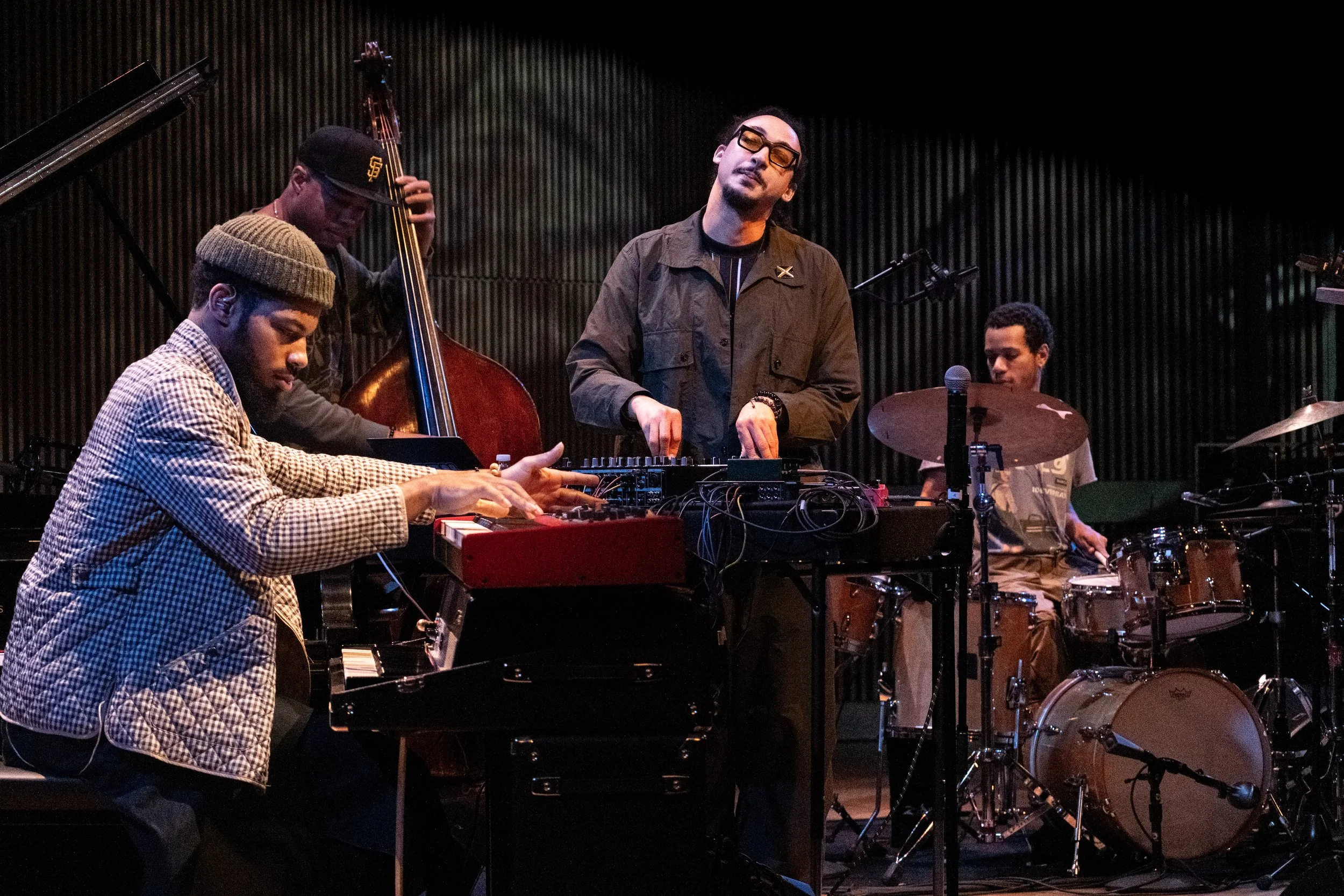
Theo Croker and band. Photo Steve Roby
Yet, amid the digital experimentation, Croker stayed connected to his grandfather, Doc Cheatham, and mentor Donald Byrd. His futurism is rooted in tradition; he simply chooses to dress that tradition in the clothing of the present. His stage banter showed a playful charisma, a necessary counterbalance to the high-concept music. He joked that his "inner child is alive and well" because he plays trumpet for a living. Later, introducing a love song titled “One Pillow,” he gave a peek into his dry humor. "It’s a modern love story," he deadpanned. "Because when you're serious in a relationship, you’ve got to get that second pillow... One pillow, one solo. Call the jazz police." This lightness grounded the set, reminding the audience that behind the digital wizardry and the "mothership" ideas, there is a human heart beating at the core of the noise.
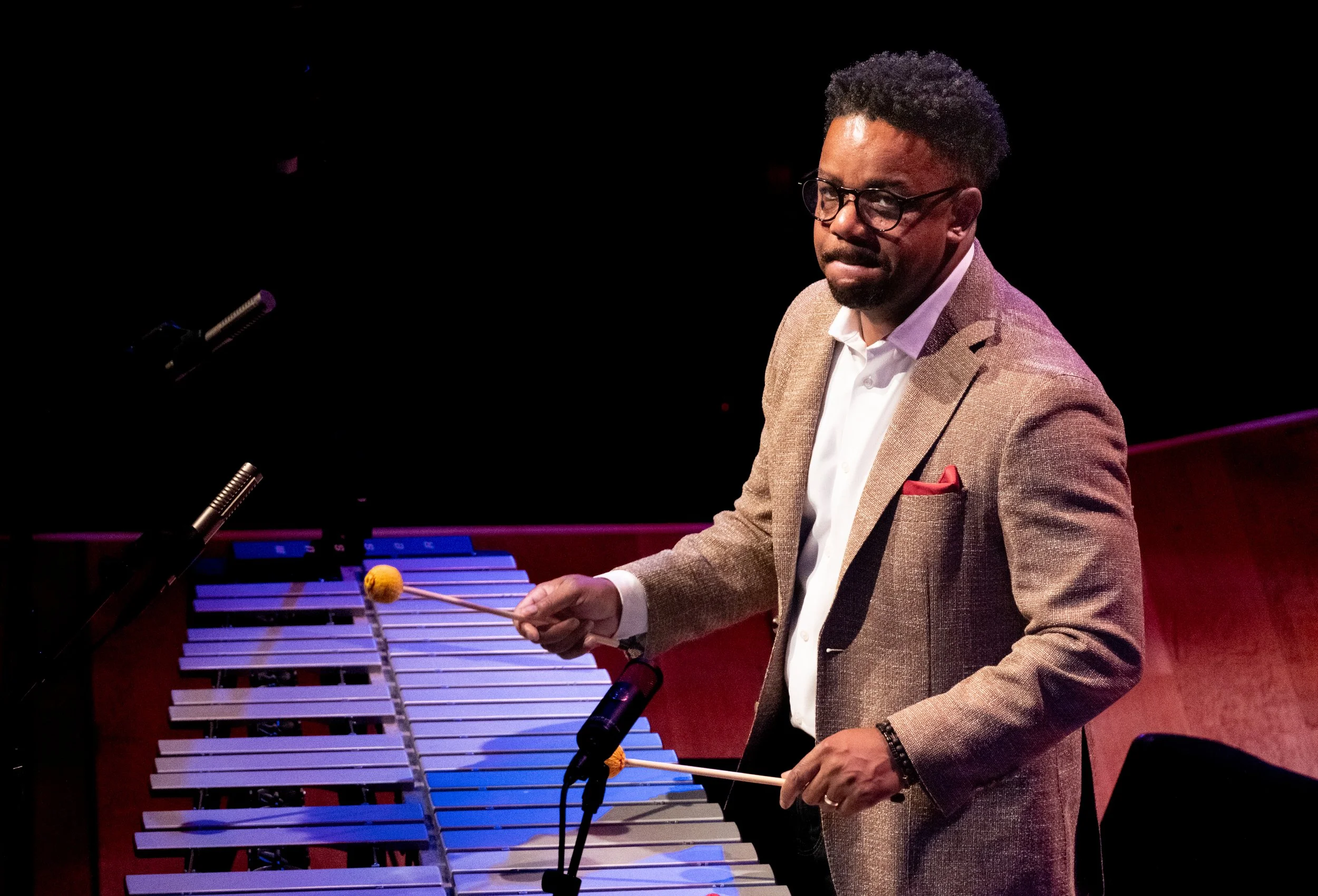
Stefon Harris. Photo Steve Roby
“One of the things about African American culture that has helped us through the journey in this country is that we’ve always had music.”
In contrast, the opening set by Stefon Harris & Blackout demonstrated the power of continuity and reimagining tradition from within. Harris, a vibraphonist with exceptional technical skill and a former member of the SFJAZZ Collective, rooted his performance in the emotional depth of jazz history. He didn't need a laptop to change the sonic atmosphere of the room; he achieved it through kinetic energy and harmonic density.
Playing his custom-designed OmegaAir and OmegaVibe instruments—innovations created with Malletech that allow smooth, vertical dampening and legato phrasing—Harris led his long-standing band through a set that emphasized empathy and communication. The chemistry was palpable. Harris called the bandstand a sanctuary, telling the audience, "On this bandstand, I’ve met some of the most beautiful, kind, empathetic, and brilliant human beings in my life."
The emotional highlight of the night was "I Know Love," a piece dedicated to the late Eileen Katz Lowenthal. Harris shared his rarely seen vulnerability on stage as he explained the composition process, describing it as a search for specific harmonies that could express complex, conflicting emotions. "I know which chords create anxiety," he said, discussing how he aimed for sounds that could convey "grief and gratitude" at the same time. This moment was brought to life by Alexis Morrast's soulful vocals, transforming the Miner Auditorium into a space of shared mourning and release.
The performance felt more like a communal ritual than a typical recital. Harris paid direct tribute to his mentor, the vibraphone giant Bobby Hutcherson, with a performance of "Now." He remembered Hutcherson's advice during their final conversation in that very venue: to always put "family first." This set showed that maintaining tradition requires active participation—a commitment to the "proliferation of empathy through the arts" that Harris promotes through his educational work and the Harmony Cloud app. In a moving moment that seemed to preempt Croker’s digital approach, Harris gestured to his bandmates and the act of live creation: "It's not about a product or an outcome; it’s about the process. That's something AI can't do for us!"
The pairing of these two artists highlighted the vibrant tension that drives modern jazz. It was a study in contrasts: Croker’s "64 Joints"—titled for its 6/4-time signature rather than any herbal inspiration—showcased a rhythmic complexity that mirrored the intricate interplay of Harris’s Blackout ensemble, yet the delivery systems were worlds apart. Where Croker used technology to expand the sonic palette outward, creating a cinematic and external experience, Harris used the technological innovations of his instrument to explore the nuances of acoustic expression, creating an internal, almost spiritual resonance.
The audience responded to both approaches with equal enthusiasm, captivated by Croker’s "magical mystery tour" of lights and sounds, and grounded by the "unapologetic soul" of Harris’s band. It validated Blanchard's curation strategy: the jazz audience craves both the roots and the fruits of the tree.

Alexis Morrast. Photo: Steve Roby
Ultimately, the concert confirmed that the jazz tradition is a living, growing organism. It is not a museum piece to be looked at from afar; it is a participatory experience. Harris finished his set with an uplifting, defiant version of Louis Armstrong’s "What a Wonderful World." Before counting it off, he offered a final testament to the endurance of the music and the culture that created it. "One of the things about African American culture that has helped us through the journey in this country is that we've always had music," Harris declared. "You can't control my joy!"
It served as a powerful reminder of music's resilience. The UpSwing series continues to prove itself as a vital platform where the dialogue between the legacy of legends like Harris and the future vision of artists like Croker keeps the genre in a state of ongoing, exciting growth. The mothership may have landed, but the legacy is what grounds it, ensuring that no matter how far the music travels, it always finds its way home.
Stefon Harris & Blackout Setlist: “Legacy Dances,” “I Know Love,” “Now.” Encore: “What a Wonderful World.”
Theo Croker Setlist: “4KNOWLEDGE,” “Amen Waters,” “64 Joints,” "Dinner With Sade,” “One Pillow,” and “Hero Stomp || A Future Past.”
Bonus: Listen to our interview with Stefon Harris.