Lisa Fischer and Orrin Evans Trio: Reimagining Soul at SFJAZZ
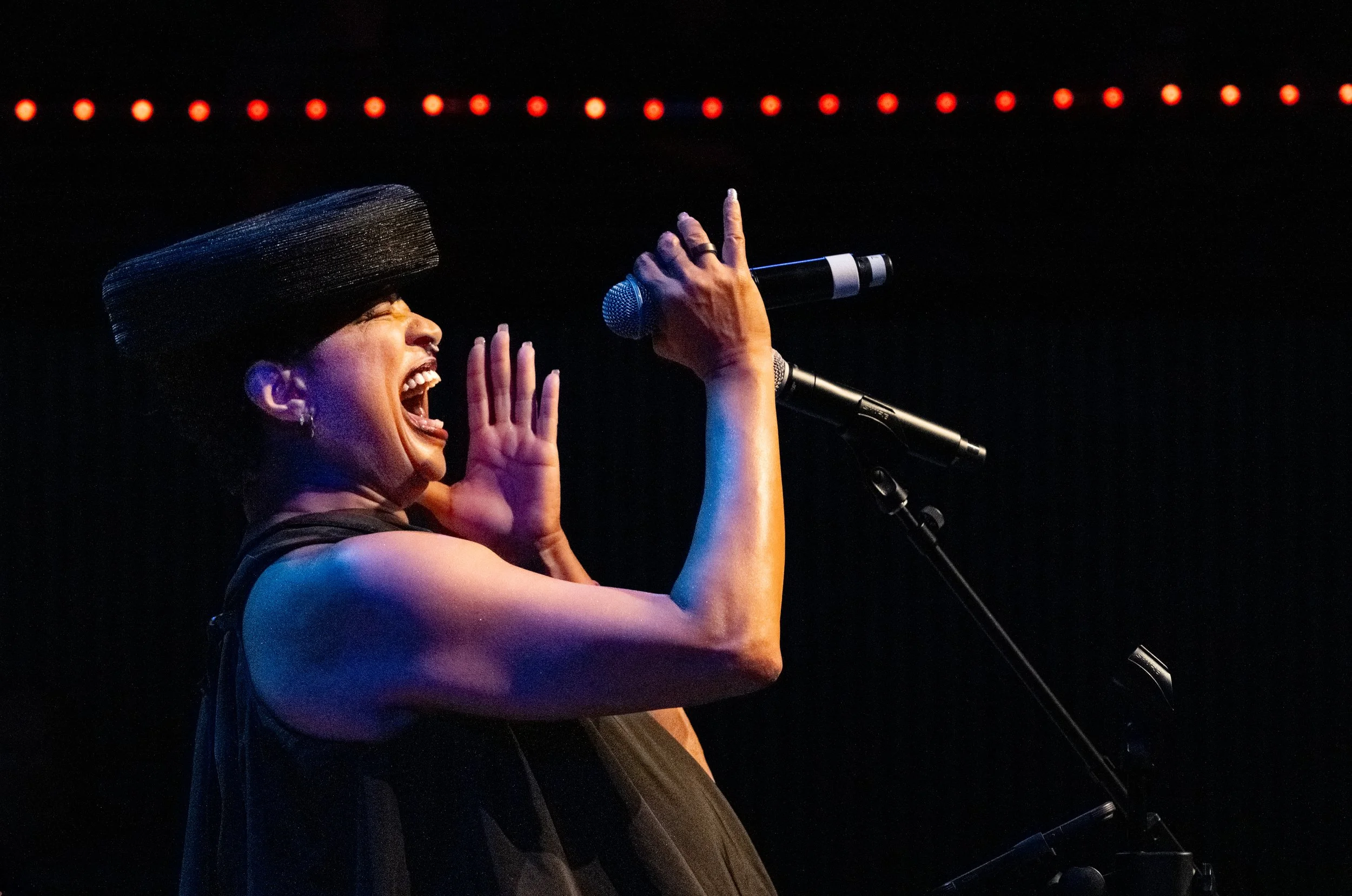
This partnership combines Lisa Fischer’s soaring, acrobatic vocal power with Orrin Evans’ refined, inventive jazz arrangements. It’s a meeting of two worlds: the grounded, "barefoot" vulnerability of a singer who has spent forty years backing rock and R&B icons, and the sophisticated structure of a pianist who approaches every chord as a question.
At a public Listening Party event, just twenty-four hours before her residency began, Fischer recalled her childhood relationship with music. She described resting her head against speakers to feel the vibrations, finding comfort in the sound when her surroundings felt chaotic. This past week at Miner Auditorium, Fischer recreated that intimacy by inviting the audience into that same close-knit sonic space.
Performing the final show of a four-night run with the Orrin Evans Trio on Sunday, Fischer delivered a set of iconic soul songs revitalized by a fresh, jazz-infused rhythm. While Fischer’s vocal talent is the main highlight, the true essence of the evening was the chemistry between the singer and the trio.
Deconstructing the Classics
The partnership between Fischer and Evans sidestepped nostalgia and instead emphasized deconstruction. This is most evident in their approach to the 1970s soul canon.
The group tackled The Stylistics’ "Betcha by Golly, Wow" and "People Make the World Go Round," stripping the songs down to their emotional core. In the hands of the trio—anchored by bassist Robert Hurst and drummer Mark Whitfield Jr.—these familiar melodies became flexible.
The peak of the music occurred during B.B. King’s 1964 blues classic, "Rock Me Baby." Fischer, in a playful and seductive moment, sang directly to Evans. She improvised a new verse that was not present in the original, crooning, "Roll me like you roll your dough, just like the Pillsbury dough boy does.” It brought smiles from the crowd, but the musical seriousness remained intact; it was a masterclass in tension and release, blending the emotional weight of the blues with the spontaneity of jazz.
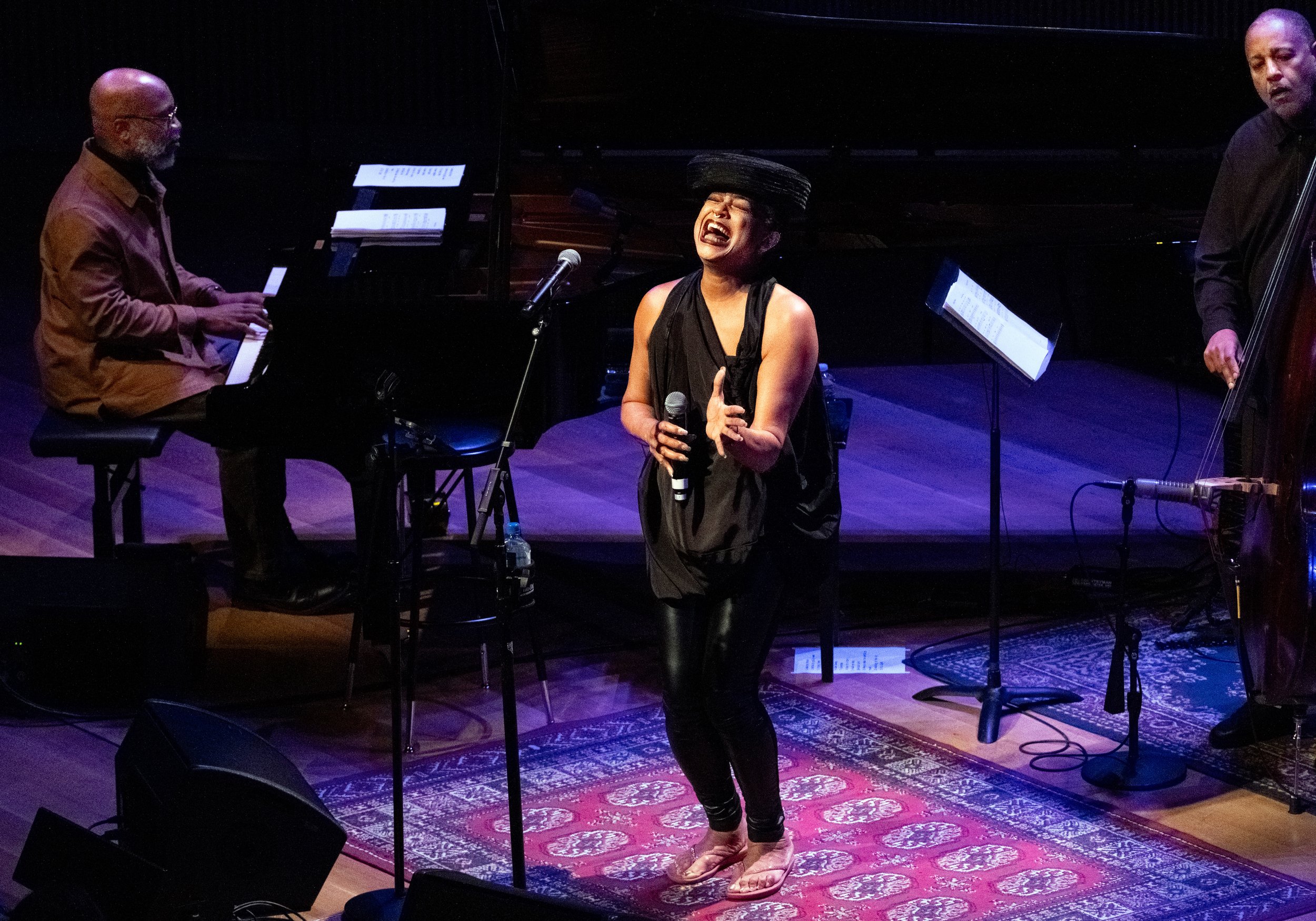
Lisa Fischer and the Orrin Evans Trio. Photo: Steve Roby
The Architecture of Air
Fischer’s technical approach to these classics is as captivating as the arrangements. Throughout the night, she used her signature two-microphone technique—one handheld for clear, lead vocals, and a second stand-mounted "effects mic" soaked in heavy reverb and delay.
This setup allows her to record a vocal phrase, loop it, and let it hover like a ghost note while she harmonizes over it. It confirms her description of singing as "painting in the air." Watching her move between the two mics is like seeing a weaver at a loom; she crafts a landscape of sound, layering textures until a single voice resembles a choir.
Her physicality reflected this sonic stretch. Fischer’s hand gestures felt natural, not choreographed, as if she were pulling the lyrics out of thin air. When she isn't singing, she sways with her eyes closed, lost in the rhythm created by Whitfield Jr.’s brushwork and Hurst’s deep pocket groove.
Flying and Falling
The setlist, while rooted in soul, followed a clear theme of flight and resilience. This was most powerful during her rendition of "Walking in the Air," a song initially written for the animated film The Snowman.
Fischer began the piece with a personal story about childhood nightmares. She told the quiet audience, "There was always some trouble going on that I couldn't control... I'd run to the window, open it, and see freedom.” She explained how, in her dreams, she initially crashed, but as she grew older and stronger, she learned to fly: “Now as an old coot, I fly real good! I think we start to learn and find direction—even in our dreams," she mused.
That sentiment was also echoed earlier in the set during "Blackbird." Fischer used the Beatles’ anthem to talk about scars, telling the crowd, "I'll take what I can get, and I’m grateful for all of it, the bumps and the bruises and the scars and all of it in life.” When a fan shouted, "We love you, Lisa," she immediately responded, "I love you back!"— one of many moments of intimacy between stage and audience.
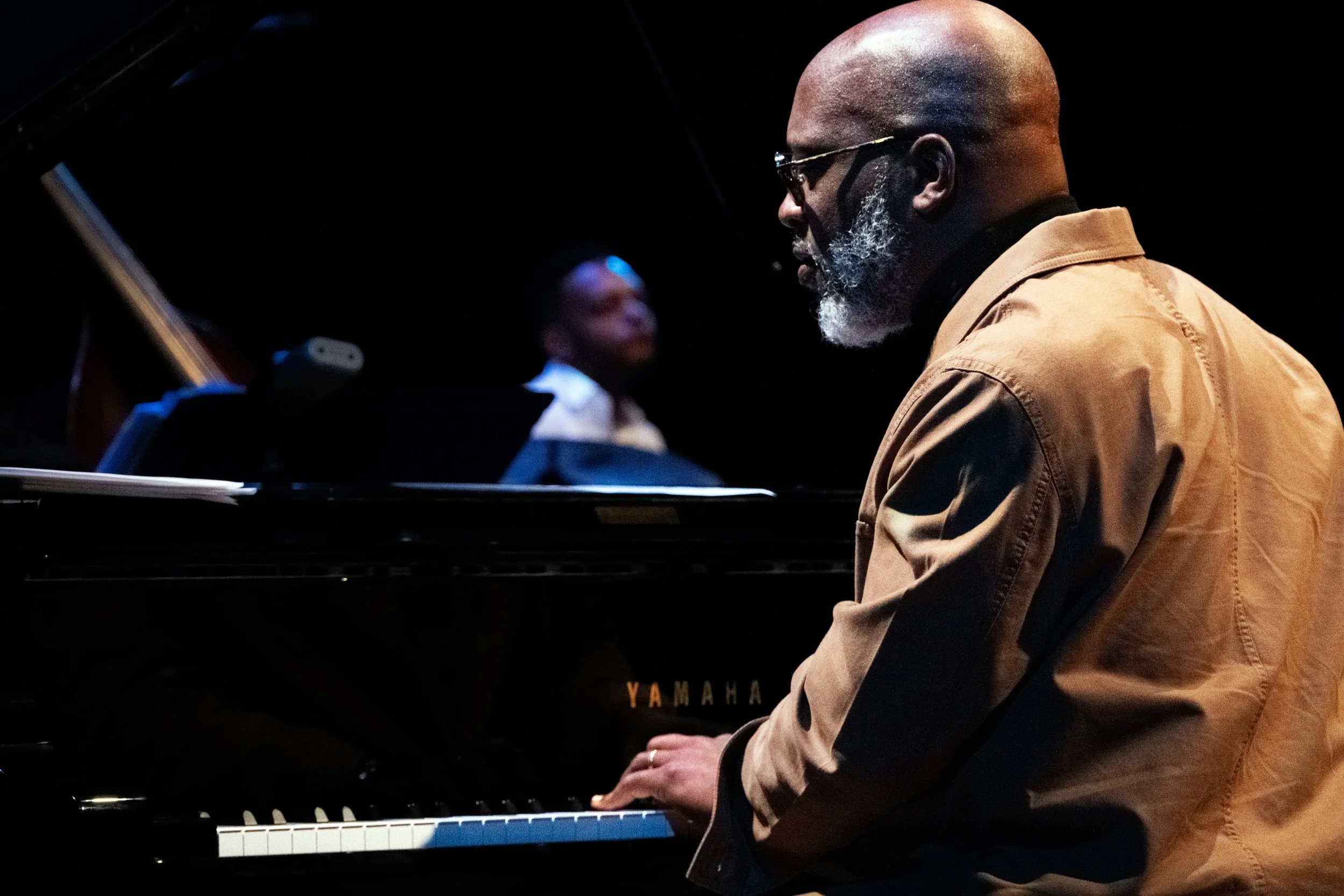
Orrin Evans. Photo: Steve Roby
Tributes and Transformations
The evening also served as a vessel for history. Fischer paid tribute to Roberta Flack with a stirring rendition of "Tryin’ Times," noting that her mother loved Flack, and highlighting the circle of life in the music industry: Luther Vandross once sang background for Flack, and Fischer, in turn, sang for Vandross.
“I know she would have loved the idea of me singing for Luther," Fischer said, her voice cracking with emotion.
Musically, the night offered surprises even for seasoned listeners. On The Beatles’ "Come Together," Robert Hurst switched to electric bass, delivering a solo intro that kept the audience guessing until he dropped into that unmistakable, sliding bass line. This frequency seemed to resonate in the chests of every Baby Boomer in the room.
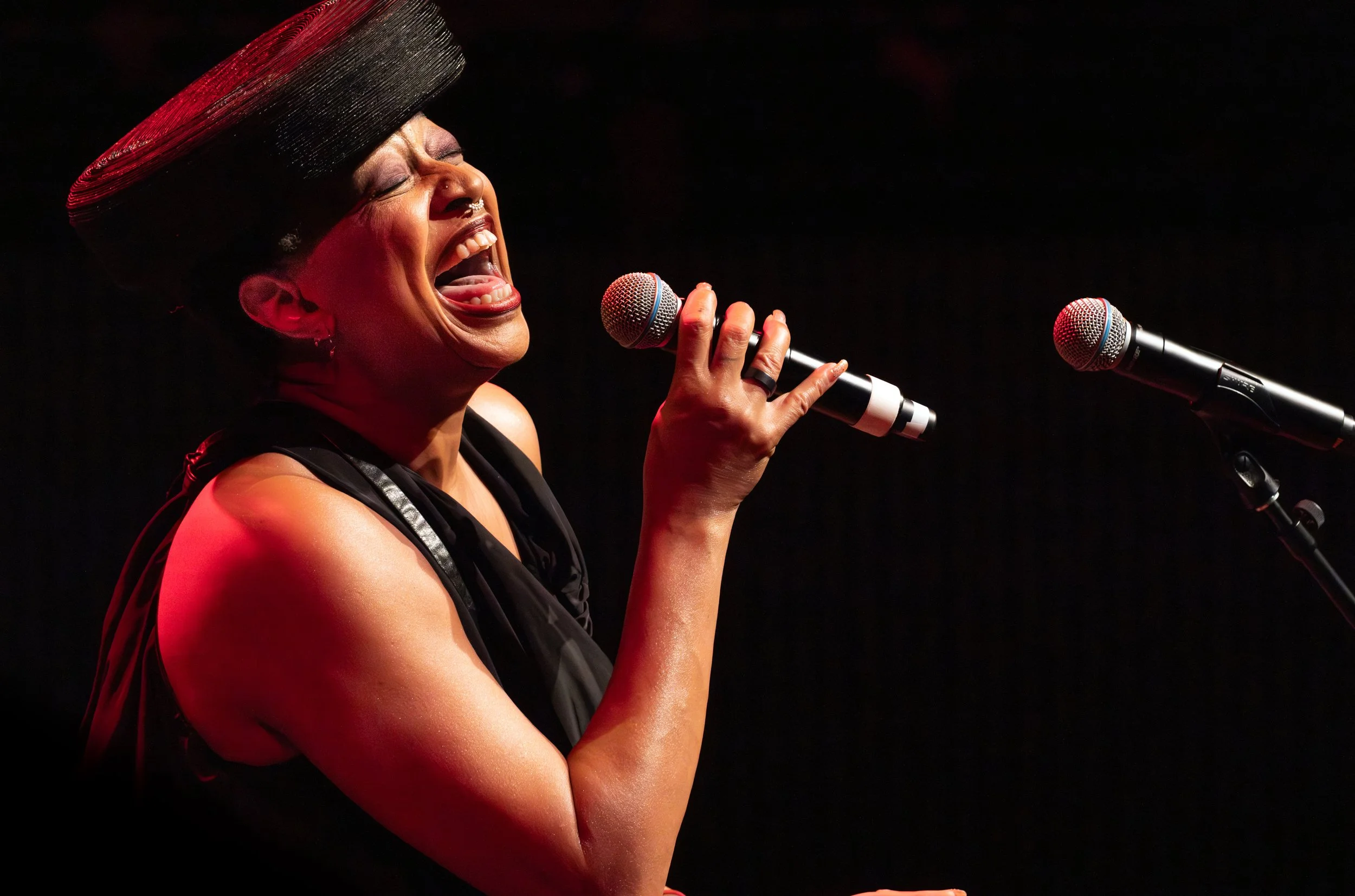
Lisa Fischer. Photo: Steve Roby
The Final Release
By the time the show neared its end, the sanctuary Fischer promised had been fully built. But the real highlight came from an unscripted moment. Near the finale, a fan shouted out a request for "How Can I Ease The Pain," Fischer’s Grammy-winning 1991 hit.
Fischer paused, seemingly captivated by the energy in the room, and launched into a shortened, a cappella version of the song. “I have to do it,” she announced. Without the safety net of the piano or drums, her voice filled the Miner Auditorium—soaring, precise, and deeply human. It served as a reminder that while effects and arrangements are impressive, the instrument itself remains a natural marvel.
A playful reminder to the audience to take it easy heading home lead into “Tip Light” with wagging fingers, shushes, chuckles, and winks. The audience again yelled “Thank you!” and “We love you!” and Fischer touched her heart and said a gracious, sincere “You’re welcome.”
A few days before Fischer’s SFJAZZ residency, Terrence Blanchard (Executive Artistic Director at SFJAZZ) was quoted as saying that Fischer didn't pursue music for fame but for "pure healing.” As she shook hands with the front row upon exiting the stage, it was clear that the healing went both ways. She had taken the safety she once found in a speaker cabinet and expanded it until it was large enough to hold everyone in the room.
Setlist: “Amazing Grace,” “Betcha by Golly, Wow,” (Stylistics cover), “Tryin’ Times” (Donny Hathaway and Leroy Hutson), “Come Together (Beatles’ cover),” “Overjoyed” (Stevie Wonder cover), “Come Sunday” (Duke Ellington cover), “Sinnerman” (Nina Simone cover), “The Star Of A Story’ (Heatwave cover), “Rock Me Baby” (B.B. King cover), “Blackbird” (Beatles cover), "People Make the World Go Round" (Stylistics cover), “Walking In The Air” (Auroa cover), “How Can I Ease The Pain” (Fischer/Walden), “Tip Light” (Slim Gaillard Trio cover).
Ms. Lisa Fischer W/ The Orrin Evans
Sunday, December 7, 2025, 7:30 p.m.
Miner Auditorium, San Francisco, California
Personnel
Lisa Fischer: vocals
Orrin Evans: piano
Robert Hurst: acoustic and electric bass
Mark Whitfield Jr.: drums
Running time: 100 minutes
Read about Lisa Fischer’s Listening Party at SFJAZZ here.
Read our 2019 interview with Lisa Fischer here.
Read our 2019 Lisa Fischer concert review here.