Julia Keefe Expands The Jazz Spectrum

Native American jazz pioneer makes her Big Island debut
Growing up on a reservation in Kamiah, Idaho, Julia Keefe’s journey into jazz began in her formative years. At four, she was captivated by Billie Holiday’s signature vocal style, especially the song “No More,” from her mother’s CD collection. Later, when Keefe began singing in the choir and at high school events, her family encouraged her to broaden her musical horizons.
Although the jazz world is known for welcoming trailblazers, early in her career, Keefe pushed back against people’s preconceptions that Native American music is just drums, flutes, and chants. As a proud Indigenous female jazz singer, she feels her purpose is to widen boundaries and continue challenging those stereotypes.
“The conflict came up when I was giving workshops and lectures and when I led demonstrations, even at clubs,” Keefe recalled. “I think some saw indigenous people, particularly Native Americans, as figures of the past in stories. And it wasn't until recently, with TV shows, that there’s much more of a native presence in pop culture outside of a historical context.”
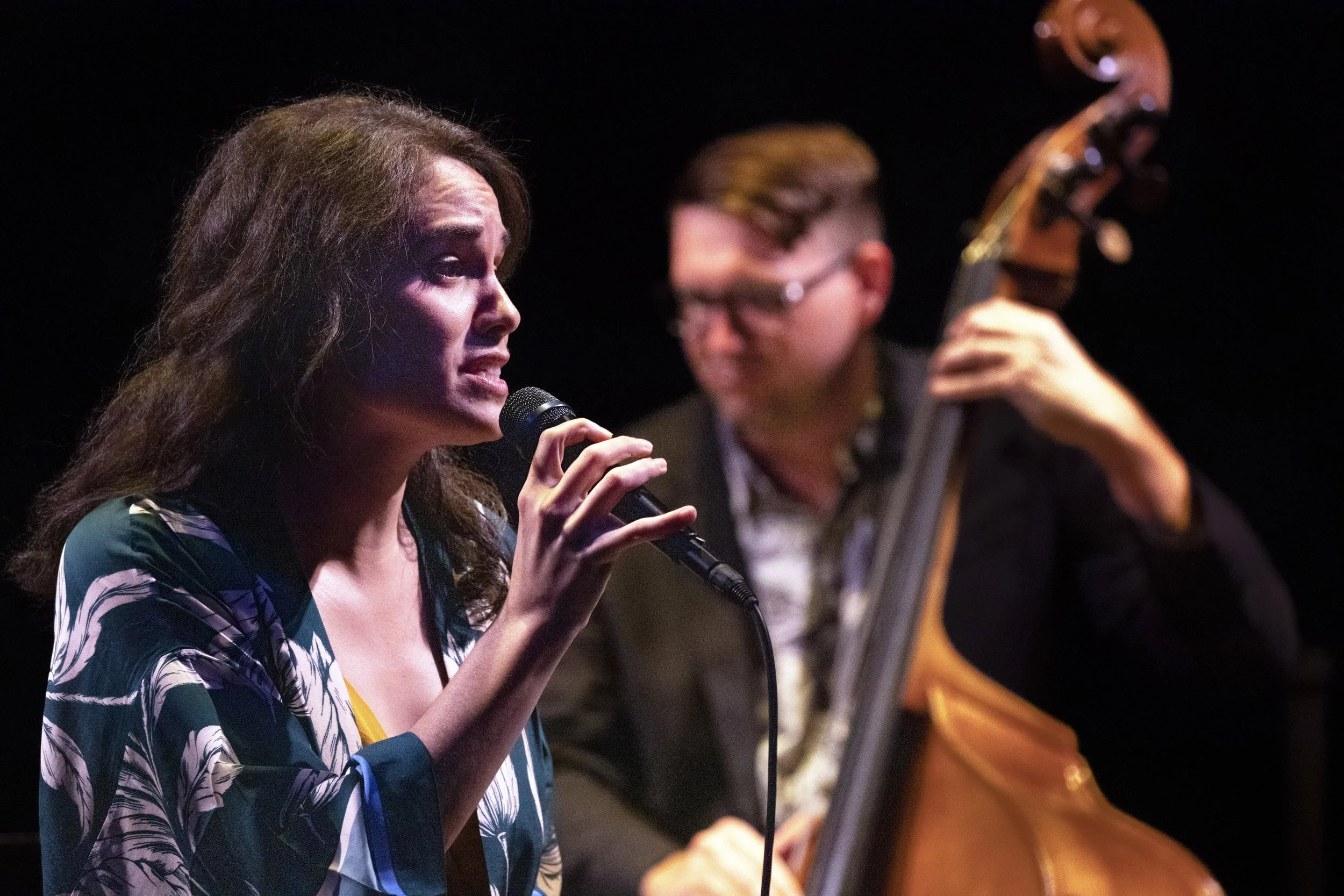
Julia Keefe and John Urban. Photo: Steve Roby
The Julia Keefe Quartet made its Kahilu Theatre debut last Saturday. The band featured Adam Bravo (piano), John Urban (upright bass), and Adam Benham (drums), with Keefe handling all the vocals. The venue converted its main stage into an intimate jazz club setting, complete with dim lighting, a bar, and candlelit tables, creating a Speakeasy vibe, or as they call it, Club Kahilu.
While her 90-minute set was mostly filled with standards from the American Songbook, intriguing deviations, including two by Brazilian composer Antônio Carlos Jobim and “Not You Again” by guitarist John Scofield, stood out.
The show’s highlight was Keefe’s jazz interpretation of a traditional Nez Perce melody that loosely translates to “This is what we are called to do.” Keefe explained that her mother had given it to her while undergoing breast cancer treatment.
“It’s typically sung at the end of a person’s life or at a memorial, but my mom is now in one year of remission,” noted Keefe. “The song is matriarchal, indigenous, and very personal for me.” The melody was soothing, Pharaoh Sanders-like at times, and this was the first time she played it with this ensemble.
Visionary Keefe continues to expand the jazz spectrum with projects like the Julia Keefe Indigenous Big Band, a venture she started with jazz trumpeter Delbert Anderson. “We received funding from Jazz Road/South Arts and began searching for 16 Native musicians. The response was overwhelming, especially from kids as young as 15, who told me, ‘I thought I was the only Native jazz musician alive today.’ As a result, the project has evolved into a community of Indigenous jazz musicians, with a database of educational opportunities and a gathering place for other projects.
Keefe’s Indigenous Big Band had its Olympia, Washington, premiere in May but is still seeking a central location where its U.S. and Canadian members can come together to jam. “Right now we’re communicating digitally, but I’m thinking of having a conference or piggybacking on one.”
Keefe also plans to document the process of assembling her Big Band and its performance in a documentary film. “This was the first time an all-Indigenous big band was on the main stage that we know of. There were smaller ensembles in the 20s, 30s, and 40s that were all Native because, as people came out of the Indian boarding schools, they had this knowledge of Western music and their instruments and were familiar with popular music of the time.”
“One of the beautiful things about jazz is the new voices that come into it, push the boundaries, and try new things. For me, reintroducing my culture into my music was a huge part of this new chapter of my artistry.”