Chico Pinheiro and Vinicius Cantuária Bring Brazilian Guitar Dialogues to SFJAZZ
Brazilian guitarist Chico Pinheiro joins Backstage Bay Area to discuss his duo collaboration with Vinicius Cantuária, the stories behind his music, and their upcoming SFJAZZ performances. Full show details and ticket information appear at the end of this feature.
Listen to the full conversation on Backstage Bay Area below.
Chico Pinheiro has spent decades making the guitar speak in overlapping dialects: the clipped lyricism of Brazilian song, the long-view architecture of classical composition, and the conversational risk of jazz improvisation. DownBeat has repeatedly named him a Rising Star guitarist, and his résumé ranges from studio work in São Paulo to collaborations across jazz, pop, and the modern spectrum of Brazilian music. Yet when Pinheiro talks about the roots of his sound, he starts with something simpler than credentials: an early sense that the instrument felt like home.
“I remember pretty clearly,” he says, describing his first paid recording date. “I actually kept my receipt. I have a receipt from my very first recording session. It’s not framed, but I’m planning to frame it.” He pauses, then corrects his memory with a musician’s precision. “I remember, actually, I was 12. I was turning 13… I remember I was very nervous, but playing the guitar was always natural for me. From the first time I picked up the instrument, it felt super natural.”
Pinheiro brings that mix of craft and wonder to SFJAZZ for an intimate duo engagement with Vinicius Cantuária on Friday, January 16, and Saturday, January 17, in the Joe Henderson Lab. The pairing unites two Brazilian artists shaped by different eras and geographies: Cantuária, a Rio-raised hitmaker who reinvented himself in Brooklyn, and Pinheiro, the São Paulo guitarist-composer known for fluid lines and harmonically rich writing.
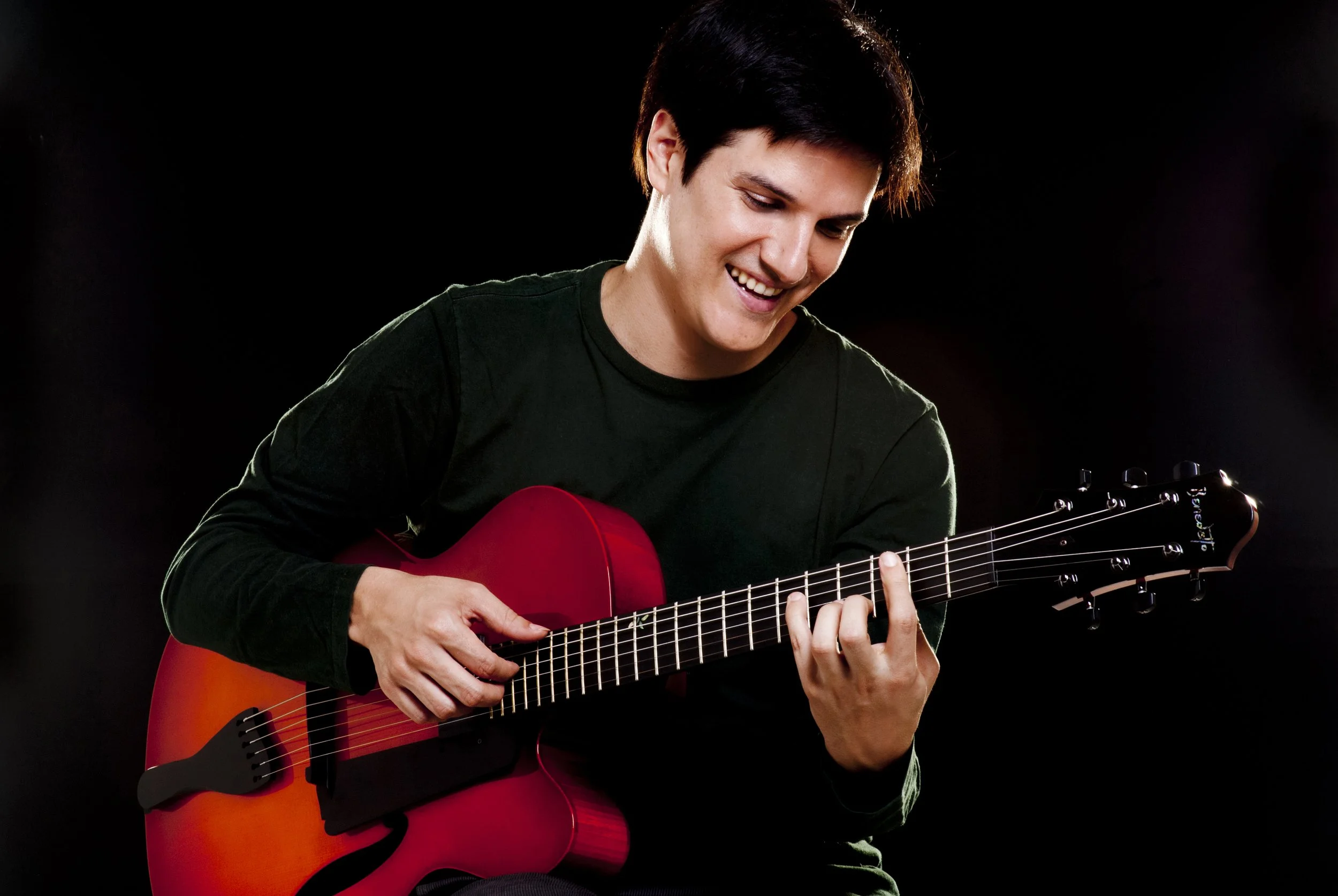
Photo: Ze Gabriel Lindoso
From Hendrix to nylon strings
Pinheiro’s origin story is not a straight line from conservatory to bandstand. He entered professional settings early, often without the standard tools. “When I started working, I couldn’t read music,” he says. “I could read some chords, but not really read music. So, everything was kind of… by ear.” The upside, he adds, was permanent: “I developed my ears pretty early.”
His first studio memory is vivid and wonderfully unglamorous. “It was a jingle, like one of those 30-second jingles… for radio,” he says, recalling “a solo… like an overdrive solo.” The reason he loved it is revealing: he started with rock. “My very first instrument was the electric guitar… and I started out playing because of Jimi Hendrix.”
The Hendrix connection is more than a childhood anecdote; it shapes how Pinheiro thinks about seriousness and play. “I always had fun playing,” he says. “Some people… start out studying theory, and it’s kind of hard. I always encourage my students… to play for fun… because I think it’s a very important part of the profession.” Then he offers a maxim worthy of a bandstand chalkboard: “It’s not because it’s fun that it can’t be serious. And it’s not because it’s serious that it can be fun.”
“City of Dreams” and the geography of expectation
Pinheiro selected two originals to discuss ahead of the SFJAZZ dates: “City of Dreams” and “Estrada Real.” “The first song captures the emotional weather of relocation, the way ambition can feel both bright and isolating. He describes the piece less as a tune than as a small narrative. “When I wrote this piece, I thought more of a suite,” he says, outlining “different sections… an opening, then a development, and then… the closing.”
The title comes from a double vision of São Paulo and New York, two megacities that demand stamina. “I was moving from São Paulo… to New York… they are both really big cities,” he says. What struck him most about New York was its collective hunger: “Everyone who goes there has a dream.” But that dream can carry loneliness. “It’s a very vibrant city… but on the other hand, it’s kind of solitary because it’s really hard to make friends there.”
Pinheiro even hears the story in the album’s visual language. “If you look at the cover… it’s a desert… and you can see, from far away, some lights.” For him, the image matches the internal state of arrival. “When you’re moving to a completely strange place… You have all these expectations… that’s why I call it ‘City of Dreams,’ because I was really full of dreams when I moved there.” The conclusion is tender, not triumphant: “I’m really happy in New York right now… but I miss São Paulo, too. Both places are very dear to me.”
Intersections, not categories
Pinheiro’s work is often described as a fusion, but he resists the idea of consciously assembling ingredients. Asked about balancing Brazilian music, classical music, and jazz, he responds plainly: “At this point it’s second nature… I can’t even avoid it. I can’t help it.”
He traces Brazilian music back to the earliest household soundscape. “My mom used to play… some jam sessions at home… that’s the music that I have in my heart,” he says. Classical music arrived as a study that became a devotion: “Classical guitar… is something I love… especially when it comes to composing.” Then comes the connective tissue that explains his arranging mind: “The most interesting thing about the music is all these intersections you can find between rock and classical music and Brazilian music… they all have common elements, and I love that.”
He also draws a boundary around what he wants to avoid. “Otherwise, it sounds a little academic,” he says. “I try to be as intuitive as possible when I’m writing and when I’m playing.”
History that moves: “Estrada Real”
“Estrada Real” carries literal history: a colonial route used to transport gold, threaded with the violence of slavery. Pinheiro speaks about it with the quiet intensity of someone composing in the presence of memory. “It has a lot to do with slavery and Brazilian history,” he says. “I’ve actually been there many times… it’s a beautiful road.”
He explains that the tune arrived as a kind of transport. “When I started writing it, it transported me immediately to that road,” he says. “It’s so emotional for me. I would love the audience to feel that emotion… that has to do with Brazil and… my youth.” The goal was not documentary detail but felt experience: “That’s what I tried to emulate when I wrote this song.”
A duo built on simpático
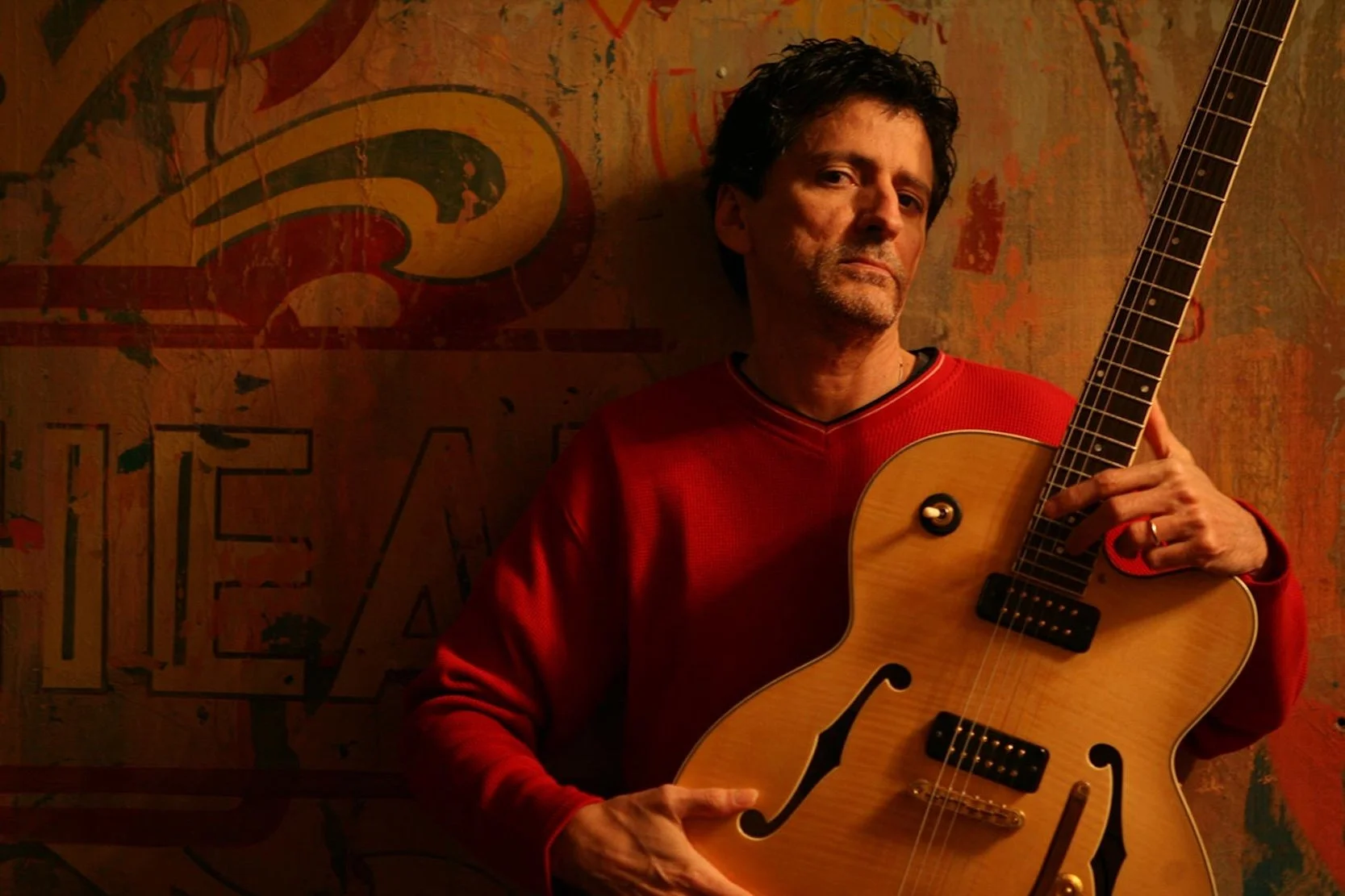
Vinicius Cantuária brings decades of Brazilian songwriting, guitar work, and cross-genre exploration to his duo performances with Chico Pinheiro. Photo courtesy of the artist.
Pinheiro’s partnership with Cantuária began with admiration and was cemented through friends. “I’ve always been a huge fan of Vinicius… we are from kind of different generations,” he says. “Besides the guitar, he’s kind of a multi-instrumentalist. He plays everything.”
When they finally met, the rapport came quickly. “We became friends instantly,” Pinheiro says, laughing over a beachside confession: “I told him I used to play your songs for girlfriends at the beach.” He calls it something harder to translate than technique: “There was this kind of simpático thing between us from the beginning.”
That ease matters in a duo, where every breath is exposed. Pinheiro previews the SFJAZZ sets as a broad Brazilian conversation rather than a single-album recital. “It’s gonna be a mix of Vinicius Cantuária’s music, my material, and some from the Brazilian songbook,” he says. “We’re gonna play… classics… we are gonna play Jobim… some different arrangements… it is gonna be super fun.”
TICKET INFO
Intimate, acoustic, and deeply conversational, these Joe Henderson Lab performances offer a rare chance to hear two Brazilian masters in close dialogue, drawing from originals, classics, and spontaneous interaction.
Show details: Vinicius Cantuária & Chico Pinheiro, January 16–17, SFJAZZ Center Joe Henderson Lab,
Showtimes: 7 and 8:30 p.m. Tickets: https://www.sfjazz.org/tickets/productions/25-26/vinicius-cantuaria-chico-pinheiro/