Aaron Diehl Finds the Space Between
Ahead of his April 26 SFJAZZ appearance, pianist Aaron Diehl reflects on a grandfather’s living room, a recovered masterpiece, and the quiet work of building music that holds still long enough to mean something.
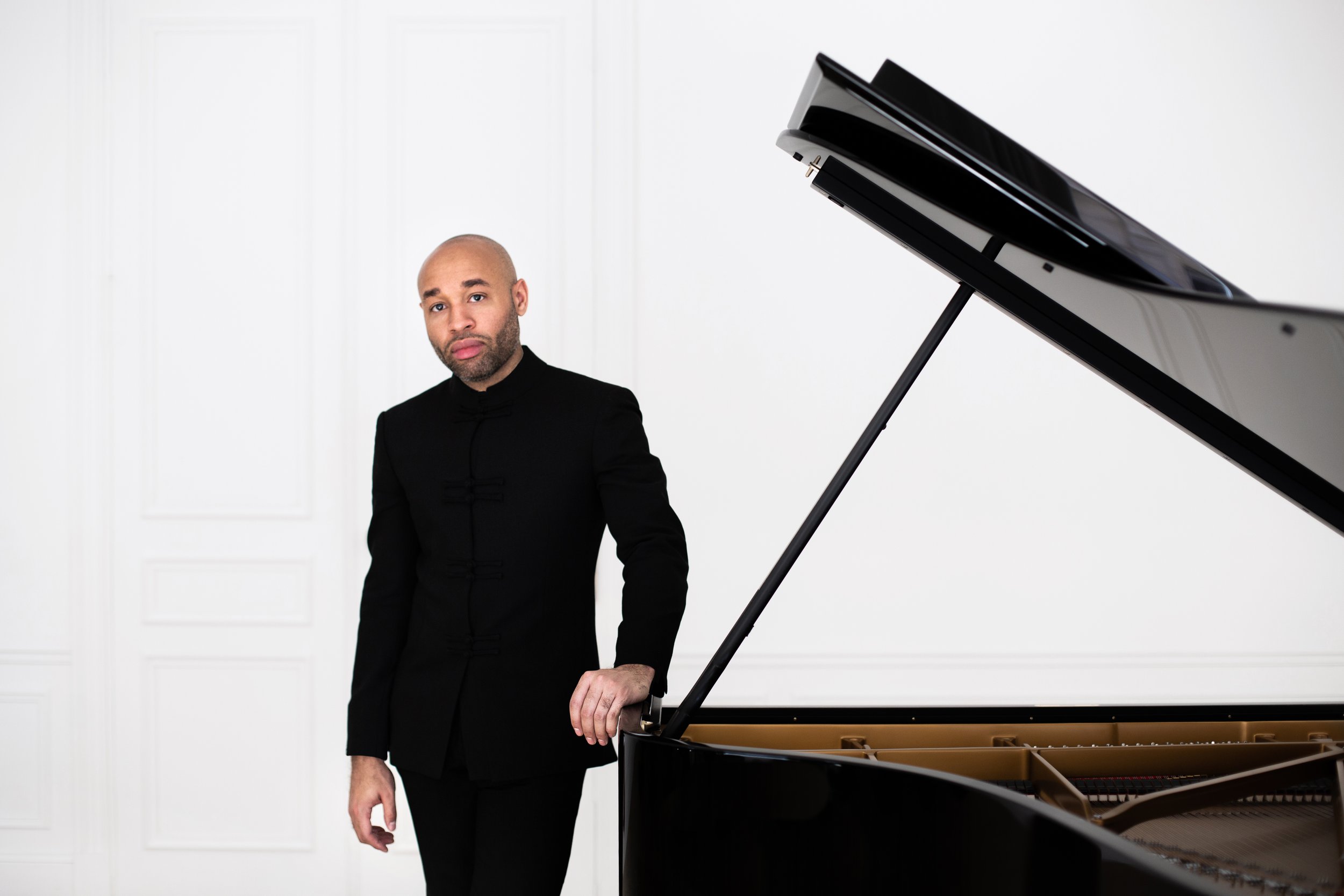
Aaron Diehl performs at SFJAZZ’s Miner Auditorium. Photo: Maria Jarzyna
Listen to the full conversation with Aaron Diehl below.
Aaron Diehl doesn’t reach for the obvious entry point. When asked about his earliest musical memory, he doesn’t cite a concert or a recording. He names a room.
“My parents bought a little baby grand piano for their living room,” he recalled. “My grandfather would often come over and play tunes — from the American Songbook or jazz standards — and I would listen to him play and often be very curious about how he made this music.”
His grandfather, Arthur Baskerville, played both piano and trombone, and those Saturday jam sessions near the family home in Columbus, Ohio, left a mark that no formal training could fully explain. Diehl remembered wanting to sit in but declining. The music felt too complex, the mechanics still opaque. But the pull was already there.
That early combination — deep curiosity, patient listening, and a refusal to rush toward mastery — would become the defining traits of one of the most distinctive pianists of his generation. Diehl, a Juilliard graduate who toured with Wynton Marsalis at seventeen, has spent the years since building a body of work that moves freely between jazz and Western classical music without treating either tradition as a ceiling or a floor. The New York Times has praised his “melodic precision, harmonic erudition, and elegant restraint.” DownBeat put it more expansively: he “gracefully melds two worlds.”
On April 26, Diehl brings his working trio to SFJAZZ’s Miner Auditorium for an evening that promises to show exactly what that description sounds like in practice. He’ll be joined by bassist David Wong and drummer Aaron Kimmel — two musicians he praised in ways that reveal a great deal about how he thinks about ensemble playing.
“They aren’t musicians who overplay,” he said. They listen acutely, with a strong sense of awareness and a deep understanding of the material and the language. But more importantly, they’re incredibly empathetic as artists, and it makes for a very enjoyable experience playing with them.”
That word — empathetic — surfaces naturally in Diehl’s conversation. It runs through his descriptions of good improvisation, good collaboration, and good music in general. His recent work has centered on a project that demanded it in abundance: a landmark recording of Mary Lou Williams’s Zodiac Suite, performed with the Brooklyn-based chamber orchestra The Knights. The album, nominated for a Grammy, brought a rarely heard orchestral version of the suite back into the world after decades of near obscurity.
For Diehl, the connection to Williams went beyond repertoire. He first encountered her sacred works through Father Peter O’Brien, Williams’s manager for the last twenty years of her life, at a Harlem church where both men had ended up by different paths.
“That was 2006,” Diehl said. “That was sort of the beginning of my journey into exploring her music, particularly her Sacred Works, but her music in general.”
When the Zodiac Suite returned as a pandemic project, Diehl was ready for it. Williams composed the suite in 1944, inspired by Ellington’s Black, Brown, and Beige, dedicating each movement to musicians born under a given astrological sign. She expanded it for a chamber ensemble and premiered it at Town Hall, but the performance was underprepared, and she largely moved on. The orchestral version saw renewed attention in the early 21st century and found its way to Diehl years later, after O’Brien had passed.
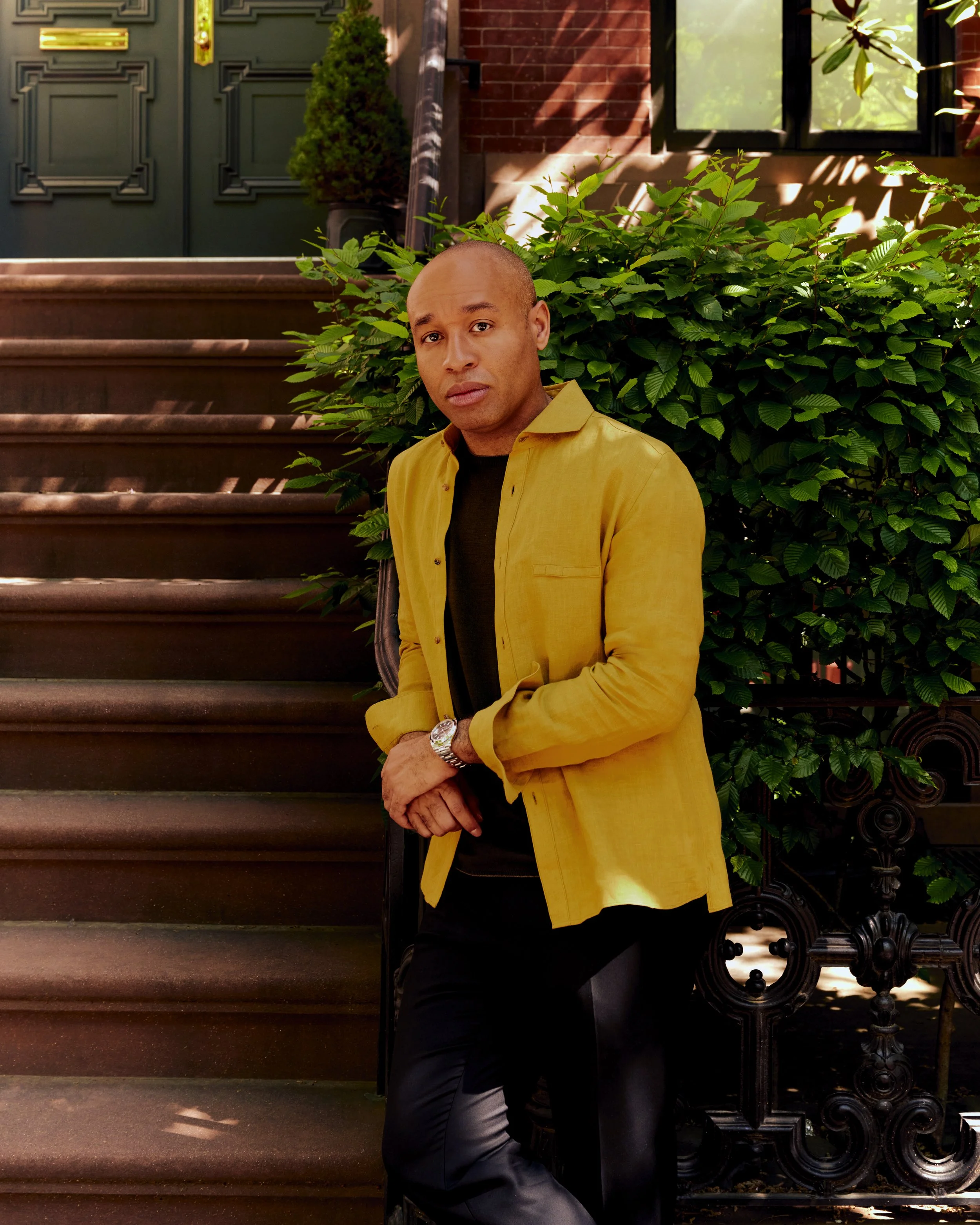
Photo: Evelyn Freja
“I decided, as a pandemic project, to pursue this work and to see if it could be revived, what’s there, and what can be learned from her journey,” he said. “Mary Lou Williams was someone who was constantly evolving — not only as a pianist but as a composer. She really ran the gamut stylistically and was always on the avant-garde in the true sense of the term.”
The set at Miner Auditorium will return to the trio’s smaller, more immediate world — featuring original compositions, new pieces still taking shape, and a set of preludes Diehl has adapted for piano, bass, and drums. He described the program as varied in texture yet unified in purpose.
“I hope people, especially in these times we’re experiencing right now, get a sense of peace, comfort, and serenity in experiencing the music we play for them,” he said.
He paused, then returned to the room. Miner Auditorium, he noted, has a quality he doesn’t take for granted.
“It’s one of the clearest halls I’ve performed in over the years,” he said. “It has the presence of a larger hall, but the acoustics and the sense of intimacy of a smaller one. I think that’s a perfect combination.”
For Diehl, the physical and acoustic architecture of a performance space isn’t incidental — it shapes what’s possible between musicians and what reaches an audience. That same care for conditions, for getting the environment right before the music begins, extends to his thinking about improvisation itself.
“The music will come to us if we allow it,” he said. “Not if we force it.”
That patience, that attentiveness to what the music asks for rather than what ambition might demand, is what has made Diehl’s trio consistently rewarding across his recordings and live performances. It’s also, in some sense, a direct inheritance from those Columbus living rooms — from watching a grandfather play tunes he loved in a room where no one was in a hurry to finish.
Show Information
Aaron Diehl performs with bassist David Wong and drummer Aaron Kimmel on Sunday, April 26, 2026, at 7:00 p.m. in Miner Auditorium at SFJAZZ. Tickets are available now at sfjazz.org.