A Word With Guitarist Stanley Jordan
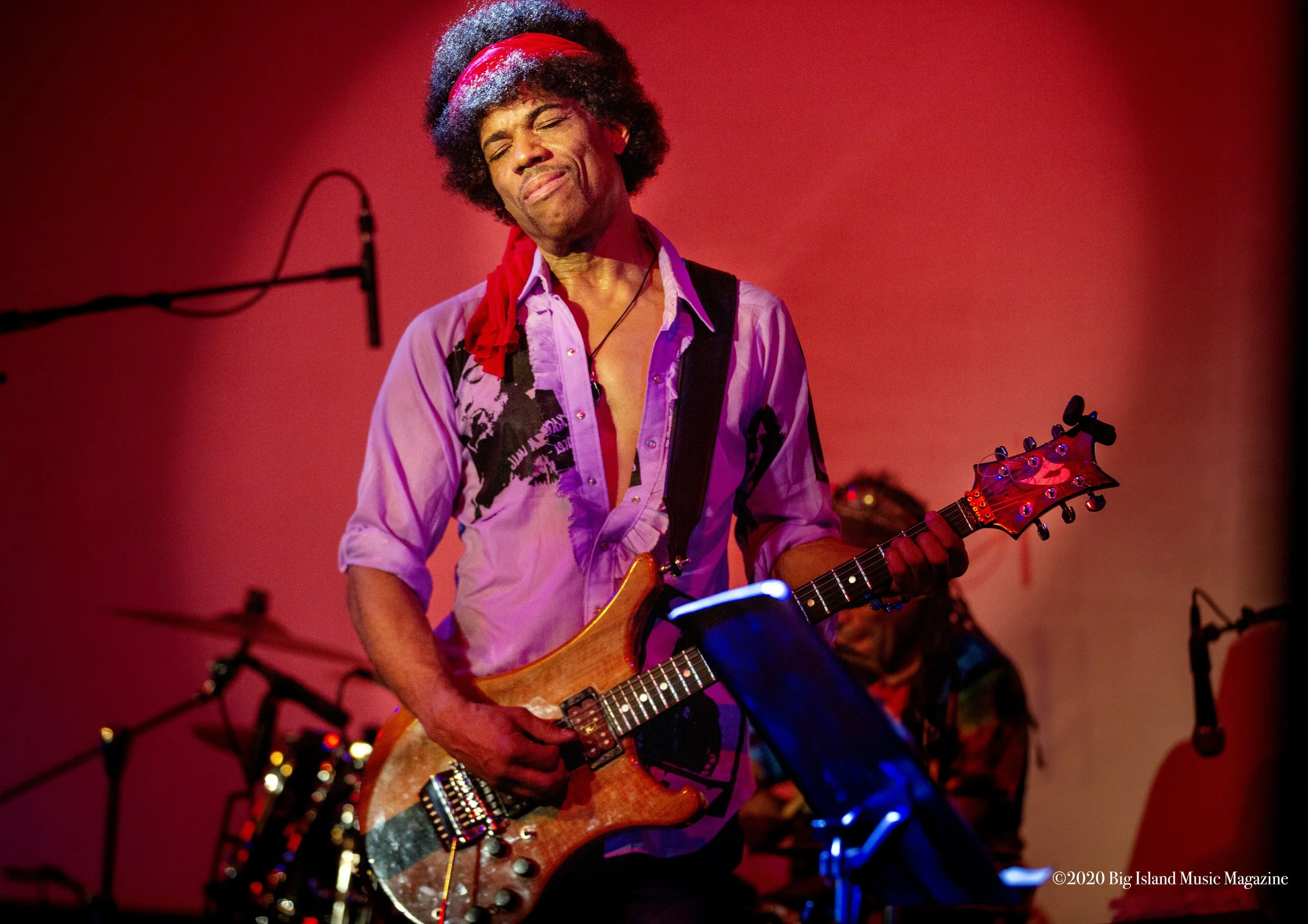
As a lifelong Hendrix fan, historian, and biographer, I was excited to learn that jazz guitarist Stanley Jordan was performing a Hendrix tribute concert, and it was happening on the Big Island. I remember buying Jordan’s debut album, Magic Touch, in 1985 and noticing his interpretation of Hendrix’s emotional tune “Angel” as one of the tracks. Jordan’s double-handed tapping technique gave the song new life 14 years after Hendrix fans first heard it.
Jordan and I both experienced a life-changing moment when we learned Hendrix had tragically died—much too soon! I started collecting archival material, which led to writing three Hendrix books and working for the Hendrix family. In Jordan’s case, he switched from piano to guitar and became a four-time Grammy-nominated guitarist. Hendrix’s music can profoundly influence people.
In several interviews, Hendrix expressed his wish for people to keep playing his music after he passed away and to “go wild and freak out.” Big Island Hendrix fans will have the opportunity to do just that when Stanley Jordan performs a bit of “Electric Church Music” at the Honokaa People’s Theatre on Saturday, Jan. 25 – see details below.
When did you first discover Jimi Hendrix’s music, and were you fortunate to see him in concert?
I never saw him perform live, but I believe everyone remembers where they were when they first heard his music. I recall the moment I learned of his passing. At that time, I was a pianist and composer, and I felt deep sadness. I also remember thinking we needed to do everything possible to keep his legacy alive. That was when I decided to start playing guitar. Jimi has always been a major influence on me, even from the very beginning.
What was the first Hendrix album you fell in love with?
The first album I owned was Cry of Love (1971), followed by Axis: Bold as Love (1967). I used to sit for hours, listening closely to every detail of that record. When I perform now, I don't copy those records note-for-note. I'm trying to give a fresh take on his music, but because of all the time I spent in the “woodshed,” much of it is still right there, almost in my DNA.
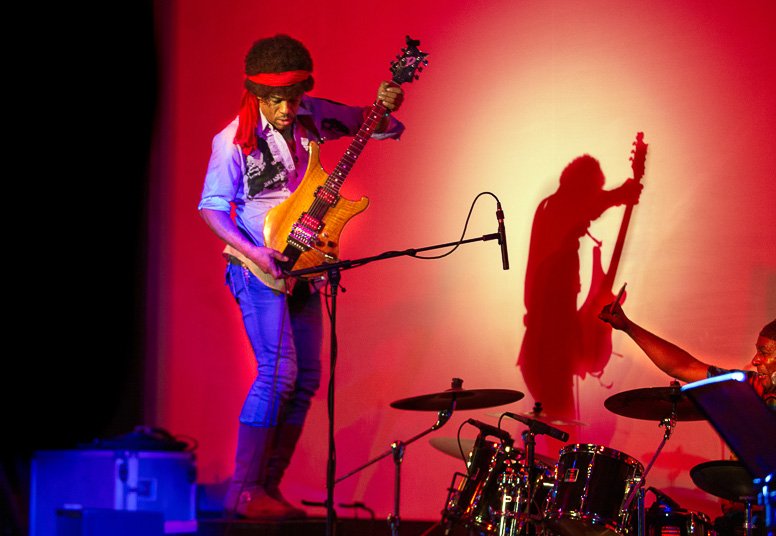
Stanley Jordan. Photo: Steve Roby
In 1969, Hendrix briefly delved into the jazz fusion genre with icons like John McLaughlin and Miles Davis. Have you listened to any of that material, and what are your thoughts on him branching out into new territory?
I think it's great. Jimi was one of the main reasons I got interested in jazz. Some rock artists pointed the way toward jazz. I already liked jazz, but I didn't have a clear entry point. It was the rock artists who started to incorporate some of the jazz vocabulary... Blood, Sweat & Tears and Chicago, with their horn arrangements. Jimi wasn't as explicit in terms of bebop style, but in how he expanded vocabulary, embraced the blues, and pushed the improvisational side. I love imagining what he would have done if he'd continued in that direction. No one knows for sure, but if you understand his music, I think you can make an educated guess about the kind of path he might have taken.
In your Hendrix tribute concert, are you using any pedals or effects similar to those Jimi relied on?
I'm using the classic Cry Baby (pedal), and sometimes I'll use the Univibe for “The National Anthem.” I'm choosing more modern versions because I believe they offer better quality. I have a high-quality reverb and digital delay pedal that I use—things that weren't available in his day.
What kind of guitar are you playing at these shows?
A Vigier Arpège has been my main guitar for over 20 years. I'm still using it and feel very comfortable with the instrument. However, at some point, I want to get a Stratocaster as we develop the show. Certain sounds are definitely a Strat sound, and I can't get them out of my Vigier, so that's in the future.
Besides playing Hendrix’s music at the tribute concerts, I understand there’s also a theatrical element to your show. Can you tell me more about that?
What I’ve realized is that truly capturing the spirit of Jimi's music involves connecting with his essence and persona, almost like channeling him. I decided to incorporate that into the show—dress the part, act the part, and appreciate it both as an actor and a musician. For me, that has become one of my favorite parts of the performance because, as a kid learning his music, it wasn't just about the notes; I was connecting with Jimi himself—his philosophy, his way of thinking, and even the experience of his name. It's all about creating an experience. Our goal is to recreate that feeling, even though I never actually attended his shows. But since I come from that era, there are certain things I understand that younger people might not, simply because it's a different time. I'm trying to take us back to those moments and recreate that experience as authentically as I can. I believe the best way to do that is to approach it as an actor as well.
What are your thoughts on Jimi’s brief power-rock-funk trio, The Band of Gypsys?
When Jimi first gained fame, he had the Jimi Hendrix Experience. It was more organized, but he wanted to move beyond that structure, and I believe that with the Band of Gypsys, he was able to elevate that approach. You can hear this progression on Electric Ladyland, where much of the material heads in that direction.
Tell me about the other members in your tribute trio.
Drummer Kenwood Dennard has been teaching the Jimi Hendrix Ensemble at Berklee College of Music for 20 years, where he is a percussion professor. He can play keyboards and drums at the same time, which is useful when we're doing “Voodoo Chile.” Bassist Gary Kelly has a long history of playing Jimi's music with several artists, including Jimmy Buffett, the Mamas & the Papas, and Martha and the Vandellas.
I understand you have a solo album coming out this year.
Yeah, we're still figuring out the exact date, but it’s called Feather in the Wind. I can’t wait for people to hear it, and there’s quite a bit of musical variety on there—different styles all connected by a theme of redemption and renewal amid loss and change. Some important people in my life I lost during the making of the album, and others who were supposed to be on it also passed away. I did a lot to maintain some continuity despite all the changes life threw at me. When life throws something your way, what do you do about it? That’s a big part of what this album is about: overcoming that.
If You Go… Have A Good Show!
Event: Stanley Jordan Plays Jimi Hendrix
When: Jan. 25, 2020. Doors: 6:30 p.m. Show: 7 p.m.
Where: Honokaa People’s Theatre, 45-3574 Mamane St, Honokaa.
Cost: General Admission: $38. Gold Circle Seating: $55.
Ticket info: For online tickets and Gold Circle Seating, go to www.bluesbearhawaii.com or call 808-896-4845. Big Island ticket outlets: Kona Music Exchange – Kona; Kiernan’s Music – Old Town Kainaliu; Waimea General Store – Parker Square, Kamuela; Top Stitch – Honoka’a; Hilo Music Exchange, Hilo Ukulele & Guitar – Hilo; and Rogers Guitars – Kea’au.
This interview has been edited for space, clarity, and continuity.
Steven Roby is the author of three books on Jimi Hendrix, including the bestseller Hendrix on Hendrix. He has been a guest lecturer speaking about Hendrix at universities across the U.S. and has taught a college course on the guitarist’s life and music. From 1979 to 1996, Roby produced annual Hendrix radio tributes, including a documentary on NBC’s Source Network.
Photo: Steve Roby